Opening the Circle

by Anna Ehrsam
The Apparatus, the Market, and Alternative Infrastructures
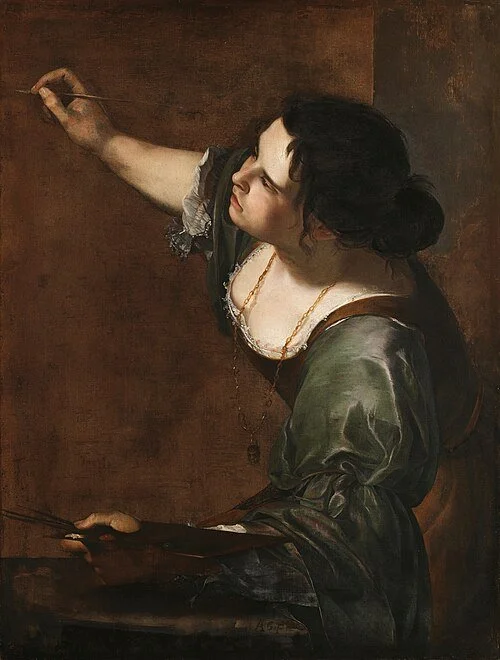
Caption:
Artemisia Gentileschi, Self Portrait as the Allegory of Painting , c.1638-1639. Long marginalized within dominant narratives of Baroque painting, Gentileschi's recovery illustrates how canon formation shapes cultural memory.
The contemporary art world is often described as an ecosystem, a market, a cultural field, or an international network. Each term is useful, but each is also incomplete. An ecosystem suggests organic interdependence; a market suggests exchange; a field suggests competitive positions; a network suggests connection. What is needed is a term that can hold all of these forces together: the institutional, the economic, the social, the ideological, the historical, and the affective. This essay proposes that the contemporary art world is best understood as an apparatus: a distributed system of museums, galleries, art fairs, biennials, auction houses, collectors, critics, curators, universities, publications, foundations, advisors, patrons, trustees, boards, social events, private dinners, studio visits, and media platforms that collectively produce visibility, legitimacy, and value.
The apparatus does not merely exhibit art. It makes art visible. It does not merely discover value. It manufactures the conditions under which value can be recognized, circulated, defended, and converted into cultural and financial capital. It does not simply reward artistic achievement. It determines which achievements become legible as achievements at all.
This distinction matters. The art world frequently presents itself as a meritocratic space in which the strongest work rises to the top. Yet art history itself repeatedly demonstrates that recognition is never purely the result of quality. Recognition is mediated by access: access to training, patrons, exhibitions, publication, critical attention, collectors, and institutional memory. The history of the canon is therefore not only a history of artistic innovation. It is a history of selection.
To say this is not to claim that successful artists are undeserving. Many artists who occupy central positions within museums, markets, and art-historical narratives are major thinkers and makers. The problem is not that the recognized are always unworthy. The problem is that recognition is unevenly distributed, and that the mechanisms producing recognition often remain obscured. When visibility appears natural, inequality appears natural as well.
This essay asks a series of linked questions. Who has access to the spaces where value is produced? How does the art market transform objects, names, and narratives into financial instruments? How do museums, biennials, Documenta, art fairs, galleries, auction houses, and collectors participate in the recursive production of legitimacy? What happens when artists are excluded not only from markets but from the very systems through which cultural knowledge becomes visible? And what alternative infrastructures might expand participation in the creation of cultural value?
The argument unfolds in ten parts. First, it defines the art world as an apparatus, drawing from theories of institutions, cultural capital, and art worlds. Second, it examines the historical exclusion of women and marginalized artists from academies, patronage systems, and the canon. Third, it maps the closed circuit of value through which museums, galleries, collectors, and critics reinforce one another. Fourth, it analyzes the secondary market and the financialization of art. Fifth, it considers the exhibitionary complex - biennials, Documenta, art fairs, and invitationals - as a powerful machine for manufacturing visibility. Sixth, it examines the artist as commodity, brand, and symbolic asset. Seventh, it argues for art as a form of knowledge production. Eighth, it develops the idea of an epistemology of access: the claim that exclusion is not merely economic, but cognitive and cultural. Ninth, it rethinks the collector not as a villain but as a participant in the circulation of ideas. Finally, it proposes Battery Journal, its Salon Series, Collectors Club, and Art World documentary project as a constructive model for opening the circle.
The central claim is simple: the future of art depends not only on the production of new work, but on the creation of new structures through which work can be seen, discussed, supported, collected, and remembered.
The Art World as Apparatus
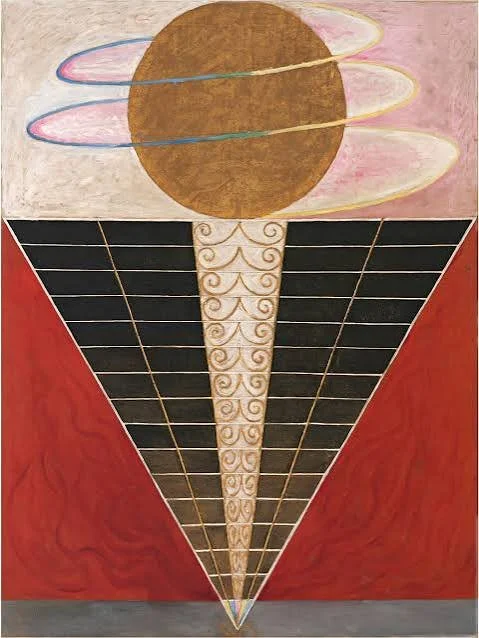
Hilma af Klint (1862-1944) developed a radical abstract language long before the canonical emergence of abstraction
The word apparatus carries theoretical weight. In Michel Foucault’s formulation of the dispositif, an apparatus is not a single institution or mechanism but a heterogeneous ensemble: discourses, institutions, regulations, architectural forms, administrative measures, scientific statements, and power relations arranged around a strategic function. The term is useful for art because the art world does not operate through one center. It operates through dispersed but interlocking sites of authority. The museum, the gallery, the collector’s home, the art fair booth, the auction saleroom, the curatorial panel, the MFA critique, the foundation grant, the magazine review, the catalogue essay, the Instagram post, and the private dinner are all part of the same field of production.
Pierre Bourdieu’s work on cultural capital and the field of cultural production helps clarify why this system is never simply economic. Art value is not produced only through money; it is produced through forms of distinction. A collector does not merely purchase an object. The collector participates in a system of taste, symbolic capital, and social position. A museum does not merely preserve objects. It converts certain objects into public memory. A gallery does not merely sell works. It manages the artist’s career, controls supply, cultivates desire, and narrates significance. The art world operates through the conversion of symbolic capital into economic capital and back again.
Howard S. Becker’s Art Worlds is also essential because it shifts attention from the isolated genius to the cooperative network. Art is not made by artists alone. It is made through systems of collaboration: fabricators, assistants, dealers, framers, installers, critics, printers, shippers, curators, collectors, conservators, editors, teachers, and audiences. The romantic image of solitary creation obscures the social conditions that make art possible. It also obscures the unequal distribution of those conditions.
Arthur Danto and George Dickie add another layer. Danto’s famous claim that something becomes art within an “artworld” points to the interpretive and institutional structures that enable an object to be received as art. Dickie’s institutional theory likewise argues that artworks are conferred status within a social institution. Whether one accepts these theories fully or not, they illuminate the central problem: art does not enter the world as self-evident. It becomes legible through frames of recognition.
These frames are not neutral. They are historically built, socially maintained, and economically reinforced. Museums, galleries, biennials, auction houses, critics, and collectors do not simply observe artistic value after the fact; they actively participate in its formation. The apparatus is therefore not external to art. It is part of the process through which art becomes publicly meaningful.
Yet the apparatus also produces scarcity. Not scarcity in the material sense alone, though scarcity is crucial to art markets, but scarcity of attention. Only a limited number of artists can be shown, reviewed, collected, funded, acquired, or canonized at any given time. In an age of extraordinary artistic production, visibility is perhaps the scarcest resource of all.
This scarcity is often misrecognized as merit. If an artist appears repeatedly in major exhibitions, is acquired by museums, receives critical attention, and commands high prices, the system begins to treat that artist’s prominence as evidence of inevitability. But prominence is not inevitability. It is the result of circulation through the apparatus.
The apparatus is recursive. Curators look to galleries. Galleries look to museums. Collectors look to curators. Auction houses look to collectors. Critics look to exhibitions. Museums look to donors and trustees. Art fairs look to galleries with market depth. Foundations look to institutional legitimacy. Each actor observes the others. Value emerges through this mutual observation.
This is why transparency matters. If the mechanisms of valuation remain opaque, the system can continue to represent itself as natural. If the mechanisms become visible, other forms of participation become imaginable.
The History of Exclusion and Canon Formation
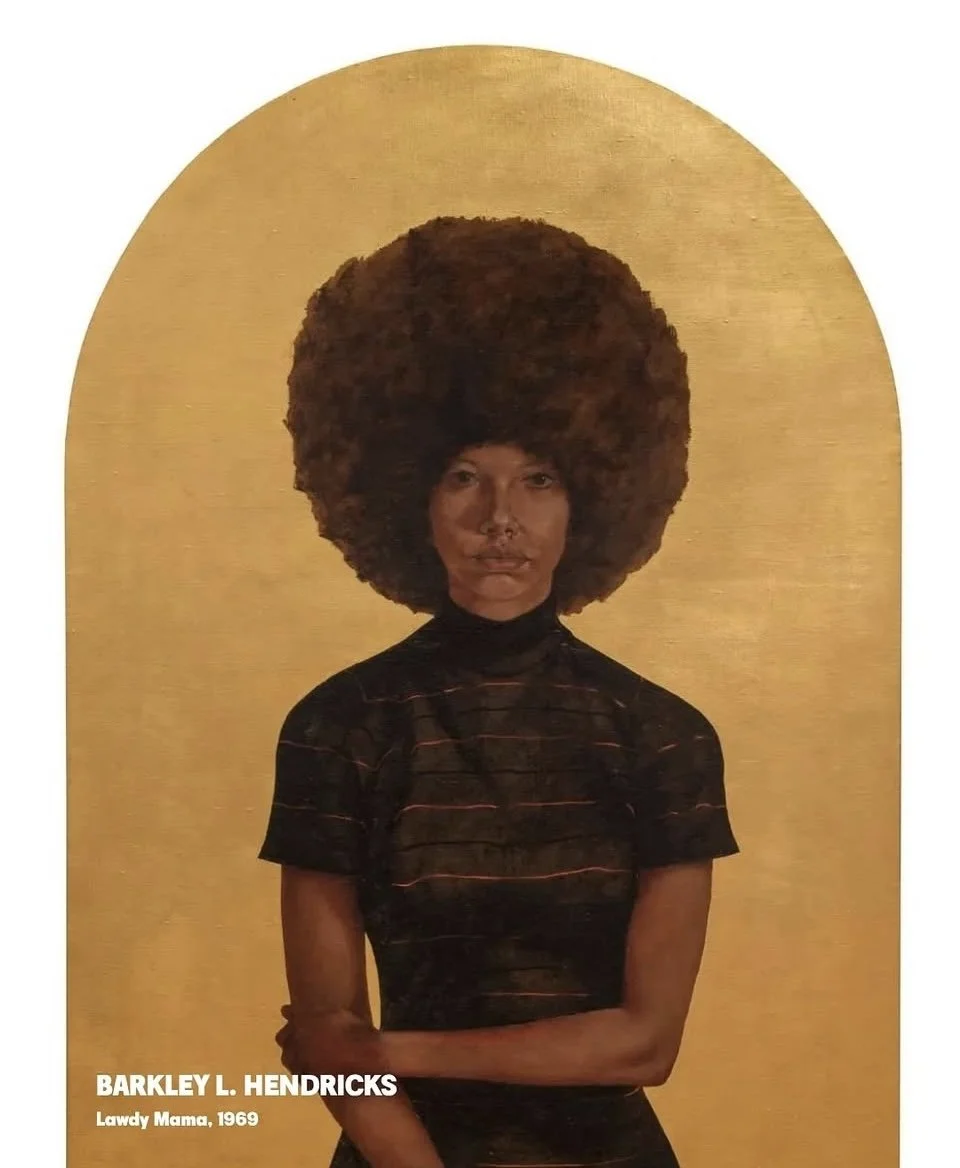

Pierre Huyghe’s Polyphonic Soulscapes 2026
Any serious discussion of access must begin historically. The unequal distribution of visibility in the contemporary art world did not emerge from nowhere. It descends from centuries of restricted training, restricted patronage, restricted mobility, and restricted authorship.
Linda Nochlin’s 1971 essay “Why Have There Been No Great Women Artists?” remains foundational because it refuses the terms of the question. Nochlin does not answer by identifying overlooked geniuses, though many existed. Instead, she demonstrates that greatness itself had been defined through institutions from which women were excluded. Access to academies, life drawing, professional training, public commissions, patronage networks, and critical recognition shaped the very conditions under which artistic greatness could be produced and acknowledged.
This is why Nochlin remains central to the present argument. She shows that exclusion is not merely a matter of prejudice after the fact. It is embedded in the structures that produce artistic possibility in the first place. If women were denied training in anatomy or barred from life drawing, they were not simply denied education; they were denied access to the dominant criteria by which artistic mastery was judged.
The Royal Academy in London offers a useful example. Angelica Kauffman and Mary Moser were among the founding members of the Royal Academy in 1768, yet women were later excluded from full participation in ways that reveal the contradictions of institutional inclusion. Laura Herford became the first woman admitted to the Royal Academy Schools in 1860, after submitting work under the initial “L. Herford,” which led assessors to assume the applicant was male. The anecdote is often repeated because it condenses the problem: the work could be admitted when gender was illegible; the artist became problematic when gender became known.
Griselda Pollock extends Nochlin’s intervention by examining how art history itself constructs difference through the categories it uses. The canon is not merely incomplete; it is structured by power. Pollock’s feminist art histories do not simply add women to existing narratives. They challenge the organizing principles of those narratives. Who counts as modern? What forms of labor count as artistic? Which spaces count as historically significant? Which forms of subjectivity become visible?
Amelia Jones further complicates the problem by foregrounding embodiment, performance, identity, and spectatorship. Her work helps us understand that the production of meaning is not located solely in the object. It emerges between bodies, viewers, institutions, histories, and discourses. This relational understanding becomes crucial when thinking about art as knowledge production rather than as commodity alone.
The case studies are well known but remain structurally important. Artemisia Gentileschi, a major Baroque painter of extraordinary force, was long interpreted through biography, trauma, and gender rather than fully integrated into the central narrative of Baroque painting. Hilma af Klint developed a radical abstract language before the canonical emergence of abstraction associated with Kandinsky, Mondrian, and Malevich, yet her work remained outside the dominant narrative for much of the twentieth century. Lee Krasner’s career was repeatedly filtered through her relationship to Jackson Pollock, despite her own major contributions to Abstract Expressionism. Alma Thomas, Faith Ringgold, Ana Mendieta, Betye Saar, and many others demonstrate that exclusion has operated through race, gender, geography, medium, and institutional expectation.
These examples are not exceptions to an otherwise fair system. They reveal how systems of recognition operate. The question is not whether omitted artists were talented enough. The question is why the apparatus failed to recognize, support, and transmit their work.
Canon formation is therefore not a passive record. It is an active technology of memory. It determines what is taught, collected, insured, conserved, published, and inherited. To be excluded from the canon is not merely to be excluded from fame. It is to be excluded from the future’s archive.
This is why contemporary efforts to revise the canon must go beyond symbolic correction. The point is not only to add women and artists of color to existing lists. The point is to examine the machinery that created scarcity in the first place. The task is not simply inclusion. The task is structural rethinking.
The Closed Circuit of Value

Agnes Denes Wheatfield – A Confrontation 1982 Battery Park Landfill, Manhattan, New York City
The contemporary art market produces value through a closed circuit of mutually reinforcing signals. Although each actor in the system appears to operate independently, the legitimacy of each actor is often confirmed by the others.
A gallery represents an artist and places work with collectors. A museum includes the artist in a group exhibition or retrospective. A critic writes about the work. A curator invites the artist into a biennial. A collector acquires the work. A foundation funds a project. An auction result establishes a public price. Another museum acquires. Another gallery expands the artist’s market internationally. The process begins to look like proof.
This circuit is not necessarily corrupt. Often it is sincere. Curators believe in the artists they select. Collectors love the works they acquire. Critics make serious judgments. Galleries invest years of labor in artists’ careers. But sincerity does not eliminate structure. The fact that the system is populated by serious people does not mean the system is open.
Olav Velthuis’s work on gallery pricing is useful here because it shows that art prices are social signals as much as market outcomes. Prices are not simply reflections of material cost or labor time. They are structured by reputation, career stage, gallery positioning, and collector demand. Sarah Thornton’s mapping of the art world similarly reveals the social choreography through which prestige circulates among auctions, critiques, fairs, magazines, studios, prizes, and biennials.
At the top of the market, uncertainty is managed through consensus. A collector considering a major acquisition wants reassurance: museum history, gallery depth, critical writing, collector peer validation, provenance, and price stability. The more signals converge, the safer the purchase appears. This is why already validated artists become more attractive. The apparatus reduces risk by reinforcing what it already knows.
The logic is circular but powerful. Museums help validate artists; validated artists attract collectors; collectors support museums; museum acquisitions increase market confidence; market confidence increases gallery power; gallery power supports more institutional exposure. The circuit becomes self-strengthening.
For emerging and under-recognized artists, the problem is not a lack of work. It is lack of access to the circuit. Many artists possess rigorous practices, exhibition histories, advanced training, and deep intellectual commitments. Yet without sustained visibility, their work remains difficult for collectors to evaluate. Without collectors, galleries hesitate. Without galleries, museums often hesitate. Without museums, collectors hesitate. The artist is caught outside the loop.
This is one of the central structural failures of the art world. It is not that the system contains no mechanisms for discovery. It does. But those mechanisms are narrow, highly competitive, geographically concentrated, and often dependent on social access. The number of artists graduating from art schools, maintaining studios, and producing serious work far exceeds the capacity of the dominant apparatus to absorb them.
The result is a paradox: the art world celebrates experimentation while its economic structure rewards prior validation. It speaks the language of risk while relying on systems that minimize risk for buyers. It valorizes originality while repeatedly concentrating attention around artists whose value has already been stabilized.
The Secondary Market and the Financialization of Art
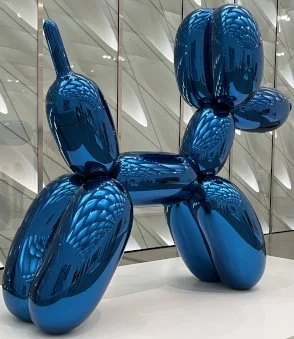
Jeff Koons 1994-2000 BalloonDog
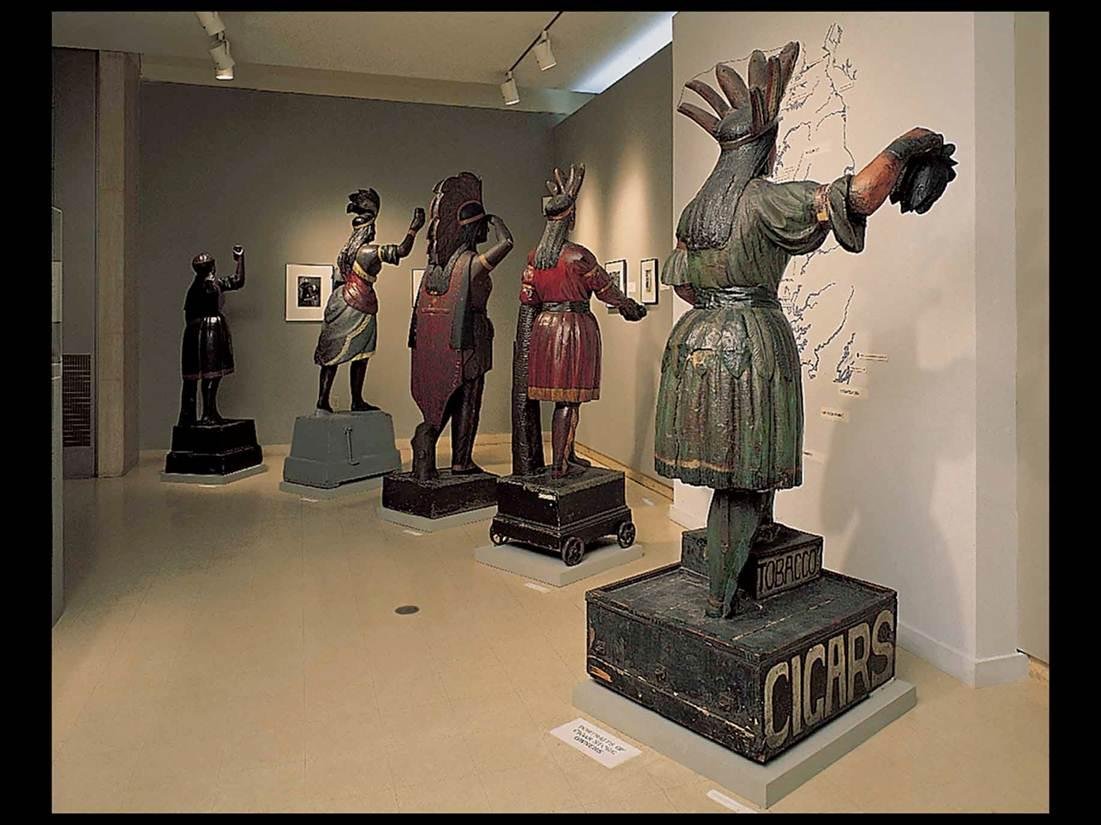
Fred Wlson, Mining the Museum series 1992-1993
If the closed circuit of value explains how legitimacy circulates, the secondary market explains how that legitimacy becomes publicly priced. The primary market introduces artworks into circulation through galleries, dealers, and direct artist sales. The secondary market resells works, often through auction houses such as Sotheby’s, Christie’s, and Phillips. The difference is decisive: the primary market often operates privately; the auction market produces public records.
Public pricing changes everything. An auction result transforms an artwork into a visible financial event. It creates a benchmark. Estimate, hammer price, buyer’s premium, provenance, bidding intensity, and press coverage all become part of the artwork’s economic identity. A work is no longer simply something collected. It becomes comparable, indexable, and narratable as an asset.
The Art Basel and UBS Global Art Market Report 2026 estimated global art market sales at $59.6 billion in 2025, with dealer sales at $34.8 billion and public auction sales at $20.7 billion. These figures matter not because they reduce art to money, but because they reveal the scale of the financial system surrounding art. Art is one of the few categories of luxury goods that simultaneously functions as aesthetic experience, intellectual object, social credential, philanthropic instrument, and store of value.
Auction houses do not merely sell art. They create public confidence in value. They generate catalogues, estimates, guarantees, evening sales, specialist narratives, and theatrical events that convert objects into market signals. The auction room is a stage on which value is performed.
The secondary market also affects living artists in complex ways. A strong auction result can increase demand, expand visibility, and validate a market. A premature or weak auction result can destabilize confidence. Galleries often work to prevent speculative flipping because rapid resale can damage long-term career development. Yet the existence of public auction records exerts pressure on primary-market pricing, collector behavior, and institutional perception.
Michael Shnayerson’s Boom: Mad Money, Mega Dealers, and the Rise of Contemporary Art is useful here because it traces the rise of powerful dealers and the transformation of contemporary art into a global, high-stakes market, with figures such as Larry Gagosian embodying the expanded scale of postwar and contemporary art commerce. The mega-dealer does not simply sell from a gallery. The mega-dealer operates across continents, manages estates, competes with auction houses, organizes museum-quality exhibitions, publishes catalogues, and cultivates collectors at the highest levels. At this scale, the boundary between market and institution becomes porous.
The financialization of art does not mean that collectors are cynical or that artworks lose meaning. Rather, it means that meaning and money become entangled. A painting may be loved, studied, loaned, insured, collateralized, donated, inherited, resold, and written into tax and estate structures. The same object can be spiritual, intellectual, social, and financial.
Thorstein Veblen’s theory of conspicuous consumption remains relevant because luxury objects communicate status. Yet art complicates Veblen. A major artwork is not merely expensive. It also carries intellectual distinction. It signals taste, historical knowledge, cultural participation, and proximity to institutions. Art is perhaps the most symbolically dense luxury good because it combines scarcity, visibility, narrative, authorship, cultural legitimacy, and financial value.
This is why the secondary market must be part of any serious theory of the apparatus. It is where symbolic value becomes public financial value. It is where private confidence becomes visible price. It is where the artist’s name can become a market category.
The Exhibitionary Complex: Biennials, Documenta, Art Fairs, and the Manufacturing of Visibility
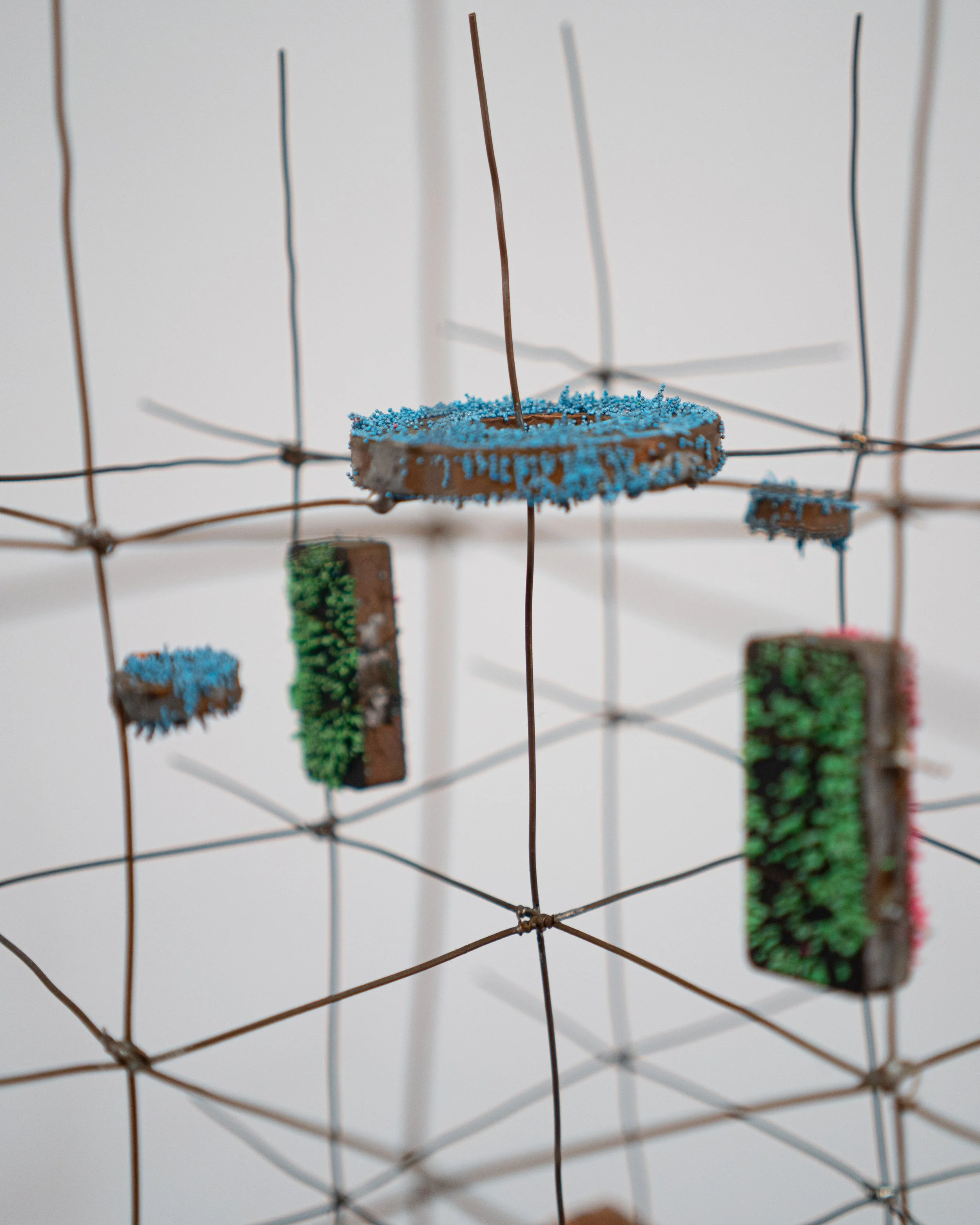
Ryan DaWalt 2026
Museums are only one part of the apparatus. The exhibitionary complex - biennials, Documenta, art fairs, invitationals, survey exhibitions, and international mega-exhibitions - is one of the most powerful systems for manufacturing visibility.
Tony Bennett’s concept of the “exhibitionary complex” describes the modern exhibition as a technology of public display, knowledge, and governance. Although Bennett’s focus includes museums, expositions, and public institutions, the concept applies powerfully to contemporary art. Large-scale exhibitions do not simply present culture. They organize cultural attention. They teach publics what counts as important. They produce forms of visibility that can be converted into institutional and market value.
The Venice Biennale, first held in 1895, remains one of the world’s most prestigious recurring exhibitions. Documenta, founded by Arnold Bode in Kassel in 1955, emerged in the aftermath of Nazism and World War II as part of an effort to reconnect Germany with modern art and international cultural discourse. The Whitney Biennial, initiated in 1932 as an invitational survey of contemporary American art, has long functioned as a barometer of American contemporary practice.
These exhibitions matter because participation becomes credential. To be included in Venice, Documenta, the Whitney Biennial, Gwangju, São Paulo, or another major international exhibition is to enter a system of intensified attention. The artist receives press, institutional recognition, catalogue documentation, collector interest, curatorial visibility, and future invitations. The invitation itself produces value.
Okwui Enwezor’s Documenta11 in 2002 is especially important because it transformed the model of the mega-exhibition by emphasizing postcolonial, global, and discursive frameworks. Enwezor did not merely select artists; he restructured the exhibition as a platform for global intellectual inquiry. Documenta11 demonstrated that large exhibitions can operate as curatorial arguments, not just surveys. It also revealed that global visibility is not simply a matter of geographic inclusion but of rethinking the categories through which contemporary art is understood.
Claire Bishop’s work on participation and contemporary exhibition culture helps complicate claims about access. Participation can expand agency, but it can also become a curatorial form that absorbs social relations into institutional spectacle. Maria Lind’s curatorial writing emphasizes the exhibition as a site of production, mediation, and knowledge rather than a neutral display format. Carol Duncan’s analysis of museums as ritual spaces reminds us that exhibitions shape behavior, identity, and public meaning through spatial and institutional choreography.
Art fairs operate differently but no less powerfully. Art Basel, Frieze, TEFAF, The Armory Show, FIAC’s successors, and regional fairs are markets, but they are also information systems. They allow collectors, advisors, curators, galleries, artists, critics, and journalists to observe one another. The booth becomes a compressed stage of value. Which gallery has which location? Which artists are foregrounded? Which works sell early? Which museums attend? Which collectors are seen? Which artists appear across multiple booths?
Art fairs are not merely sites of exchange. They are sites of signaling.
The apparatus is watching itself. Everyone observes everyone else’s acts of recognition. This recursive observation is essential to value production. Attention precedes price, but attention is itself produced through invitation, placement, repetition, and social confirmation.
This is the key proposition: the market follows attention, but attention is never neutral. It is organized.
The Artist as Commodity
Once visibility circulates through the apparatus, the artist becomes more than a maker. The artist becomes a symbolic asset. The artwork is a commodity, but the artist’s name becomes a brand, a category, a market trajectory, a biographical narrative, and a promise of future value.
Guy Debord’s theory of spectacle helps explain how social relations become mediated by images. In the contemporary art world, the artist’s image circulates alongside the work: studio photographs, interviews, installation shots, fair booths, openings, dinners, biographies, press releases, and social-media fragments. The artist becomes legible through a public narrative. The more coherent and compelling the narrative, the easier it is for the apparatus to circulate.
This does not mean that artists cynically invent personas. Often the branding of the artist is done around them and sometimes against them. The market requires readability. It likes a story: the prodigy, the rebel, the survivor, the intellectual, the outsider, the political witness, the formal innovator, the mystic, the bad boy, the feminist pioneer, the postcolonial voice, the technological visionary. These narratives may be partly true, but they also reduce complexity into collectible form.
bell hooks is crucial here because she insists that representation is never innocent. Images participate in systems of power. Who gets represented, how, for whom, and under what conditions are political questions. The art market can celebrate difference while commodifying it. It can turn identity into a selling category while leaving structural access unchanged.
Judith Butler’s theory of performativity also helps illuminate the artist’s public role. Artistic identity is not simply possessed; it is repeatedly enacted through institutional contexts. The artist statement, the studio visit, the lecture, the interview, the opening, the CV, and the archive all contribute to the performance of artistic legitimacy. The artist becomes recognizable through repeated acts within the apparatus.
This is especially important for artists who do not already fit established models of genius, seriousness, or market confidence. Some artists are asked to explain themselves constantly. Others are allowed opacity. Some are permitted to be universal. Others are made representative of identity, trauma, geography, or community. The commodity form does not treat all artists equally.
At the high end, the artist’s name can become a financial sign. A Basquiat, a Richter, a Kusama, a Hockney, a Bourgeois, a Sherman, a Gormley, a Gagosian-represented artist, a Venice artist, a Documenta artist, a Whitney Biennial artist: each phrase carries market information. The name condenses networks of validation.
The artist as commodity is therefore not merely a problem of money. It is a problem of legibility. The system rewards artists whose work, identity, and narrative can circulate efficiently through galleries, institutions, media, and markets. Practices that are slower, more complex, more local, less easily branded, or less aligned with current discourse may struggle for visibility even when they are intellectually profound.
Art as Knowledge Production
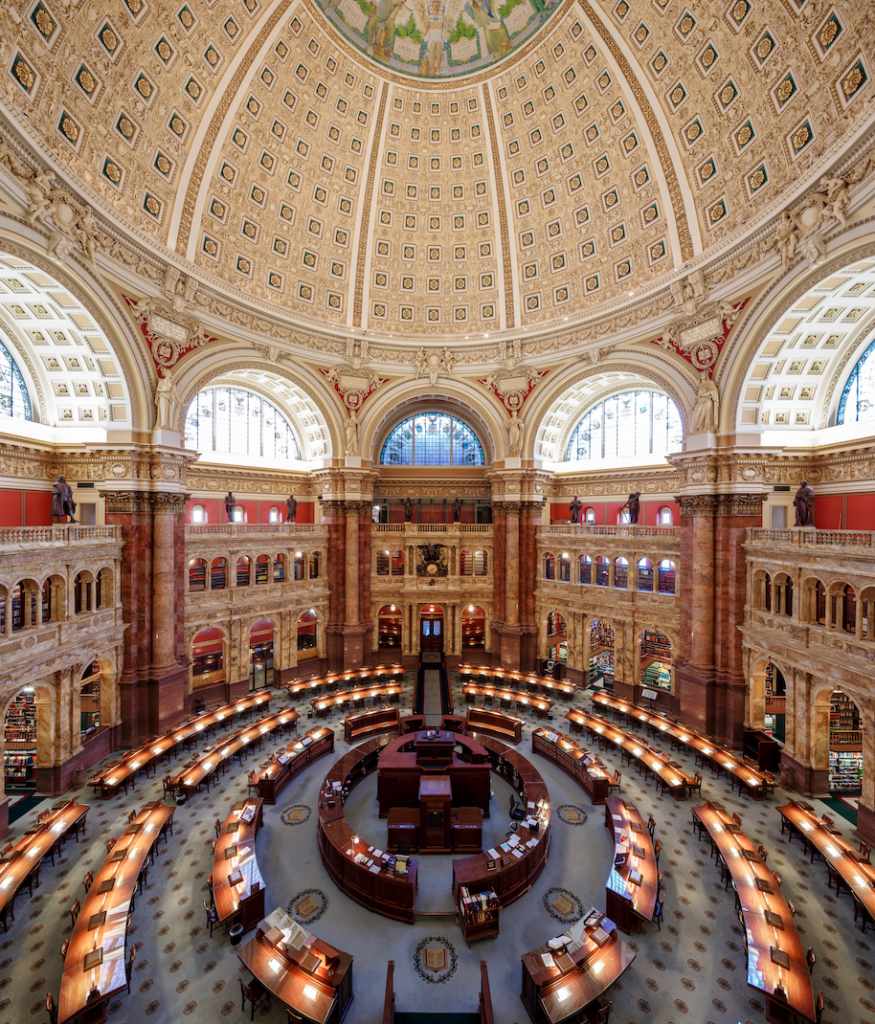
Library of Congress, Washington D.C.
To analyze art only as commodity is to miss its deepest function. Art is also a form of knowledge production. It is a way of thinking through materials, images, bodies, spaces, systems, affects, histories, technologies, and possible futures.
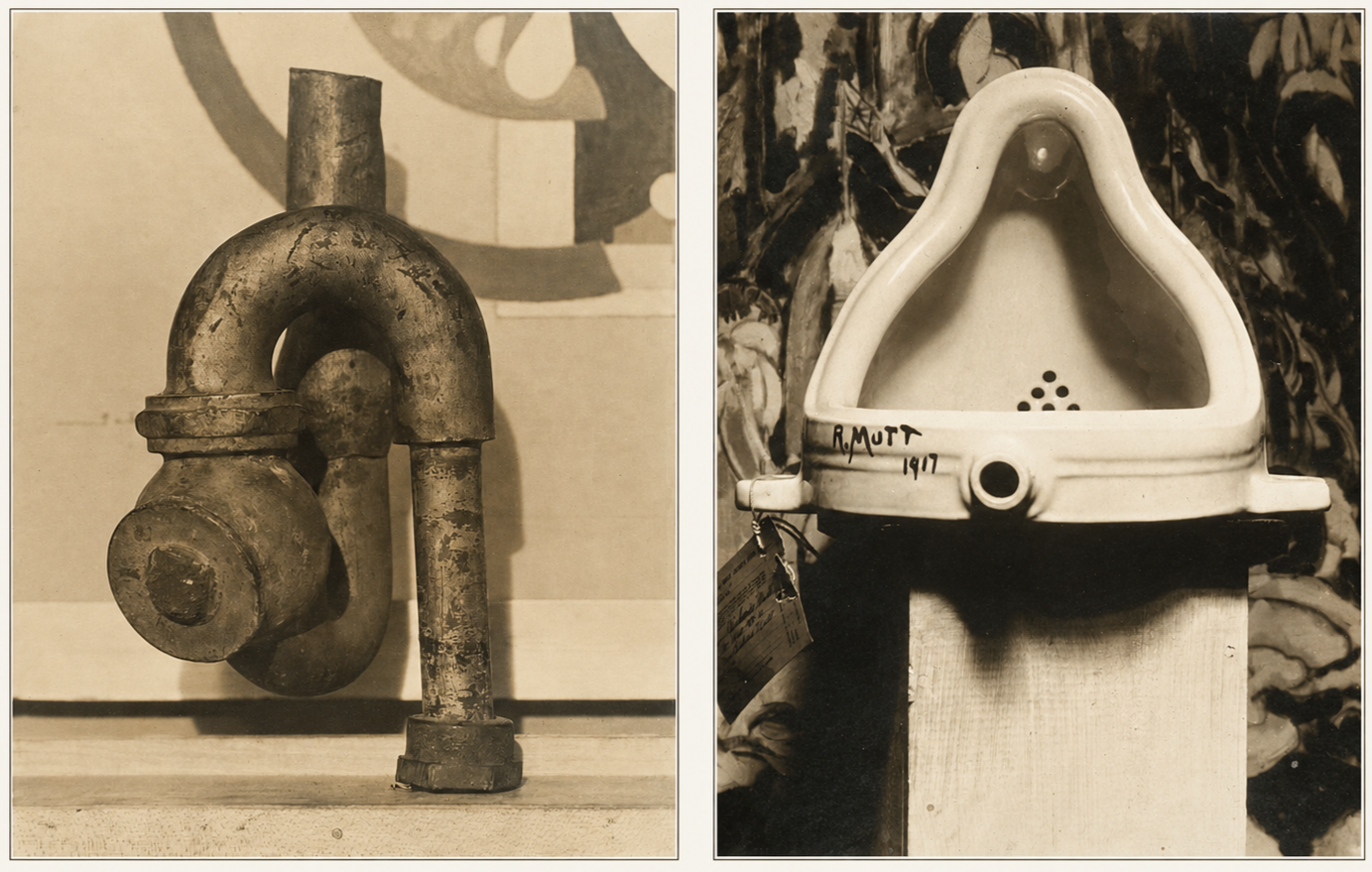
Marcel Duchamp is central to this argument because he transformed the artwork from an object of visual mastery into a philosophical proposition. Beginning in the 1910s, the readymade displaced craft as the sole criterion of art and introduced a radical question: what makes something art? Duchamp’s gesture did not eliminate the object. It relocated the object’s meaning within systems of selection, context, language, authorship, and institution. In doing so, Duchamp anticipated many of the central concerns of contemporary art: conceptuality, institutional framing, irony, systems logic, authorship, spectatorship, and the instability of value.
Duchamp’s significance is not that he made art intellectual instead of visual. It is that he revealed that art had always depended on structures of recognition. The readymade exposes the apparatus by making the frame visible. It asks us to see that meaning is not inherent in the object alone. Meaning emerges through relation.
Lucy Lippard’s work on the dematerialization of the art object extends this transformation. Conceptual art shifted attention from objecthood toward idea, process, documentation, language, and system. Lippard also provides a crucial bridge between conceptual practice, feminist politics, alternative spaces, and activist criticism. Her work makes clear that the expansion of art’s language is inseparable from the expansion of its social and political possibilities.
Donna Haraway’s concept of situated knowledges is equally important. Knowledge is not produced from nowhere. It is embodied, partial, relational, and accountable. This has profound implications for art. Artists do not produce universal statements from outside the world; they produce situated investigations from within specific histories, bodies, technologies, and environments. The strength of art as knowledge lies precisely in its capacity to think from situated positions without reducing those positions to fixed identity.
Bruno Latour’s actor-network theory, Karen Barad’s agential realism, and Rosi Braidotti’s posthuman thought all help us understand why contemporary art so often works across human and nonhuman systems. Artists today investigate climate, artificial intelligence, animal consciousness, extraction, migration, surveillance, biotechnology, archives, ruins, computation, ecology, and planetary interdependence. These practices are not illustrations of existing theory. Often they are theory by other means.
Art can prefigure language. Before a social condition has a name, artists may sense it formally. Before a political structure becomes visible, artists may model its effects spatially, materially, or performatively. Before a technology is fully understood, artists may test its emotional and philosophical consequences. Art does not merely reflect culture. It diagnoses, anticipates, and invents.
This is why artists often appear ahead of their time. They are not predicting the future in a mystical sense. They are working at the threshold where perception, material, and concept encounter emerging conditions.
The history of modern and contemporary art can be read as a sequence of epistemological ruptures. Cubism challenged single-point perspective and proposed simultaneity. Dada challenged rationality after the catastrophe of World War I. Surrealism investigated unconscious life. Constructivism linked art to social organization and technology. The Bauhaus explored integration of art, design, architecture, and industry. Abstract Expressionism positioned painting as event and existential field. Pop exposed commodity culture. Minimalism redefined objecthood and space. Conceptual art privileged idea and language. Feminist art challenged the politics of the body and domestic labor. Institutional critique turned the museum itself into subject matter. Postcolonial, ecological, and digital practices continue to expand what art can know.
Art is therefore not supplementary to philosophy or science. It is a parallel mode of inquiry. It proceeds through embodied speculation, material experiment, symbolic compression, affective intelligence, and formal invention. It produces knowledge that cannot always be translated immediately into discursive language.
Missing Histories, Missing Futures: The Epistemology of Access

If art produces knowledge, then exclusion has consequences beyond career inequality. It restricts cultural intelligence. When artists are denied access to visibility, society loses more than objects. It loses ways of seeing, feeling, thinking, and imagining.
This is the epistemology of access.
An epistemology of access asks how knowledge is shaped by who is allowed to participate in its production and circulation. In art, this means asking not only which artists are shown, but which forms of thought become available to publics. When institutions repeatedly amplify narrow groups, they do not simply exclude individuals. They narrow the field of possible knowledge.
Linda Nochlin’s intervention becomes even more radical in this light. The question is not simply why there were no “great women artists” according to inherited criteria. The question is how many forms of knowledge failed to circulate because women and others were denied the conditions through which greatness could be produced and recognized.
bell hooks’s writing on margins as sites of radical possibility is useful here. Margins are not merely spaces of deprivation; they can be spaces of critical vision. But marginality becomes politically and culturally productive only when it can speak, circulate, and transform the center. If the apparatus extracts marginal narratives without transforming access, it reproduces inequality under the sign of inclusion.
Haraway’s situated knowledge also matters because it rejects the fantasy of the view from nowhere. A more expansive art world is not desirable only because fairness requires it. It is desirable because knowledge improves when more situated perspectives participate in its production.
This point should not be reduced to diversity rhetoric. The issue is not demographic optics. The issue is epistemic range. Different histories produce different questions. Different bodies perceive different pressures. Different geographies reveal different systems. Different social positions generate different forms of urgency.
When Artemisia Gentileschi is marginalized, Baroque painting is diminished. When Hilma af Klint is excluded from narratives of abstraction, modernism is misdescribed. When Lee Krasner is subordinated to Pollock, Abstract Expressionism becomes narrower than it was. When Alma Thomas, Faith Ringgold, Ana Mendieta, Betye Saar, Howardena Pindell, Lorraine O’Grady, and others are treated as supplementary rather than central, American art history loses conceptual force.
Missing histories produce missing futures. If artists are not supported, their work may not be preserved. If their work is not preserved, it may not be studied. If it is not studied, it may not influence future artists. Exclusion breaks transmission.
The task, then, is not only to recover the past. It is to alter the future’s conditions of memory.
The Collector as Cultural Participant

Critiques of the art market often cast collectors as villains. This is too simple. Collectors participate in systems of inequality, but they also participate in the creation and transmission of culture. The problem is not collecting. The problem is concentrated access to collecting, concentrated influence, and insufficient collector education.
Patronage has always shaped art history. Renaissance workshops, modernist experimentation, avant-garde publications, artist-run spaces, private museums, and contemporary commissions have depended on people willing to support art before consensus is secure. Gertrude Stein and her circle helped shape early modernism. Peggy Guggenheim supported and exhibited major figures of the European and American avant-gardes. Countless less famous patrons have sustained artists whose work later became historically significant.
Collectors can do more than purchase objects. They can preserve practices, fund experimentation, loan works, support publications, introduce artists to institutions, commission new projects, and create archives. A collector who understands art as knowledge production becomes a participant in the circulation of ideas.
This reframing is important. If art is only a luxury asset, the collector is primarily an investor. If art is also a knowledge system, the collector is a steward of cultural inquiry. These roles can coexist, but the balance matters.
The contemporary art world needs more collectors, not fewer. More precisely, it needs a broader collector base: people who buy at different levels, support emerging and under-recognized artists, learn how value is produced, understand the relationship between patronage and cultural memory, and see collecting as participation rather than mere acquisition.
The question is how to cultivate ten thousand informed collectors rather than depend on five hundred powerful ones.
This is also where market transparency becomes constructive. If collectors understand how galleries build careers, how auction results affect artists, how museum acquisition changes perception, how provenance operates, how speculation can harm living artists, and how sustained support matters, they can participate more responsibly. Collector education is not peripheral. It is central to opening the circle.
Collectors need not be ultra-wealthy. A collector can begin with works on paper, editions, small paintings, ceramics, photographs, publications, or direct support of artist projects. What matters is not only the price point but the relationship to value. Collecting can be a form of attention, commitment, and belief.
Opening the Circle: Battery Journal and the Future of Cultural Value
Anna Ehrsam Nomadic Structure / System for Living. A speculative model of cultural infrastructure exploring mobility, participation, habitation, and alternative forms of social organization.
If the apparatus produces value through visibility, discourse, and circulation, then alternative infrastructures must also produce visibility, discourse, and circulation. They cannot remain purely oppositional. They must build.
Battery Journal is positioned to function not simply as a publication, but as a cultural infrastructure. Its work can include criticism, interviews, documentary production, salons, collector education, artist profiles, public conversations, archival documentation, and community formation. Each of these activities participates in value creation. The difference is that value creation can be directed toward broadening access rather than reinforcing scarcity.
The Battery Journal Salon Series can operate as a live site of discourse: artists, curators, collectors, writers, scholars, and audiences in conversation. The salon format matters because it restores relationality. It allows ideas to circulate through speech, presence, questions, disagreement, and shared attention. It creates a space between the university, the museum, the gallery, and the market.
The Collectors Club can become a mechanism for expanding patronage. Not by imitating elite collector circles, but by educating new collectors about how to look, how to buy, how to support artists, how to understand materials and process, how to read a practice over time, and how to participate ethically in value creation. A collector club can demystify the market while creating real economic support for artists.
The Art World documentary project can make the apparatus visible. Documentary form is especially suited to this task because it can show the social choreography of the art world: openings, studios, fairs, collectors, conversations, installations, negotiations, and private forms of labor that usually remain unseen. It can reveal how value is made without reducing art to money.
Together, these initiatives form a constructive model:
Publish serious criticism and scholarship.
Document artists and ideas.
Convene live conversations.
Educate collectors.
Create archives.
Build relationships between artists and supporters.
Make mechanisms transparent.
Expand participation in cultural value.
This is not anti-market. It is anti-exclusion. It recognizes that markets exist and that artists need economic support. But it refuses to accept that the existing market should be the only mechanism through which value becomes visible.
Battery Journal’s role is not to replace museums, galleries, biennials, or collectors. It is to widen the field in which artists, ideas, and audiences meet. It is to create additional pathways through which recognition can begin.
The most important cultural work of the next decade may not be discovering more talent. Talent is everywhere. The more urgent task is building infrastructures capable of recognizing, supporting, and transmitting that talent before the market has already decided where value belongs.
Conclusion: Toward a More Expansive Art World
The art world is not a single place. It is an apparatus: institutional, social, economic, symbolic, and historical. It produces visibility. It produces legitimacy. It produces value. It also produces exclusion.
The task is not to deny value, reject collectors, dismiss museums, or romanticize marginality. The task is to make the mechanisms visible so that they can be expanded.
Art is a commodity, but it is not only a commodity. Art is also knowledge production, speculative research, cultural diagnosis, philosophical inquiry, and future-making. If this is true, then access to art’s systems of visibility is not a luxury concern. It is a question of cultural intelligence.
When artists are excluded, societies lose more than artworks. They lose possible ways of thinking. They lose languages that might have emerged. They lose futures that might have been imagined.
Opening the circle means cultivating new collectors, new publics, new publications, new salons, new archives, new documentary forms, and new forms of patronage. It means recognizing that value is not found fully formed. It is made through attention, discourse, care, support, and transmission.
The question is no longer who belongs inside the art world.
The question is how expansive the art world is willing to become.
Notes
Selected Bibliography
Art Basel and UBS. The Art Basel and UBS Global Art Market Report 2026. Authored by Clare McAndrew, Arts Economics.
Barad, Karen. Meeting the Universe Halfway: Quantum Physics and the Entanglement of Matter and Meaning. Durham: Duke University Press, 2007.
Becker, Howard S. Art Worlds. Berkeley: University of California Press, 1982.
Bennett, Tony. “The Exhibitionary Complex.” New Formations 4 (Spring 1988): 73-102.
Bishop, Claire. Artificial Hells: Participatory Art and the Politics of Spectatorship. London: Verso, 2012.
Bourdieu, Pierre. Distinction: A Social Critique of the Judgement of Taste. Cambridge, MA: Harvard University Press, 1984.
Bourdieu, Pierre. The Rules of Art: Genesis and Structure of the Literary Field. Stanford: Stanford University Press, 1996.
Broude, Norma, and Mary D. Garrard, eds. The Power of Feminist Art. New York: Harry N. Abrams, 1994.
Butler, Judith. Gender Trouble: Feminism and the Subversion of Identity. New York: Routledge, 1990.
Danto, Arthur C. “The Artworld.” The Journal of Philosophy 61, no. 19 (1964): 571-584.
Debord, Guy. The Society of the Spectacle. New York: Zone Books, 1994.
Dickie, George. Art and the Aesthetic: An Institutional Analysis. Ithaca: Cornell University Press, 1974.
Duncan, Carol. Civilizing Rituals: Inside Public Art Museums. London: Routledge, 1995.
Enwezor, Okwui. Documenta11_Platform 5: Exhibition. Ostfildern-Ruit: Hatje Cantz, 2002.
Foucault, Michel. Power/Knowledge: Selected Interviews and Other Writings, 1972-1977. New York: Pantheon, 1980.
Haraway, Donna. “Situated Knowledges.” Feminist Studies 14, no. 3 (1988): 575-599.
hooks, bell. Art on My Mind: Visual Politics. New York: New Press, 1995.
Jones, Amelia. Body Art/Performing the Subject. Minneapolis: University of Minnesota Press, 1998.
Latour, Bruno. Reassembling the Social. Oxford: Oxford University Press, 2005.
Lind, Maria. Selected Maria Lind Writing. Berlin: Sternberg Press, 2010.
Lippard, Lucy R. Six Years: The Dematerialization of the Art Object from 1966 to 1972. New York: Praeger, 1973.
Nochlin, Linda. “Why Have There Been No Great Women Artists?” ARTnews 69, no. 9 (January 1971): 22-39, 67-71.
Pollock, Griselda. Vision and Difference. London: Routledge, 1988.
Shnayerson, Michael. Boom: Mad Money, Mega Dealers, and the Rise of Contemporary Art. New York: PublicAffairs, 2019.
Thornton, Sarah. Seven Days in the Art World. New York: W. W. Norton, 2008.
Velthuis, Olav. Talking Prices: Symbolic Meanings of Prices on the Market for Contemporary Art. Princeton: Princeton University Press, 2005.