Electromagnetic Dynamics: Anna Ehrsam + Ryan DaWalt +Si Golraine
Electromagnetic Dynamics in Art
Interview by Anna Ehrsam with Ryan DaWalt and Si Golraine
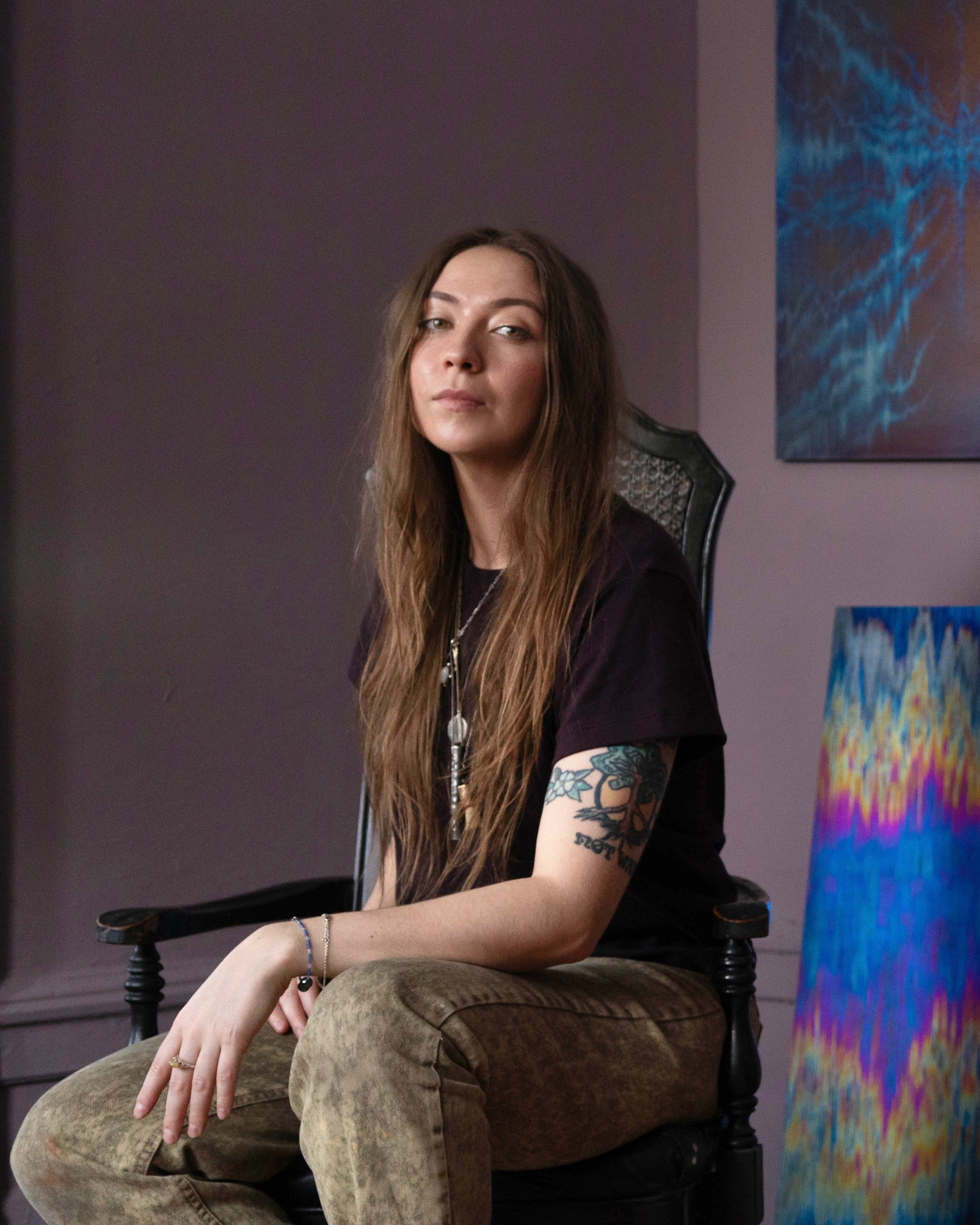
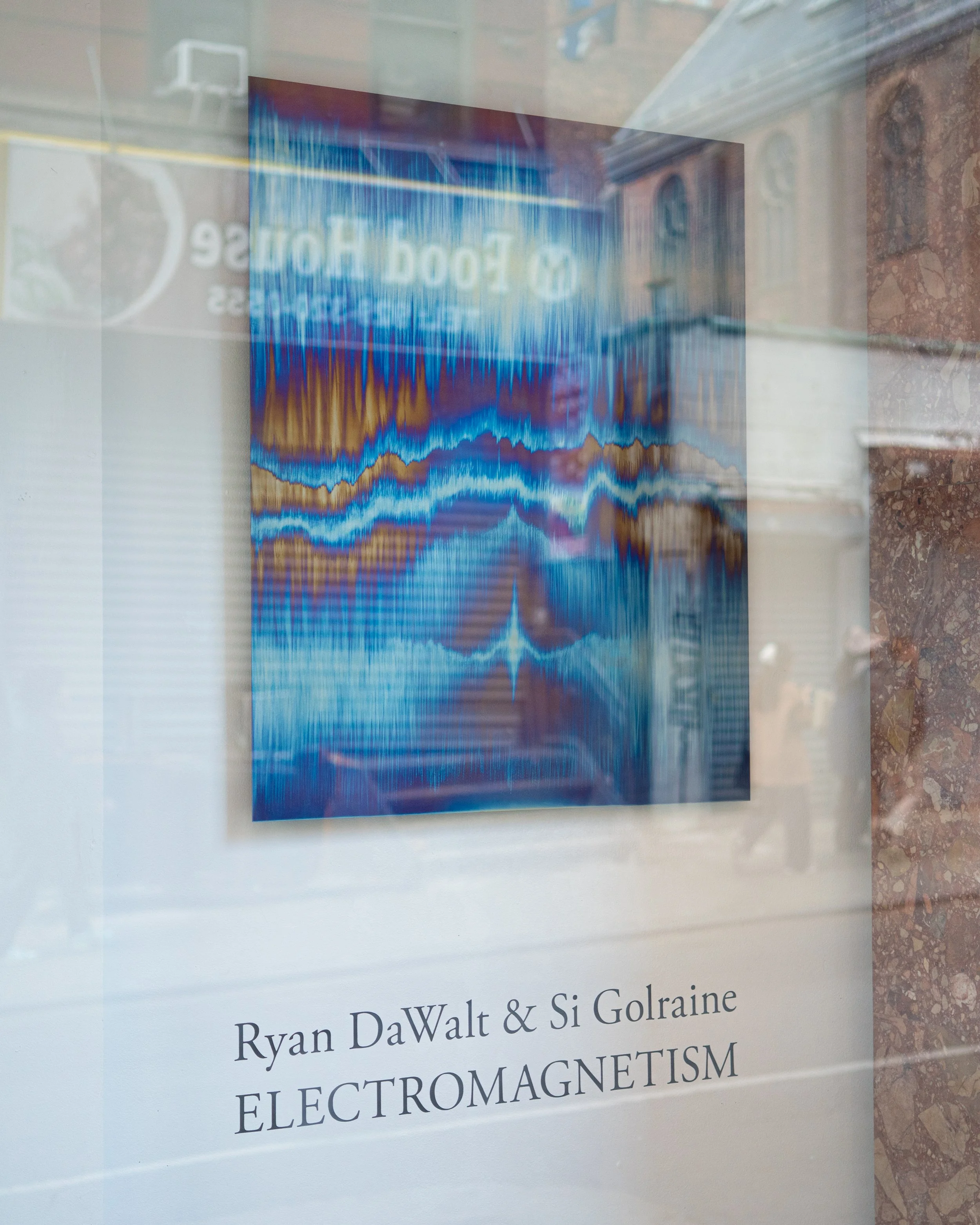
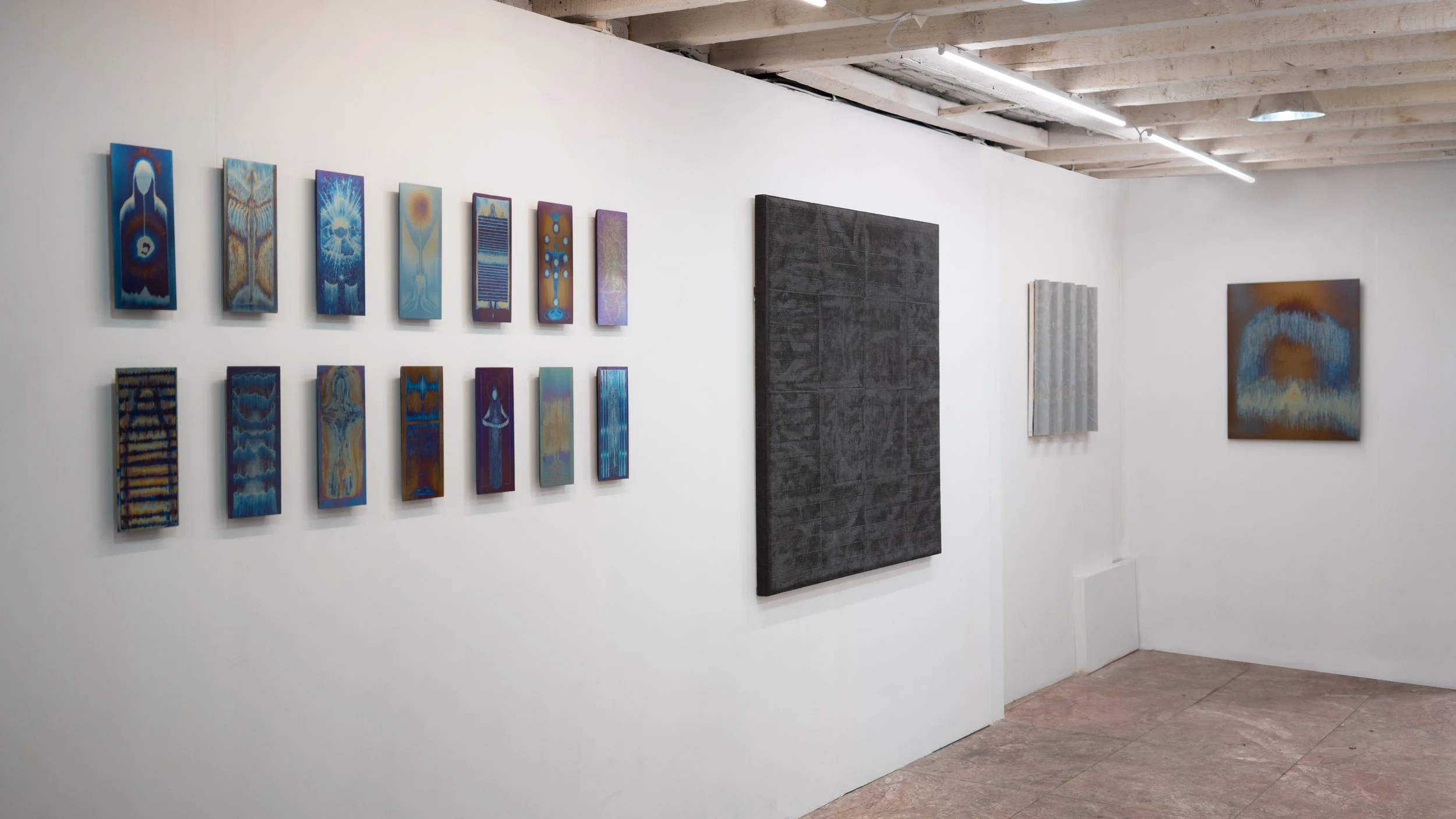
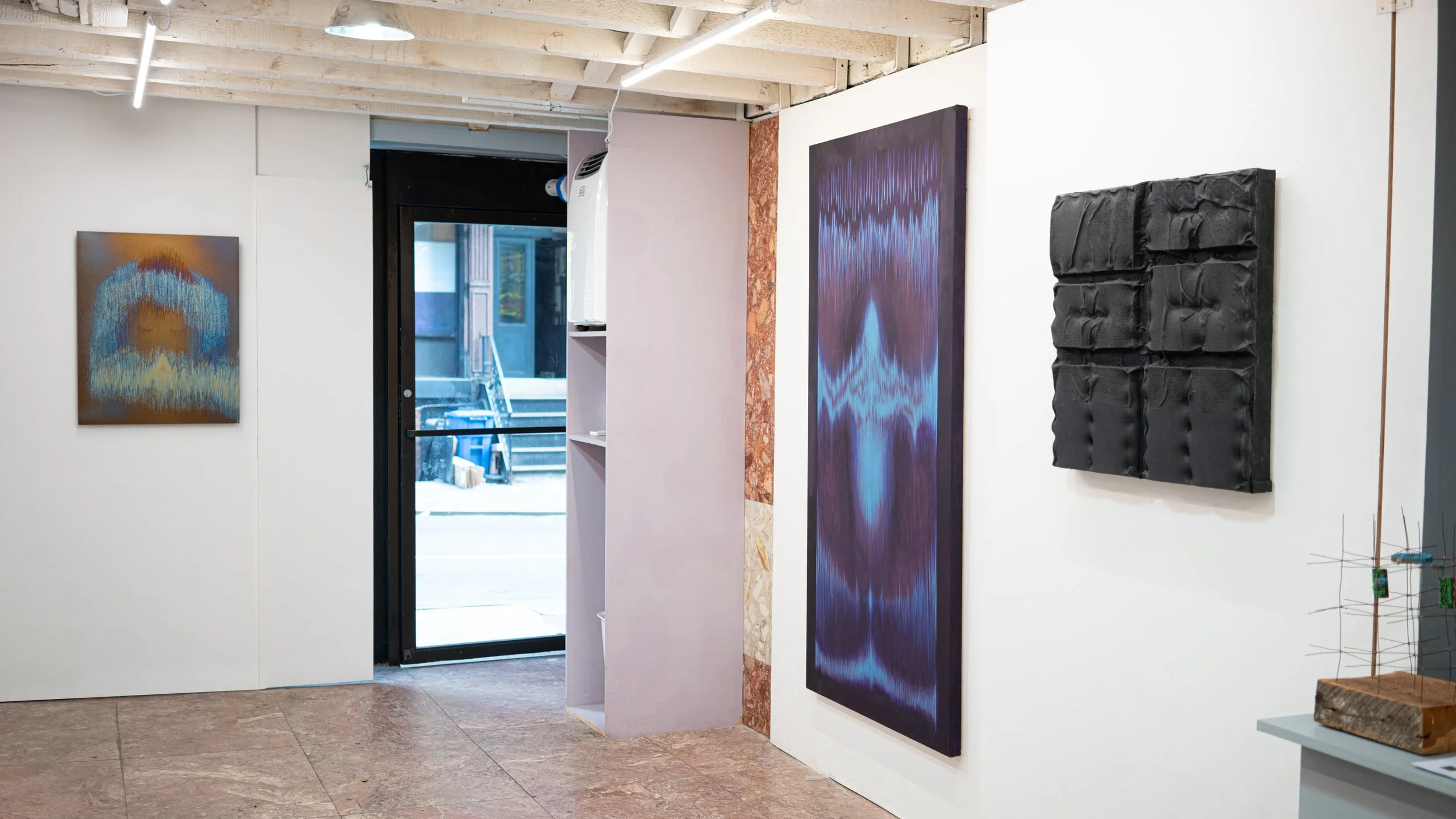
I had the pleasure of interviewing New York based artists Ryan DaWalt and Si Golraine at Gloria’s Project Space during their exhibition, encountering two distinct practices linked by a shared engagement with electromagnetism. Working through live electrical current, Si Golraine channels voltage through an electrified brush, using a conductive medium on titanium to translate energy directly into colored patina. Her process is durational and present, less about control than attunement, riding electromagnetic flow as it moves through body, tool, and surface. This work frequently unfolds in dialogue with sound, including live performance with musician, composer, and producer Gerry Gonzales. Together, as Sestra Kuya, Golraine and Gonzales invented and engineered a custom process in which raw electricity, applied through a brush to titanium sheets, generates shifting colors while the same current is transmitted into sound through modular synthesis. The result is a simultaneous act of visual and sonic creation.
In contrast and resonance, DaWalt approaches the electromagnetic spectrum through sculpture, optics, magnetism, sound, and screen-based technologies. During the live performance at Gloria’s Project Space, he joined Si Gloraine using Psytrekken, an instrument of his own invention: an electromagnetic field sensor and resonator that reads ambient magnetic waves and triggers processed synthesizer sound. Across object-based inquiry, spectral color, LCD displays, and sonic systems, DaWalt investigates how electromagnetic forces shape perception, probing the relationship between machine optics, sound, and the human optic nerve. Together, their practices do not merge but resonate - distinct investigations into how invisible forces become known through material, sound, and sight.
Ryan DaWalt
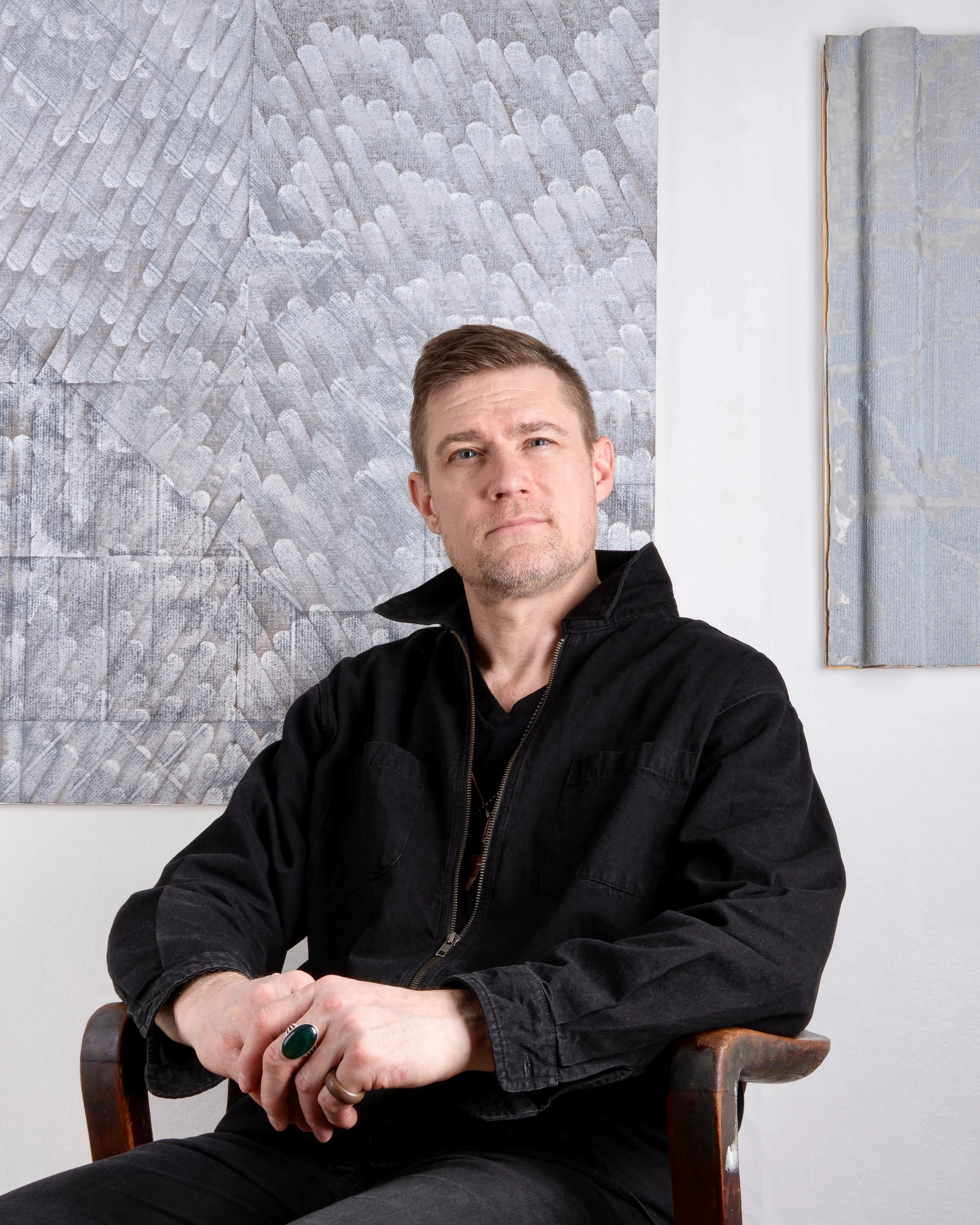
Ryan DaWalt is a multidisciplinary artist whose work investigates electromagnetism as a perceptual, bodily, and aesthetic field. For over two decades, he has worked with magnetic force and the full electromagnetic spectrum, from the narrow bandwidth of visible light to invisible waves that register through sound, vibration, and sensation. His practice spans sculpture, screen-based architecture, optics, sound, performance, ultraviolet light, video, and the inventive misuse of both new and obsolete technologies. DaWalt understands electromagnetic forces not as purely mechanical phenomena but as biodynamic fields that move through bodies, nervous systems, and cellular structures, shaping perception beyond the optical. Influenced by Marshall McLuhan’s assertion that technology extends human neurology, his work proposes aesthetic experience as a mode of attunement to imperceptible forces - where reception, transmission, and neutrality exist in constant flux.
Si Golraine
Si Golraine is a multidisciplinary artist whose work centers on electricity as both material and collaborator. Using raw electrical voltage as a medium, she develops processes that generate sound and color simultaneously, most notably by channeling current through titanium to alter its surface at a molecular level, producing iridescent, light-responsive color fields. Her practice embraces electricity’s unpredictability, treating energy as an intelligence to attune to rather than a force to control. Grounded in eleven years of classical music training and informed by frequency medicine, Golraine’s work is inherently polyphonic - linking visual, sonic, bodily, and cognitive perception through shared electrical signals. Born in Ukraine, her background spans music, theater, painting, and restoration. She is the co-founder of Sestra Kuya with musician Gerry Gonzales and the creator of Anophony, a system translating voltage into synchronized sound and color.
Can you tell me about your background and the formative experiences that first drew you toward working with sound, light, EMS, and your material processes?
R: I grew up in rural Indiana. The landscape has had a lasting impact on me. Northern rural Indiana has been inhabited by Indigenous peoples for thousands of years, spanning prehistoric cultures and later historic tribal nations. The landscape was scraped flat by the glaciers and is currently gridded with country roads and filled in with rows and rows of corn, soy, and wheat. I remember riding my bike out on the country roads and seeing these field lines and hearing the very loud buzzing of the powerlines and thinking about what it once was. My father used to tell me stories about the native american tribes from the region. My uncle was an accomplished ceramicist who dealt with this landscape and its history. As early as 4th grade I began to see the landscape through his art, which was influenced by Constructivism and art as production as well as folk art traditions.
S: I grew up in the most eastern part of Ukraine, Luhansk. It’s a very industrial region with a lot of mining and factories. I remember growing up feeling an immense void in the space and culture around me. I couldn’t comprehend the intensity of the war and starvation that the region had gone through, but I could sense an immense cloud of hardship. My dad studied metallurgy and worked in factories pressing metal sheets and building cars before I was born. Later, he started his own business selling car parts. I never made the metallurgical connection between his work and mine until recently. I went to classical music school from the age of six and studied piano for eleven years - that was my main foundation for becoming an artist. I was lucky to have a great piano teacher who valued presence and emotion over technique, which is very rare in post-Soviet classical music education. I was very sick as a child, and it took my parents a long time to figure out how to help me, eventually through non-conventional medicine. That experience became one of the foundational moments that made me subconsciously feel there’s something more out there beyond what we know and accept as the only method.
Who or what first inspired your practice, whether artists, scientists, or other influences?
R: As I mentioned, my uncle and artist Kent DaWalt was a very early influence. We had many of his works in our home. Marxism and Constructivism were the underpinnings of his work. Early on I realized experimentation and the language of science were a part of my interests. I discovered the Gutai Group, Zero Group, and experimental film. Like Gutai, my impulse has been to observe my materials and give voice to its behavior. My works set up conditions for the material to perform. As far as scientists, my earliest scientific influence was in the fields of psychology, industrialism, and athleticism. In psychology, Carl Jung’s Symbols of Man was a guide as well as Piaget’s educational concept Object Permanence. My father taught individuals with various mental and behavioral challenges in a state institution as well as students with learning and physical disabilities. The mind and body itself has always seemed like an object for creation. My father, a teacher, had many modular and transparent bodily models. I played with hearts, and eyeball models where one could see, remove, and reassemble the various parts. Some of my earliest work included foam resin and painted body parts that mimicked these forms. Scientists such as Charles Wilson and his space radiation particle chambers, Nikola Tesla and his harnessing of energy from the atmosphere, and Alan Turing and his theoretical computing helped me discover visual polyphonic rhythms. This discovery allowed me to layer visuals, concepts, and materials in ways that would sync and move in and out of complex rhythms. I no longer had to think of a work of art as being ‘about something’ static. A work of art’s presence could become a complex dynamic relationship between other works and itself and parts of itself could align and misalign in generative ways.
S: My earliest influence was music. My aunt was a professor at a conservatory in Russia, and I began studying piano as a child. The first deep inspiration for me was Johann Sebastian Bach and polyphony. From a very early age, my piano teacher noticed that I had an exceptional ability to play and comprehend multi-voiced Preludes and Fugues by Bach, and that became my specialty in piano competitions. I remember loving to break down the voices of each piece, to observe and hear the independent life and unfolding story of each one. His works revealed the mechanics and mysteries of sound, harmonics, and mathematics.
I was inspired and fascinated by polyphony as a child because it offered a way for both my brain and body to exist in multitudes. I think that this comprehensive experience with polyphony shifted my mind and perception toward a wider range of awareness: an ability to hold opposing thoughts and remain active in multiple states at once.
Later, working for several years in holistic frequency medicine became another foundational influence. Operating electromagnetic frequency machines such as Sensitiv Imago, Rife, and PEMF reshaped my understanding of the body as an electromagnetic instrument - something that can be tuned into balance and resonance. I began to understand the body as an instrument, a channel, and a receiver simultaneously. That awareness now carries directly into my work, where my body and presence are part of the circuit through which both sound and image are generated using raw voltage.
The breaking point came through metallurgy. At the time, I was a creative director for a company called Eatingtools, representing over a hundred artists worldwide who were pioneering new ways of working with metal - experimental forging techniques, novel alloys, Damascus processes, and anodizing titanium. Through that environment, anodizing became familiar to me as a way of coloring titanium objects. When the owner of the company, Abe Shaw, offered me a DC power supply to take home, I built my own brush circuit and began experimenting. Once I experienced electricity directly shaping color on titanium, there was no going back.
Wassily Kandinsky’s Concerning the Spiritual in Art and Nikola Tesla’s vision of electricity as a living, Earth-based force have also been lasting influences.
How would you describe your current body of work, its materials, forms, and sensory qualities?
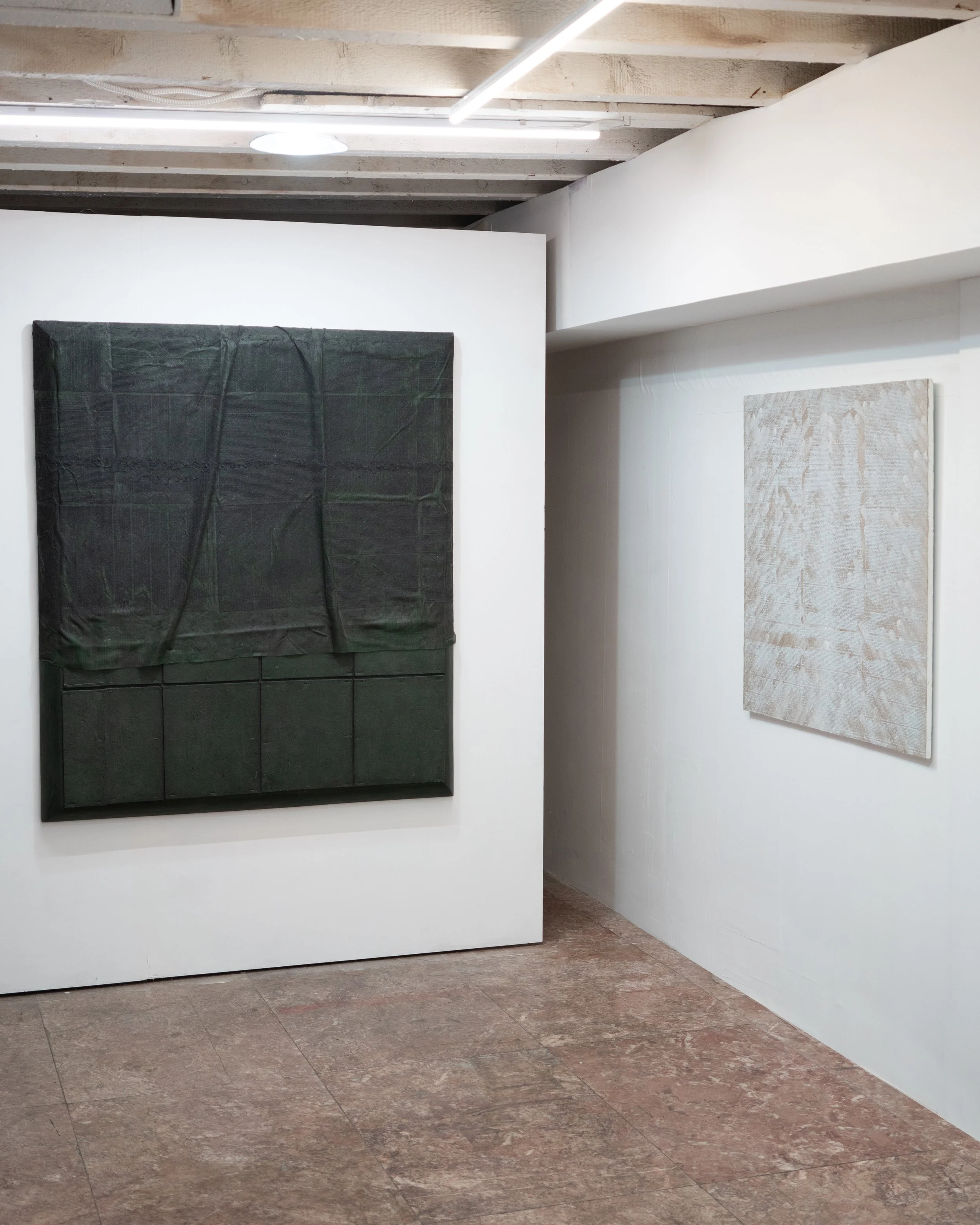
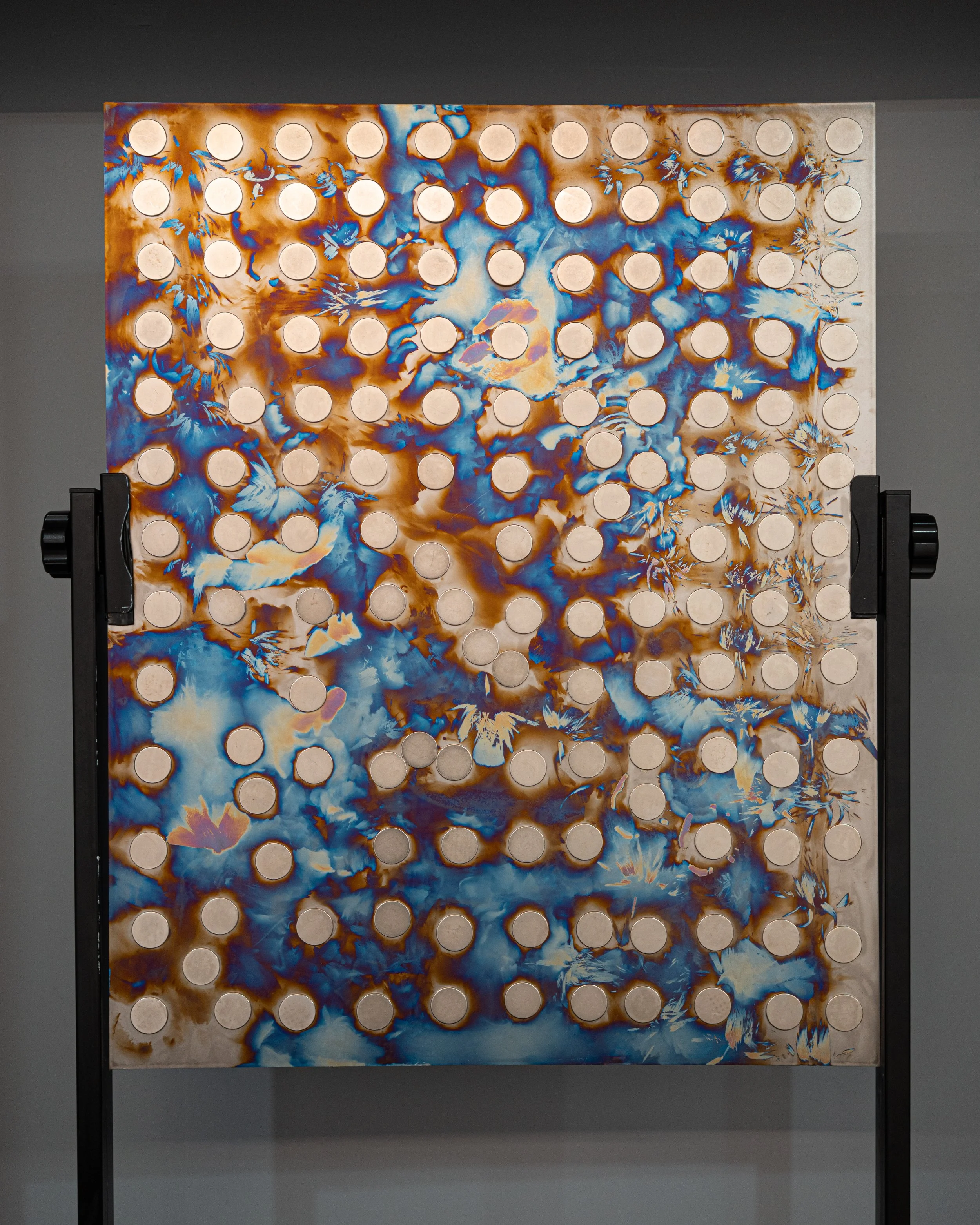
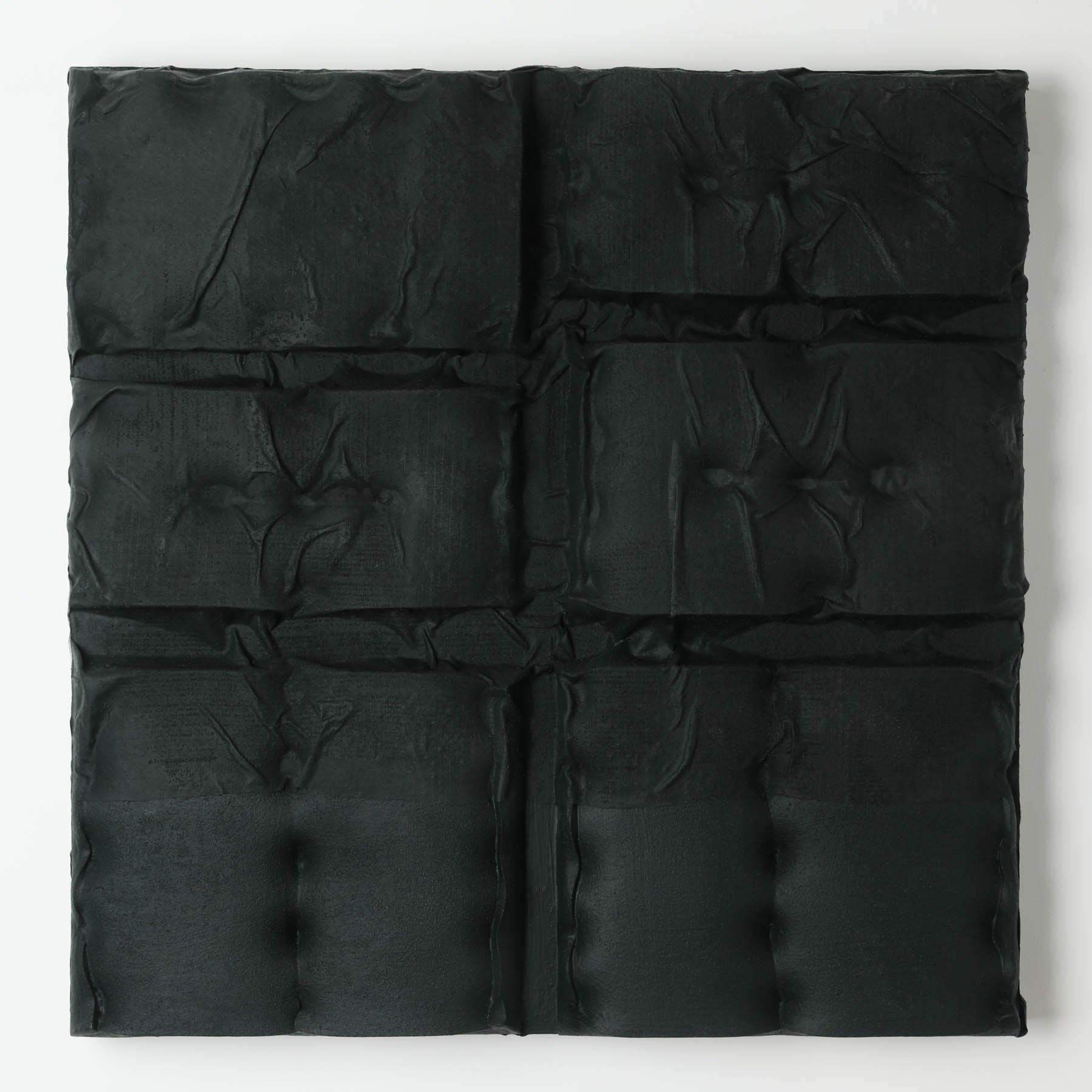
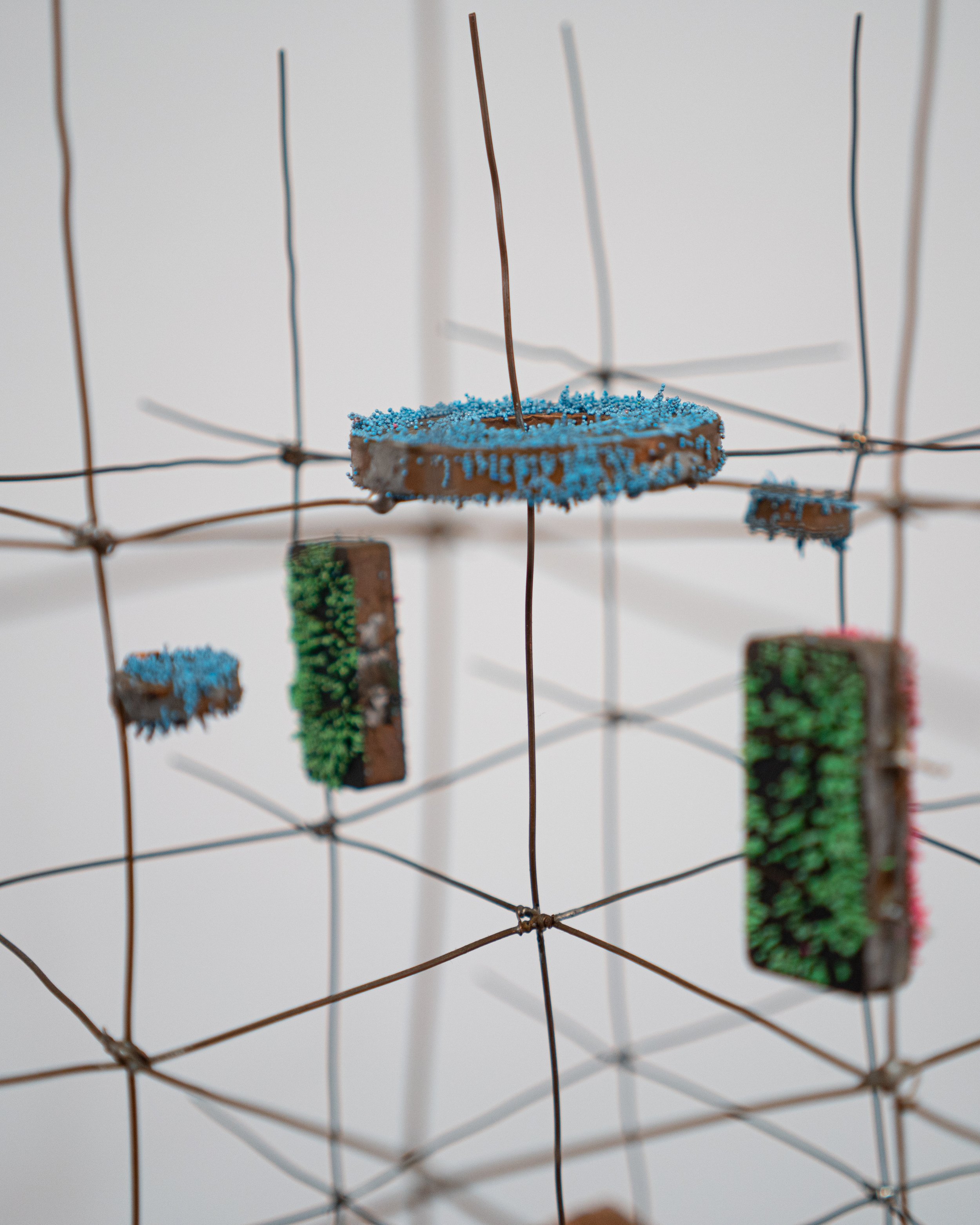
R: My current work emphasizes process, materiality, and complex systems as objects. My work uses fixed and static magnetic energy toward an expansion of visual material language to include a work of art’s objecthood beyond human observation. I am interested in setting up conditions for actuated experiments that exist in real time within the object. The magnetic pull acts as a radiant binder of fragmented color particulates that form lines and lines that form planes of colors and textures. These wall-based objects aim to reveal the dimension of the second dimension as well as reveal the molecular objecthood of paint and re-imagine the binder as an invisible radiant force that moves through the material ground to do its work as magnetic suspension- a live fundamental force. I want my work to enter the sensory field of the subtle body by way of radiant magnetic flux to the heart and through the optic nerve to the brain.
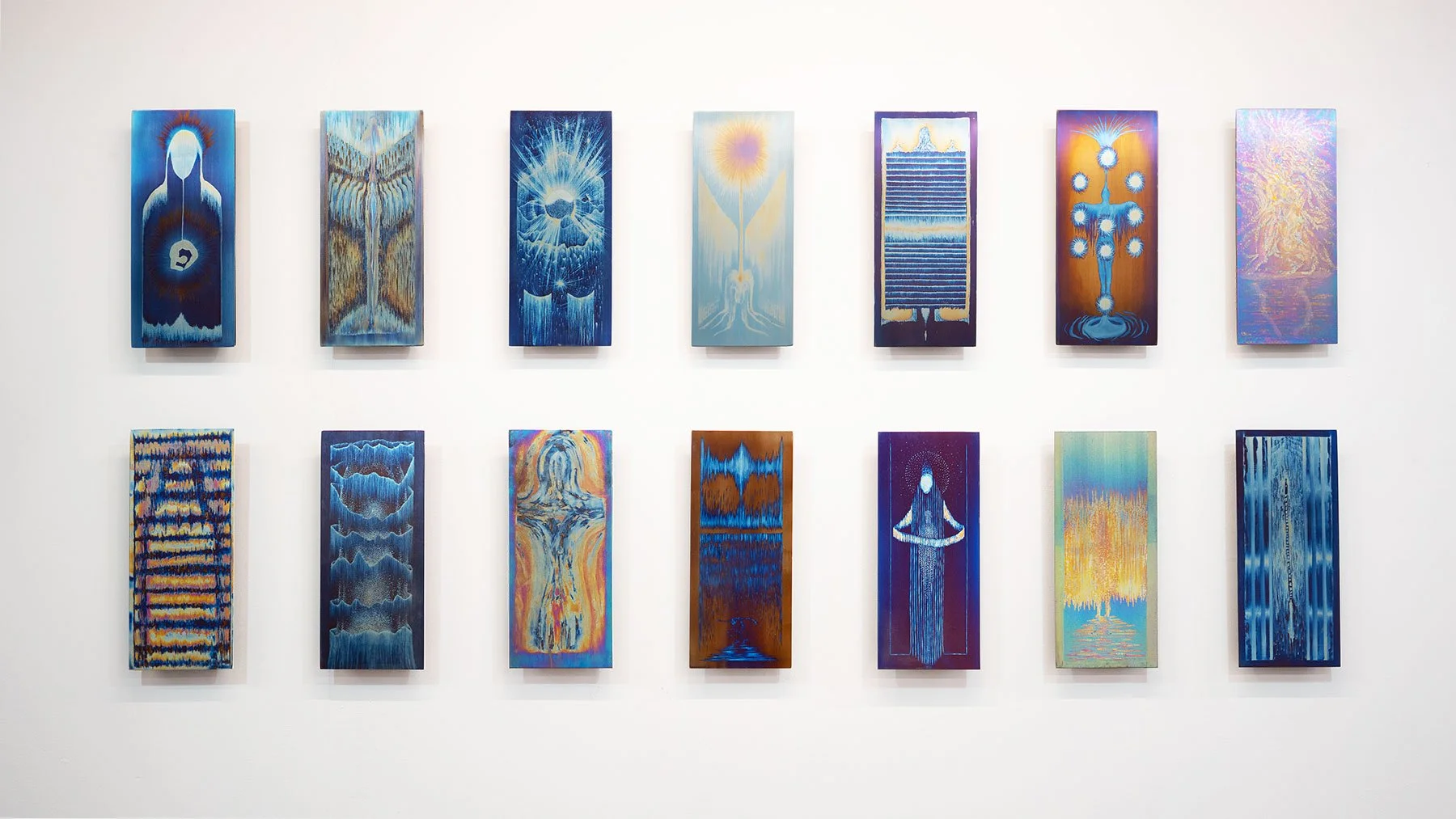
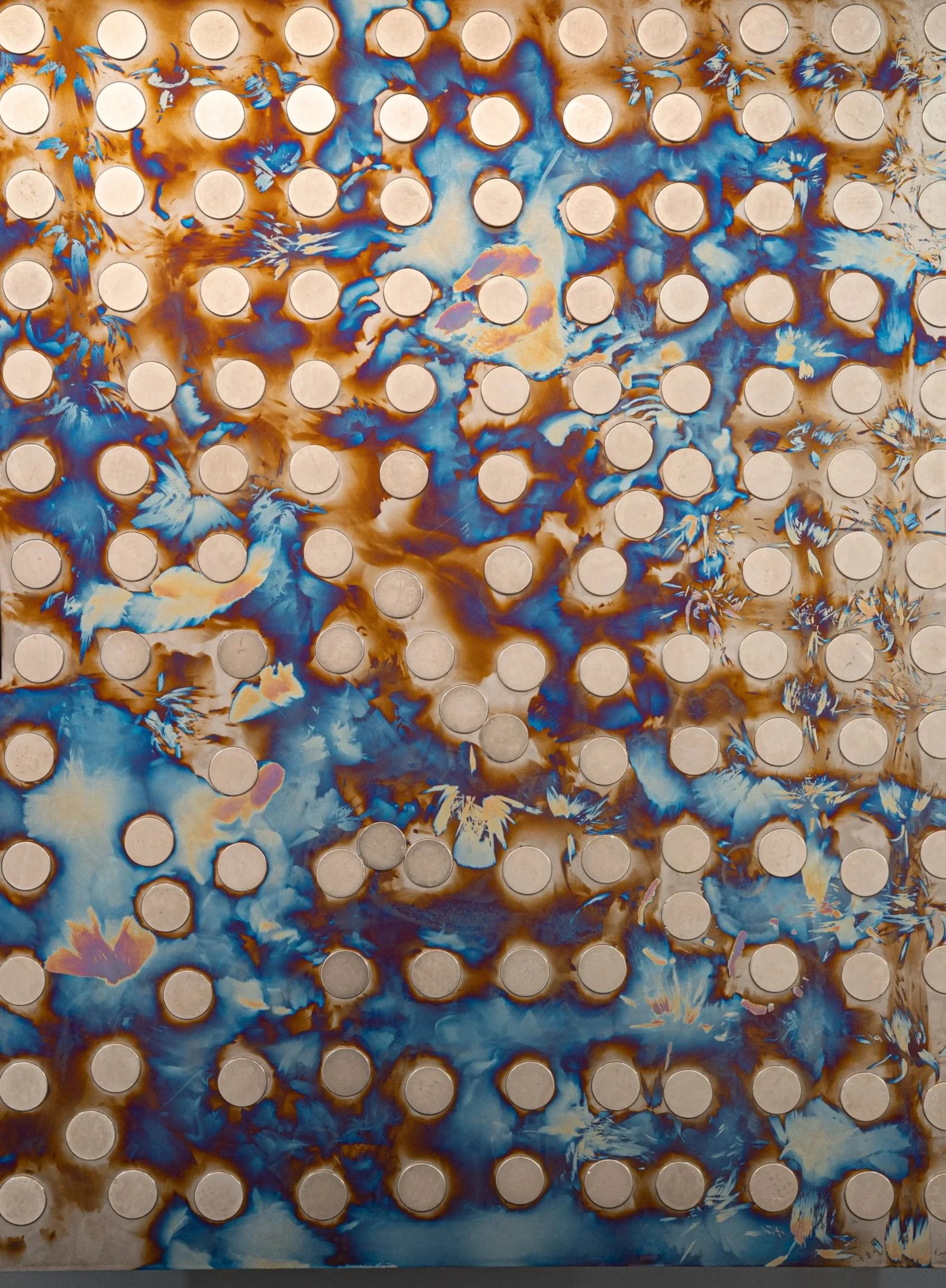
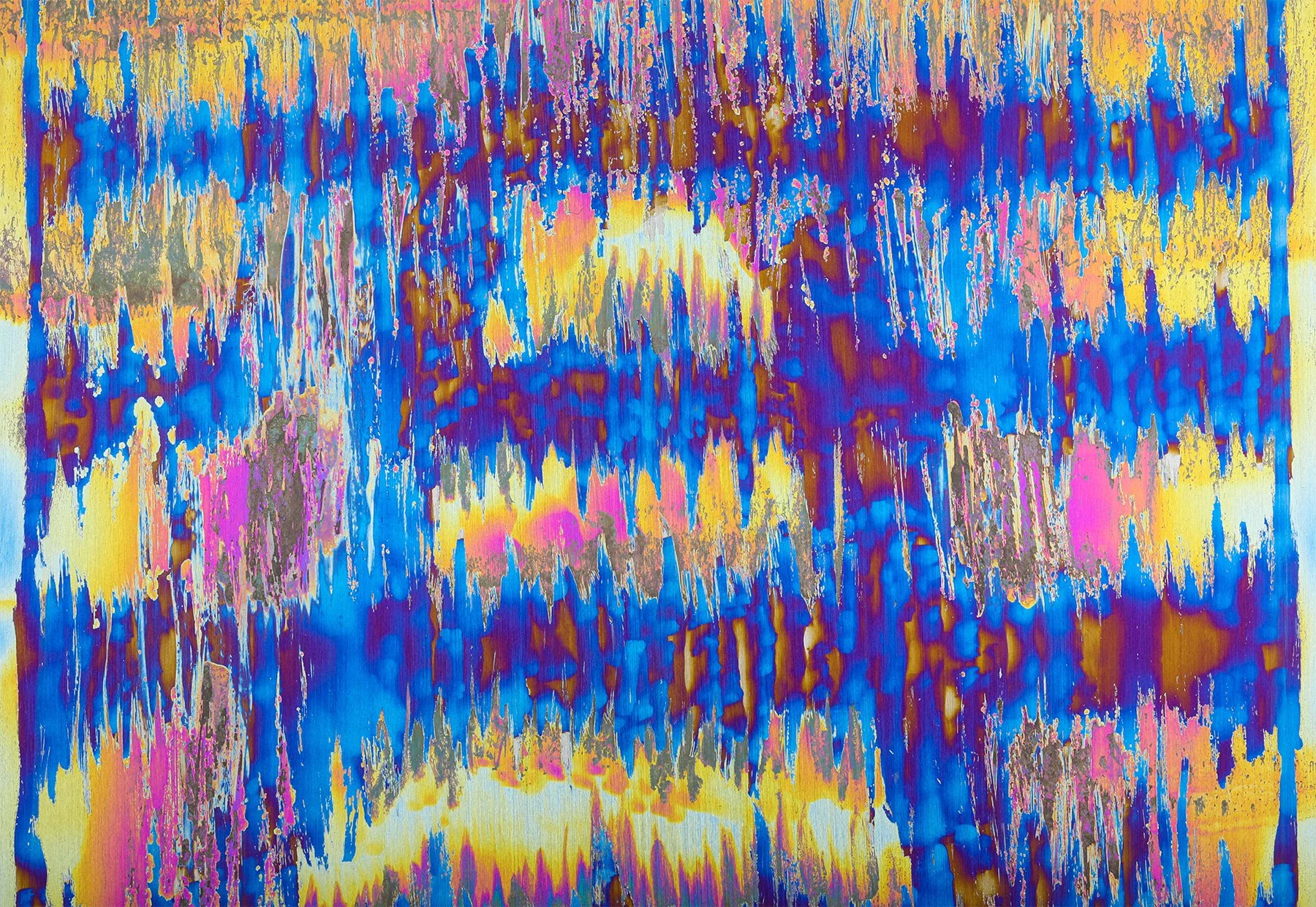
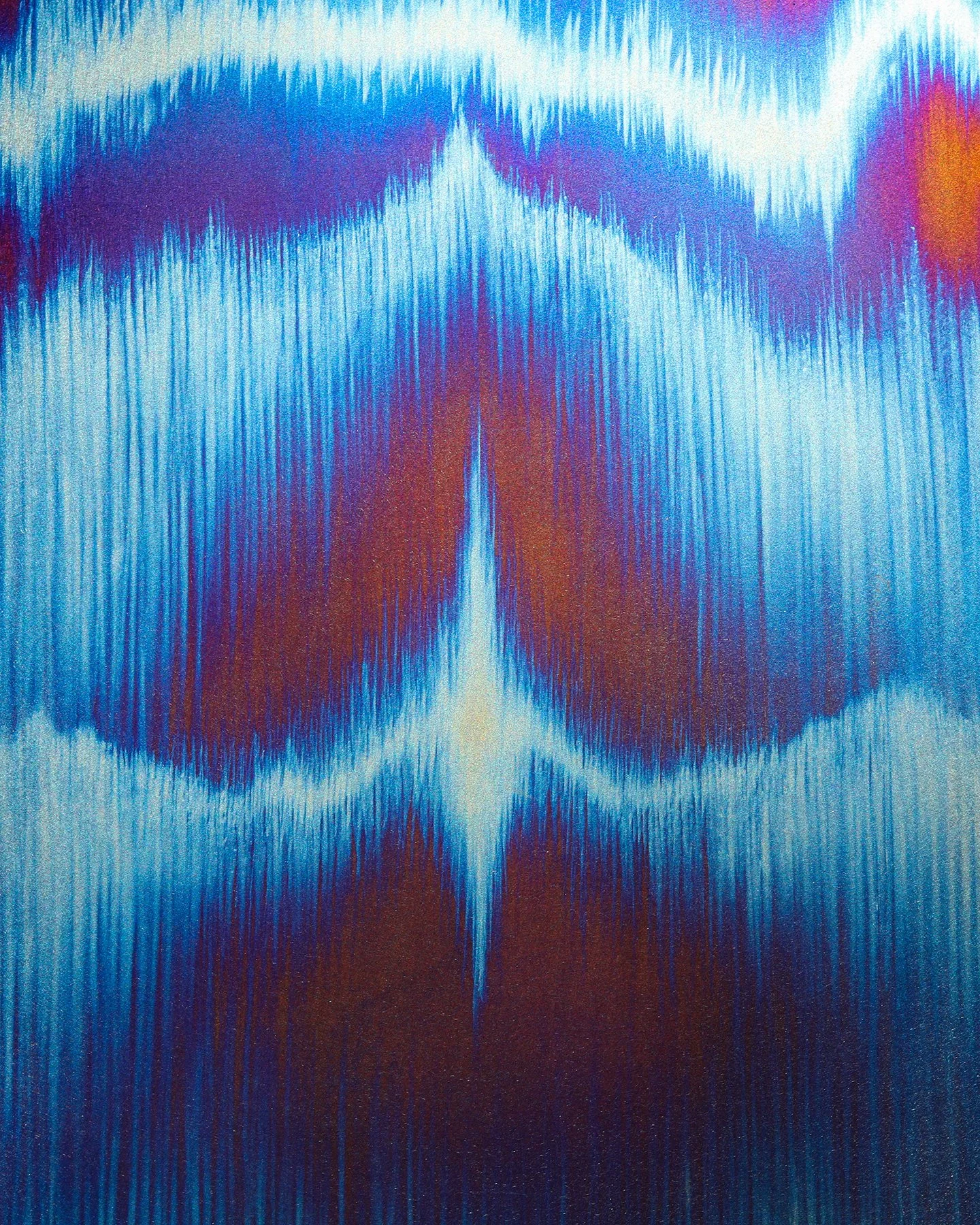
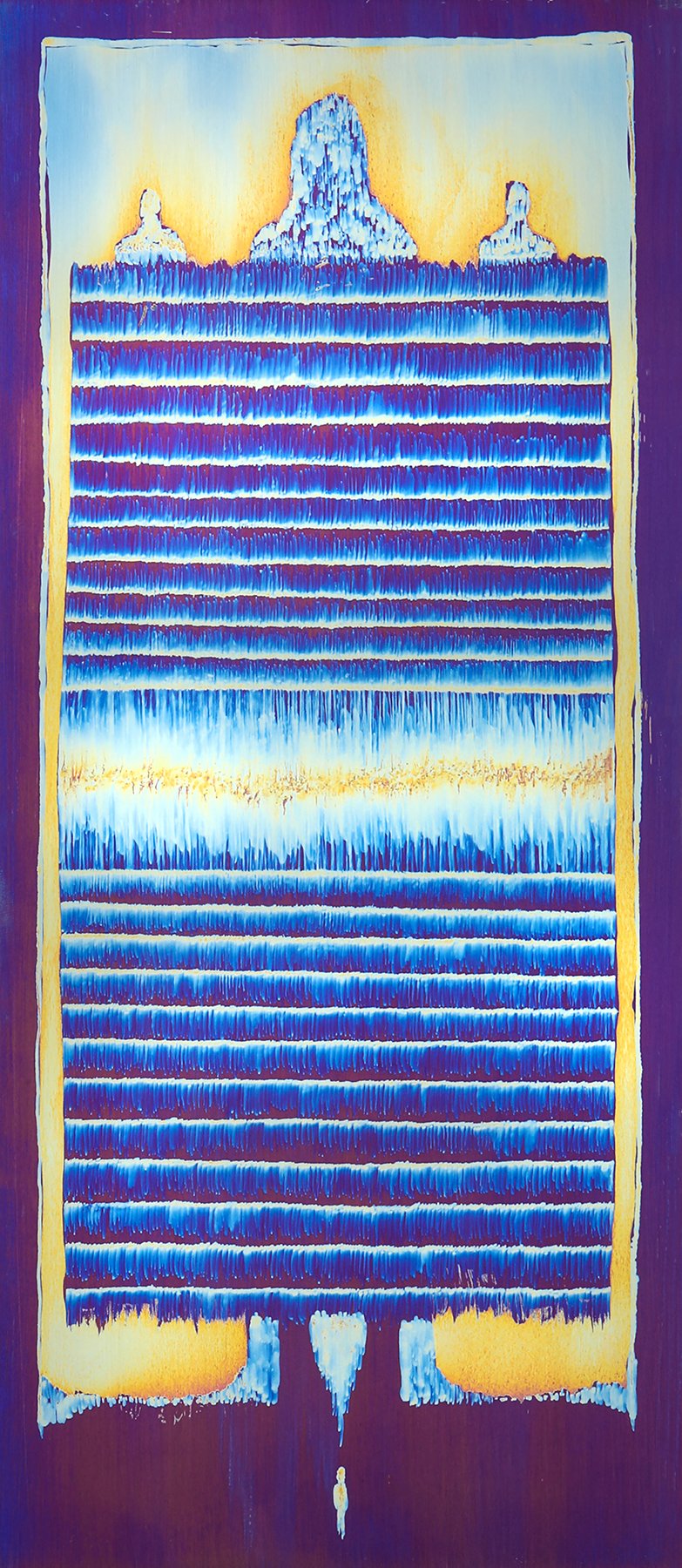
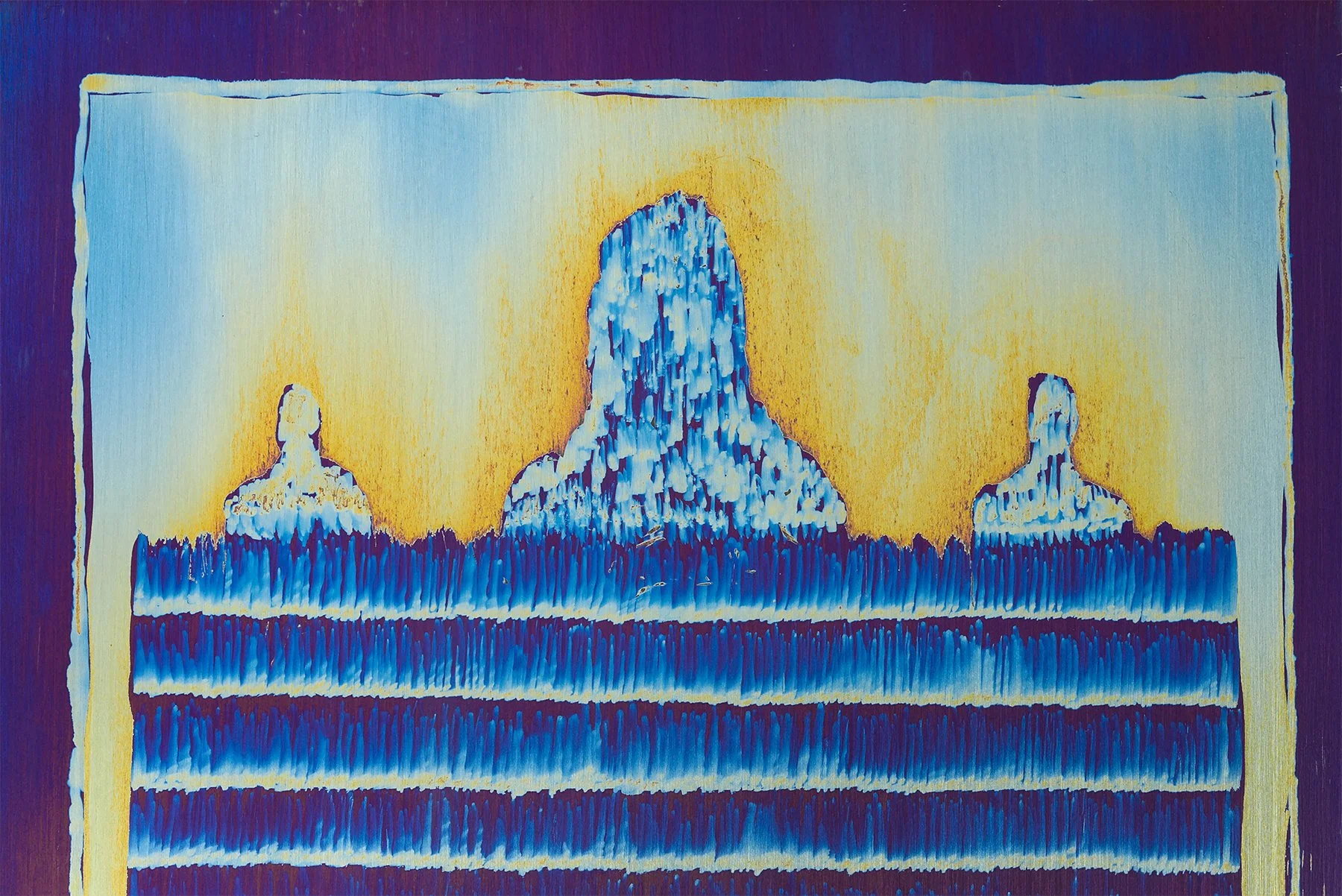
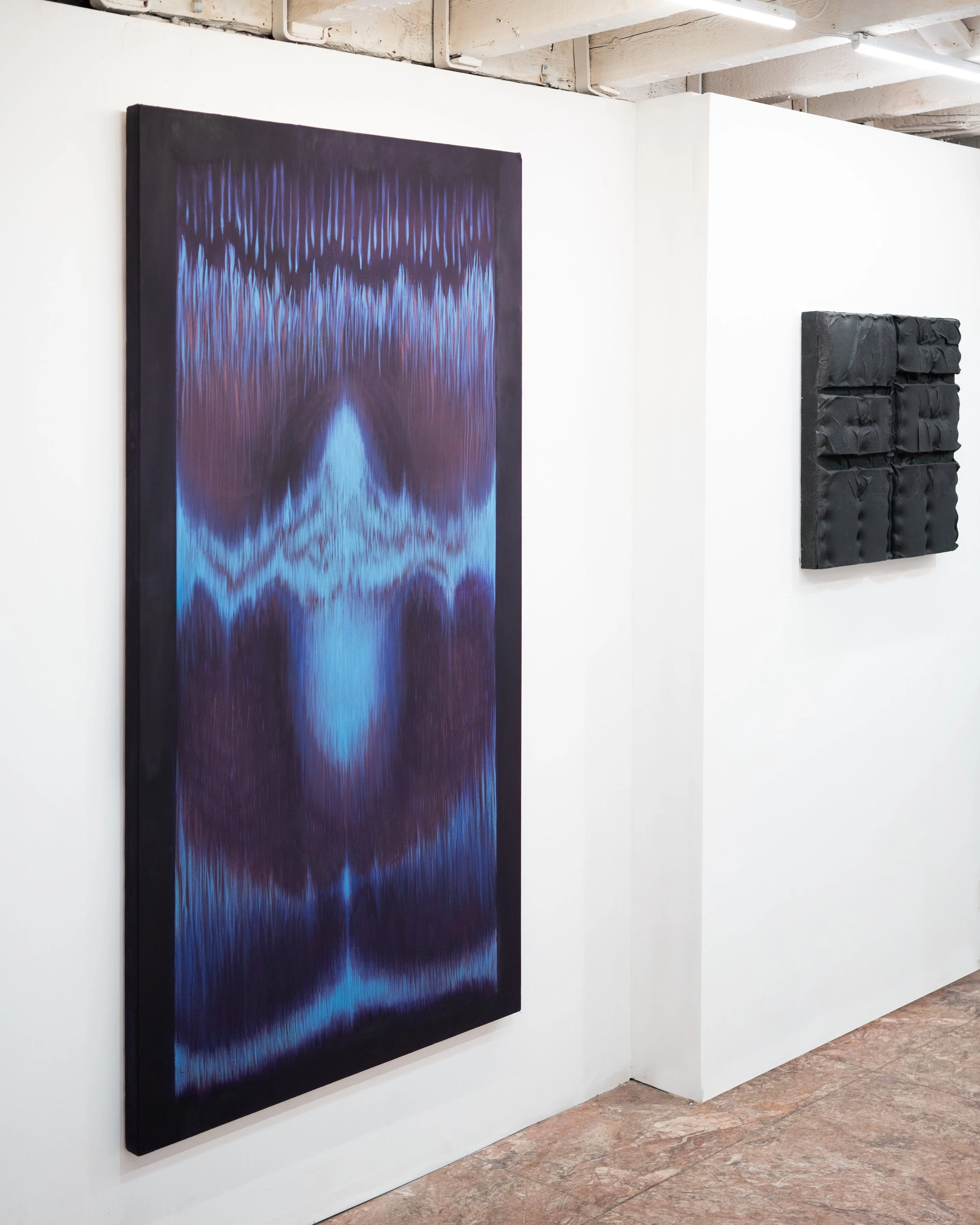
S: My current body of work is focused on the unification of the material and the immaterial through the use of raw electrical voltage as both a visual and sonic medium of art. I apply fluctuating voltage to titanium sheets in my visual practice, and through my multidisciplinary project Sestra Kuya, in collaboration with sound artist Gerry Gonzales, these same electrical fluctuations are transmitted into live sound. This process is extremely sensitive and responsive to even the smallest shifts in movement, pressure, or energy. With no need for paints or dyes, I am able to be fully immersed in the act of painting without the interruption of mixing color. The process demands an intense level of presence due to its sensitivity - and its inherent danger. In my solo visual practice, I work through making small vertical marks that resemble frequencies. They appear unintentionally, as I try to let my hand move without control, much like the natural rhythm of breathing. A recurring subject in my work is the appearance of abstracted figures. They often seem to dissolve into their surrounding space, as if it is impossible to tell where the figure ends and the field begins. For me, this reflects the quantum, continuous, and unifying field that we are all part of. Light and color play an essential role in this practice. In electricity painting on titanium, I am limited to a specific range of colors determined by electrical voltages. Creating contrast and variation within this limited palette has been both challenging and deeply engaging - a field I continue to refine. Because the paintings are made on titanium, they are highly reflective and responsive to light. On a physical level, their colors literally change as they react to different angles of illumination, causing each piece to shift in appearance depending on placement, movement, and time of day.
Conceptually, what ideas or questions are you most interested in exploring through your practice?
R: I want my work to highlight its own objectivity and to mirror my body’s energetic field and perhaps commune. I hope to reach into the anonymous unseen void of the real with an amplified sensation and a greater awareness of that field’s potential. I want my work to become a way for me to think about a system of unified fragments - these fragments can represent many different concepts, anything from particle physics and sociopolitical dynamics to systems of knowledge and stars. Magnetism is a fundamental force in the universe and surrounds our whole planet. The sun itself has a powerful magnetic force field. We depend on these radiant forces to exist. I want to reach into this field and sense it and manipulate it and learn from it. Perhaps I can create a bridge between the object and consciousness when the object is not being observed. I think Art’s objective to address the Void.
S: I feel a need to create art that can reflect the nature of existence more directly. Working with electrical voltage brings attention to a fundamental force that underlies all life - something both essential and easily overlooked. In a time marked by fragmentation and continual tension, my practice has become a way to bring together areas that are often seen as separate: spirituality, science, visual art, and music. Life itself moves in more dimensions than we can fully perceive, limited as we are by our own biological and cognitive capacities. I hope my work can suggest a similar sense of multiplicity - a meeting point of perspectives that invites reflection and resonance.
Can you talk about the tools, technologies, or even inventions that are central to your process? How do you balance experiment with craft?
R: I have invented many tools in my practice as well as for other artists. My work is so experimental; each body of work is a prototype and requires innovation. The thread that binds the work is the magnetic field. I have been exploring this field for over twenty-six years now. One tool I had to build for myself to my specifications is the Chakpur. A chakpur is a narrow metal funnel, typically twelve to eighteen inches long, with ridges or a grated surface running along the sides. It tapers to a fine point with a small hole at the end, which controls the flow of sand. I use the tool for its intended purpose. I made several attempts before getting my tool perfect for my specific needs. My particulate is stainless steel and varies in size, which requires a specific angle and opening. The traditional chakpur is much thicker metal and heavier, with a smaller opening. The material used in them is colored sand and has a different sensitivity to vibration. In general, it is very much like a type of musical instrument - it makes a percussive sound when being used. Most recently, my collaboration with Sestra Kuya led me to invent the Psytrekken, an instrument that would allow me to drag, pull, or press magnets to trigger a programmed sound through a modular synth. The Psytrekken functions mostly as a percussive instrument, but can also sound like strings.
S: In my visual art practice, I have developed a unique approach to applying electrical voltage onto titanium with a brush. Over time, I have expanded this technique into creating my own methods of electrical bathing and blocking the surface from receiving voltage as a way of forming color contrast within a system of color application that can only move upward in voltage. Currently, the most significant invention in my practice is the electrical circuit that I developed and engineered with Gerry Gonzales in March 2025 to transmit the fluctuating electrical voltage that I paint with into sound. This moment marked a complete breakthrough in my work, opening a direct bridge between visual and sonic form. We continue to refine and expand the possibilities of this evolving medium. Because our practice is rooted in invention, craft becomes not a choice but a necessity. Everything must be custom built and carefully designed: from the circuit itself to the tools, presentation, and even the language we use to describe it. We created the term Anophony to name this new form: a sonic and visual artwork created by applying fluctuating electrical voltage to titanium and transmitting that same circuit into sound. Each component requires precision and sensitivity to ensure that the system remains both functional and expressive. At the moment, we are focused on advancing the circuit’s capabilities and developing custom tools, such as specialized brushes that allow me to paint and connect to electrical voltage seamlessly. We are also experimenting with new mounting systems for the final works and reimagining how sound and image can coexist as one integrated form.
If we use the language of the elements and principles of design, how do you see yourself constructing images, sounds, and environments? What compositional choices matter most to you?
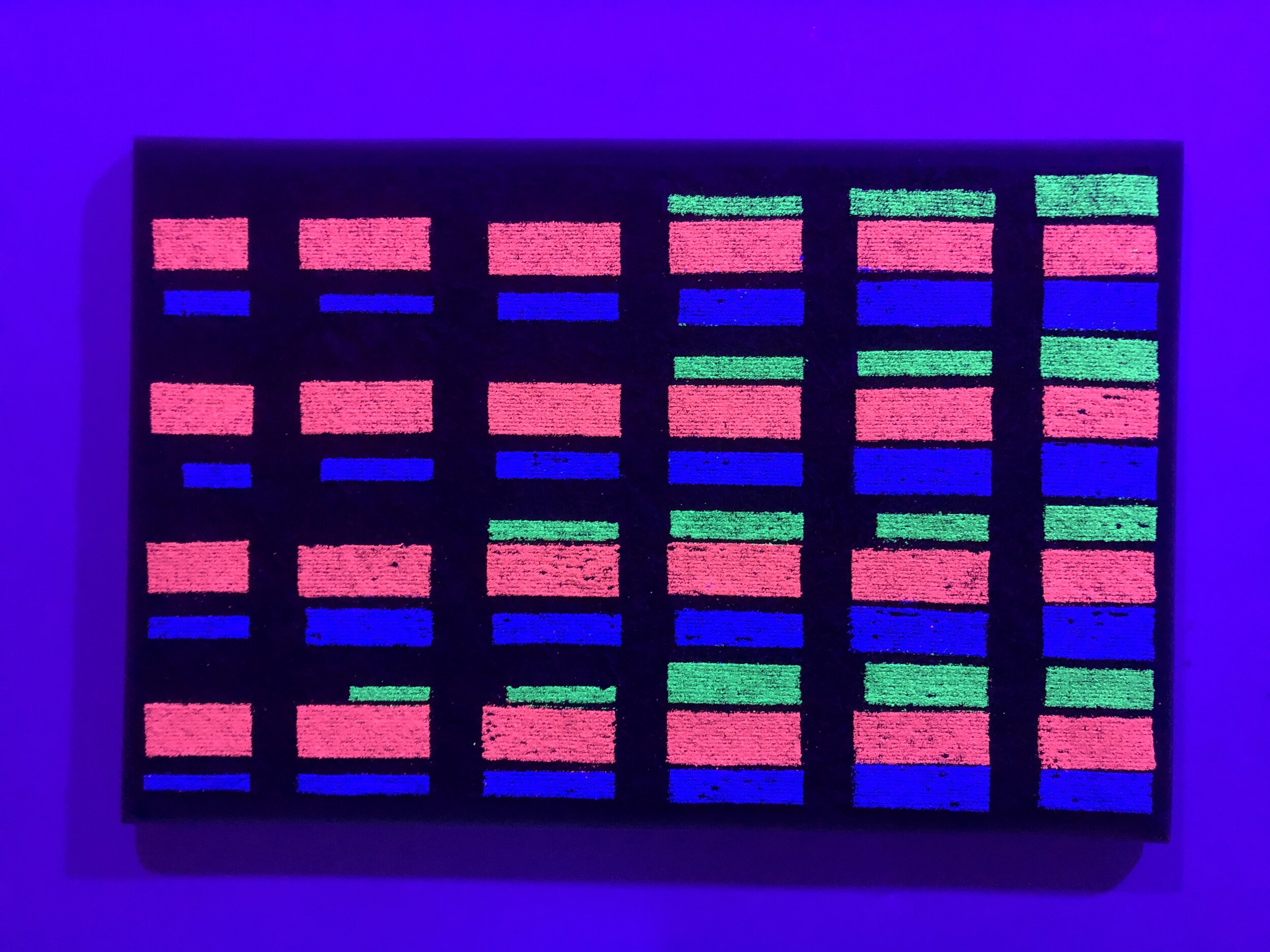
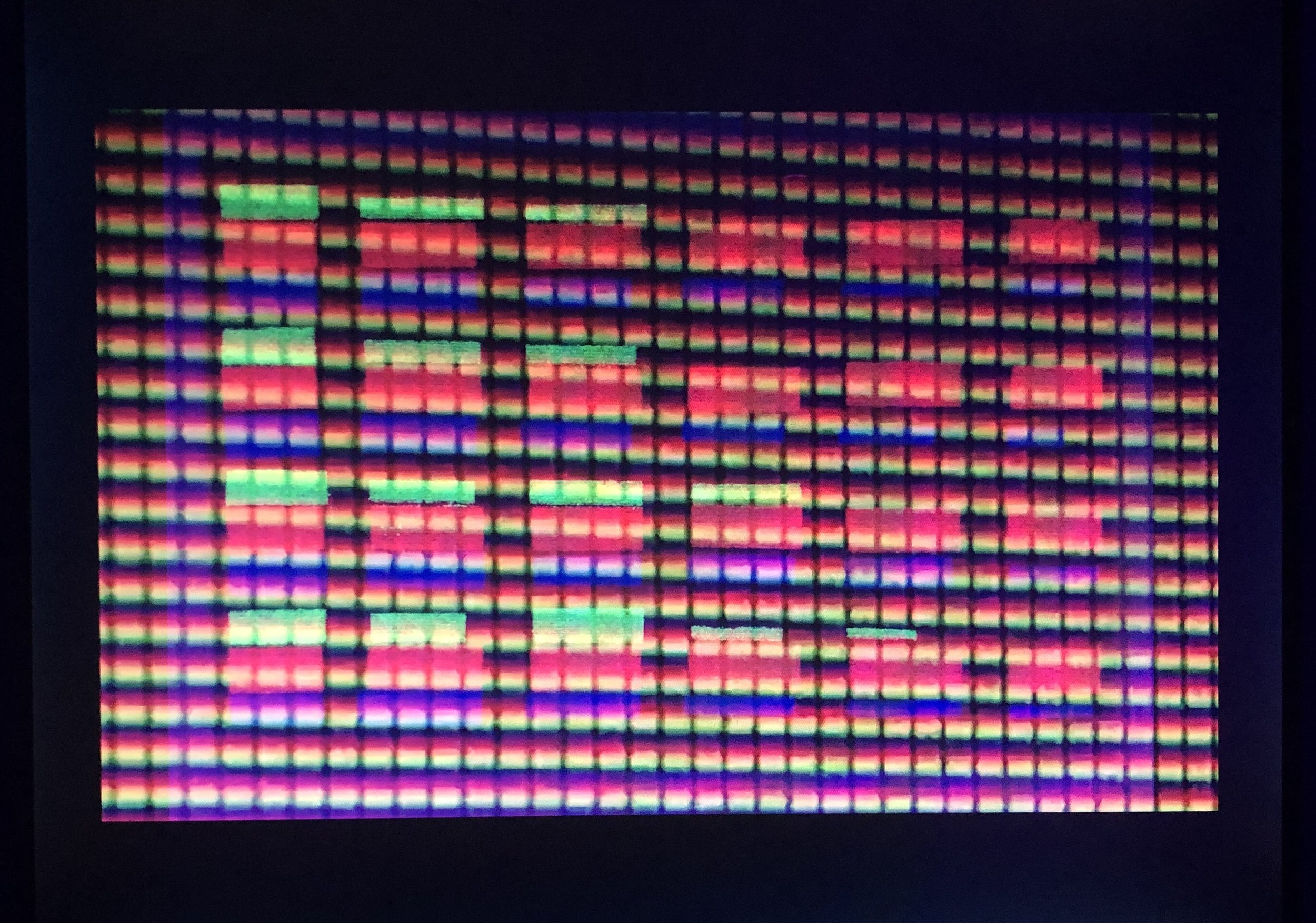
R: Repetition, pattern, sound, duration, and texture all lend themselves to sound and image. Sound has informed my work since high school, when I began carving fiddleheads in wood. I began making simple instruments or sculpting compositions with taut wire across them that were both line and sonic. I am not so interested in translation between visual and sonic codes as I am in them working together fluidly. I am not trying to make a visual thing that is sonic, but I am interested in making an object that can be seen and listened to or played as a soundscape. There was a durational aspect in both the making of and the viewing of the installation Psychic Screen, installed at VSOP in 2020. The works required being lit by ultraviolet light but would shift from ambient light from the surrounding windows, which would slowly shift to phosphorescing when the light changed in the evening.
S: Line, repetition, sound, pattern, and color are the primary elements that guide my work. I am drawn to simple, repetitive movements that are never identical. Like the breath that moves in and out, each line carries a subtle variation - no two are ever the same. The same is true for a musical note: its length, direction, and tone shift slightly with each occurrence, revealing both discipline and unpredictability. I often think of my process as a bridge between what happens visually and what happens sonically. Structure in my work functions as both composition and rhythm, shaped by movement, form, color, and tone. I borrow the language of music theory to describe what I see, thinking in terms of intervals, phrasing, counterpoint, and texture, and at the same time. I often feel like a vessel for translating energy across sensory dimensions. Color in my work is generated by different voltages of electricity, while sound arises from those same electrical fluctuations. In this way, composition happens visually and sonically at once - a polyphonic expression that comes from a singular fluctuation. I look for balance through rhythm, embracing the syncopated, multivalent quality of both sound and image as they unfold in the moment.
Where do you see your work positioned within the longer history of visual art, sound art, or performance? Are there lineages you feel connected to?
R: John Cage and Harry Partch are dear to me. Fred Spicknell, my jazz professor in college, loaned me his John Cage record and told me not to scratch it. It was a joke I really didn’t get until much later. It is this intervention aspect of Cage’s work that I really desire in my magnetic works that allows the object to remain in play even when one is not attuned to it. It has it’s own inner life. I want the body to silently intervene or join with the energy of the magnetics of the wall-based object. Harry Partch’s handmade instruments were very inspiring to me. He created his own system of a forty-three-tone microtonal scale. There is something I love in Frank Stella’s Black Paintings (1958–60) that uses the width of the brush. I began using rulers and numbers in this way, partially inspired by Duchamp’s 3 Standard Stoppages as well as Stan Brakhage’s use of people’s birthdays or anniversaries as film-editing decisions. I have had so many great mentors. My first major and ongoing mentorship was my best friend’s dance instructor, Amy Beaty. Amy was my artistic spiritual mentor in the cultural desert of Logansport, Indiana. She taught me how to live as an artist and how to be uncompromising and use my work ethic as a force. Amy introduced me to Balanchine. George Balanchine’s choreography unified the dancers in geometric patterns in an architectural spectacle meant to be viewed from above. I compose from above and from the side and every angle, but primarily from above due to my use of gravity and scatter patterns of my particulate. I guess Balanchine is a great place to talk about my interest in sound. Balanchine’s collaboration with Igor Stravinsky, whose work developed atonality, is also important to me. Another performative influence would be that of the Gutai Group, the avant-garde Japanese group who emphasized using their bodies and created tools to perform their works.

S: I see my work as continuing a lineage of artists who invented new mediums to merge disciplines at their source. I feel especially connected to Margaret Watts Hughes, whose eidophone translated vocal vibrations directly into image, and Thomas Wilfred, who created the Clavilux as an instrument for composing with light. What draws me to these practices is that they don’t separate sound, image, and performance, they treat them as different expressions of the same underlying phenomenon. I also feel a strong kinship with artists who brought spiritual or mediumistic practices into abstraction, such as Hilma af Klint and Ithell Colquhoun. In their work, the artist isn’t the sole author but a conduit, and that’s something I deeply relate to in my own process. Within sound and performance, I’m drawn to practices that use repetition, duration, and systems as living processes. Artists like Caterina Barbieri, Björk, and Brian Eno have shaped how I think about structure, chance, and the balance between control and surrender. I was also lucky to attend Brian Eno songwriting course last year, which expanded how I approach my practice and helped me open it further toward intuition and generative systems. In my own work, these threads come together through my use of raw electrical energy. It’s a medium that is inherently both visual and sonic, so image and sound emerge from the same source in real time. Because of that, I don’t think of the work as moving between disciplines, but as working within a single system where they are already unified
What does your work mean to you personally, and what do you hope viewers will take away from it? What do you think about the role of interpretation, both your own and the audience’s?
R: I think of my work in terms of the studios I have had. The spaces I inhabit have so greatly affected the size and materials of my work. I’ve always had a live/work setup. I don’t like to lose contact with the work even for a few weeks, and I rarely travel - so it’s like a fire I stoke. That said, the repetition of my day-to-day is pressed up against the work. There is a living cadence to how it is wrought. I decided to work at the pace of my resources and life changes. I don’t buy materials on credit, and I consistently work through any emotional circumstances. Everything stokes the fire of the creative energy in the work. So even though I utilize the grid motif, there is a deep emotional connection to the work. For me, the work is a neural pathway through the thread of my lived experience. There are such dense memories in the work. The work is a sort of evidence of my becoming; it is dynamic in this way. I hope the viewer will have an emotional response to the spirit of the work. In short, I hope that they will feel something. In some cases the work includes live magnetic force - I hope that the viewer can develop a subtle sense of this in their bodies - that is to say, that a viewer can feel a subtle kinesthetic exchange between them and the object. In a way, what I describe is like how a cassette head reader reads audio tape. There are patterns of ferromagnetic materials set in specific patterns, and as it passes over the head, these patterns are converted to electronic signals that are then translated into audio recording. Maybe our subconscious body has the capacity to use our bioelectric neurology to sense patterns made in a magnetic field. Perhaps I can communicate emotional information in new ways through the patterns I make in my constructed fields.

S: My work, to me, is a way of sensing the relationship between body and mind, and how that relationship shapes the emotional palette and the actions that arise from it. It is an inquiry into the mechanics of comprehension and reaction, of presence and co-creation with something larger than myself. When it comes to interpretation, I find its fleeting and changeable nature deeply compelling, and I want my work to reflect that quality. The titanium’s color spectrum, which never appears the same twice, and the ambiguous formations of frequency and shape both serve as tools for cultivating that sense of impermanence. I think of them as opportunities for interpretation - as anchors to the present moment, points of entry into an ever-changing root of the same equation.
Your works resonate with energy, vibration, color, light, and sound. How do practices like meditation, sound composition, wellness or other spiritual practices inform the way you create
R: I was a high jumper in track and field in middle school through college. The focus, will, and pressure on body and mind are very much energetic and connected to sustained wellness. Being an artist is using all of your internal and external resources while maintaining a semblance of even energy. I work a full day, maintain my domestic life, support artist friends, while making my own work and showing and having to move every 5 years. I like to cook and I maintain healthy life habits as much as possible. As far as spiritual practice, I associate spirituality with external presence - specifically a presence definitively outside my ‘self’ that presents itself as peace in the midst of great turmoil or distress where it is unexpected, but not always. It’s not controllable with a method. I pursue this presence of peace. My methods and practice are personal.
S: Meditation shapes how I create. Vipassana meditation, in particular, has become a foundation for how I approach both my life and art practice. It is a very simple practice based on awareness of the breath and the body, without visualization or sound. Through this practice, you train your mind to become less reactive, and through that process, you are able to sense subtler and subtler sensations in your body that are usually only sensed subconsciously. That process allows us to reprogram the mechanism of reactivity to craving and aversion on a subconscious level. The goal of the practice is a more equanimous mind and a greater ability to resonate love and kindness toward all beings. During longer meditation periods, such as the 10-day Vipassana courses, I have had experiences in which I was able to sense the body not as a solid material, but as a vibrational flow of electricity, with a distinct magnetic movement throughout the spine. I find it interesting that with greater equanimity of the mind comes the ability to sense more subtleness. I try to approach my state of being during my art practice in a similar way.
Beyond the personal, how do you see your work engaging broader contexts such as ecological, technological, or political? Looking ahead, tell us where your work is going.
S: Ecologically, my work brings forward the subject of energy in all its expressions, both physical and spiritual. The global energy crisis remains one of the most urgent challenges of our time, and my practice explores the nature of energy and electricity as tangible experiences - something people can both see and hear in real time. I am deeply interested in revisiting underrecognized inventions in the field of sustainable energy and adapting their principles into custom-engineered equipment that can serve as tools for both visual and sonic art-making. I come from a place marked by intense political tension: Luhansk, Ukraine. Living through more than a decade of war has been a long and challenging journey. Apart from destruction and death, I have witnessed families and friendships fracture over differing political views, an experience that has been painful and transformative. I now live in the United States; my family is in Russia, and many of my friends are still in Ukraine. That dynamic creates a complex network of perspectives within my own world. I believe my fundamental drive to create art rooted in unification comes from this background. The act of bringing together science, spirituality, music, and visual art - within one tangible and immediate experience - is, for me, a way of seeking connection and encouraging a shared sense of understanding within a divided reality.
R: My work is determined by a studied and considered aspect of the previous bodies of work where I feel the need to investigate some aspect in the previous systems. I am creating a new medium which requires work to change often. Just as I complete a body of work, the next body has come to mind. Many times this has required learning new skillsets and material processes. My work has moved from magnetic color fields to collaging the magnetized material, to simple pattern studies with the magnetic field. I've tried many possible ways to compose with and sculpt with magnetic force. Most recently, I have begun using life magnets in the work rather than removing them after they have done the work of organizing the particulates. In this new way, decisions are made through the magnetic material that are current in real time- and can change in the work. This live force has a real presence and potential. In the work, I set up conditions for the material to make decisions beyond language or representation, and the result is not arrested, but active- unlike paint or a traditional surface treatment. I find that working within this energetic potential, I am more of an observer of these forces and the work has its own life outside of my desires.
Let’s talk about the collaborative aspect of your work.
R: With the invention of my personalized Chakpur, I had originally experimented with trying to create coils of thicker and thinner wire to graduate the strength of the vibrations when rubbed with the chopstick. I was attempting to calibrate the tool’s mechanical vibration with particle size, and particle size with color. I stopped thinking about resolving that in that particular tool, but I never fully gave up on the metrics of sound to particle size, color calibration, and magnetic pull. In 2016, I collaborated with sound musician Tatsuya Nakatani using the Chakpur at Shapeshifter Lab, where I used the chakpur to make magnetic paintings and the chakpur was percussive to his sound interventions. Tatsuya was bowing the edge of large bronze cast gongs, among other vibratory percussion techniques. We were both directly bringing these measurable vibrations together.
My friend Andy introduced me to Si’s work via a DM. I looked at the feed and wanted to see her work and see her process. I showed up a day too early and accidentally met Gerry Gonzales, who was there, and I was able to witness her process of anodization to sound and an early Sestra Kuya tech session. We began collaborating shortly thereafter, testing ways to create impressions of magnetic effects using her electrical painting techniques combined with my magnetic processes. Gerry Gonzales’s and Si’s invention gave me the confidence to try using a cassette head to read raw magnetic radiation and convert it to sound - and it worked. Working with Si and Gerry has led me to an applied understanding of electricity and magnetism as relativistic in electromagnetism. Si and I began experimenting with adding magnets to her titanium process. I would use the Psytrekken on one side and Si her brush on the other - both modulated through Gerry’s Eurorack and we got some very interesting results. One fascinating discovery was- when our tools passed on opposite sides of the titanium, there was an effect in the electromagnetic field that modulated the sounds from our invented tools. We hope to explore this more. We have some experiments we are conducting that allow us to imagine electricity and magnetism as a single creative act.
S: As Ryan focuses on magnetism as a primary medium in his art and I work solely with electricity, meeting each other brought up many unexpected discoveries for both of us - most importantly, the realization that electricity and magnetism are in fact one unified force in nature, inseparable from one another. That perspective deeply shifted how we each think about our individual practices, and became the starting point for our desire to explore ways of unifying our worlds both visually and sonically, as a metaphor for this phenomenon.
Collaborating on transmitting both electricity and magnetism into image and sound has been an incredibly inspiring and transformative experience. Working together with these raw forces of life in a non-verbal way, often standing on opposite sides of the easel without seeing each other, has activated a new kind of sensitivity in both of us, a heightened ability to feel, attune to, and interact with one another and with the unknown.
We are now planning to expand our collaborative practice through co-creative visual works that combine my brushing and bathing electricity painting techniques with Ryan’s magnetic processes and hand-colored magnetic steel particulates. The collaborative aspect of my work has become increasingly important, especially through the development of Sestra Kuya and meeting Ryan. I feel deeply grateful to be surrounded by artists with whom interests that were once lived mostly in solitude can now be experienced, shared, and co-created, through meaningful exchanges where we truly resonate and understand one another.