The Body Politic and Speculative Futures
The Body Politic and Speculative Futures
by ANNA EHRSAM
Whitney Biennial 2026
The 2026 Whitney Biennial does not announce itself through a single curatorial thesis. It arrives instead as a field of intensities: damaged bodies, unstable infrastructures, ecological loops, compromised archives, theatrical grotesques, ancestral continuities, and unexpectedly tender acts of persistence. At first encounter, the exhibition can feel chaotic, even exhausting. It asks a great deal of the viewer. Its energies move across sculpture, installation, painting, sound, video, and performance without offering one governing style or formal program. But after moving through it, after letting the works accumulate rather than resolve, a pattern begins to emerge. Not stylistic unity. Something more difficult and more interesting: a shared condition of exposure, feeling, and transformation.
The show is saturated by vulnerability, but not vulnerability as softness alone, and certainly not as weakness. It is vulnerability as a fact of contemporary life: the body exposed to history, representation, markets, surveillance, ecological instability, and also to kinship, desire, intimacy, and care. What keeps the exhibition from becoming bleak is that it does not treat this exposure as a dead end. It stages a more useful proposition: life in the United States now is lived inside structures that both constrain and sustain us, but those structures are not the whole story. The artists gathered here do not simply diagnose crisis. They question, rework, metabolize, and transform it. They make form under pressure.
This, to me, is where the Biennial begins to open. It is often difficult, often bruising, but it is also full of vitality. The artists are not merely illustrating crisis or offering aestheticized symptoms of collapse. They are thinking through the present by making objects, images, sounds, gestures, architectures, and speculative propositions. They are asking what can still be imagined from inside the conditions we have inherited, and what kinds of shared worlds might still be built. That insistence matters. It shifts the exhibition away from despair and toward agency.
Seen this way, the Biennial becomes an expansive portrait of contemporary culture in America. Not inclusive in the thin institutional sense of adding more identities to an existing frame, but expansive because it allows radically different artistic languages to remain distinct. Discord matters here as much as harmony. Some works grind, scrape, accuse, and disturb. Others gather, steady, console, or hold. The exhibition is not a choir singing in unison. It is closer to a field of frequencies, sometimes clashing, sometimes resonating, sometimes refusing synthesis altogether. And yet something larger does begin to hum. The show imagines the social body not as unified or whole, but as living: fractured, improvised, wounded, playful, relational, and still capable of making futures beyond domination.
What does the Whitney Biennial say about America now? Not in the blunt sense of message or slogan, and not in the exhausted register of asking whether an exhibition is “political” as if politics were a genre. A better question is what conditions of life the exhibition makes palpable. What kinds of bodies, tools, memories, inheritances, and social relations does it gather into visibility? Across the works I was drawn to, one answer kept returning. The Biennial is less a survey of styles than a study of contemporary life under strain, of bodies caught inside forces they did not design and cannot fully escape, but also of the forms of imagination and invention that persist there.
This is why the show initially feels overwhelming. It behaves more like the present itself: overdetermined, infrastructural, contradictory, emotionally unstable. Sculpture, painting, sound, installation, and performance function as different sensors for detecting the same charged atmosphere. The figure appears repeatedly, but almost never as a stable, sovereign, self possessed unit. It is scanned, crouched, doubled, refrigerated, translated, archived, racialized, turned into data, commodity, relic, signal. If there is a thesis to the Biennial, it may be this: the human condition in America now is not defined by autonomy so much as exposure. But exposure is not the end of the story. It is the condition from which these artists begin.
The scale of the Biennial also means that certain works, especially the time based ones, resist immediate absorption. Some of the most affecting material in the exhibition unfolds through duration, sound, and attention, and it deserves a second, slower return than a first pass through the galleries can allow.
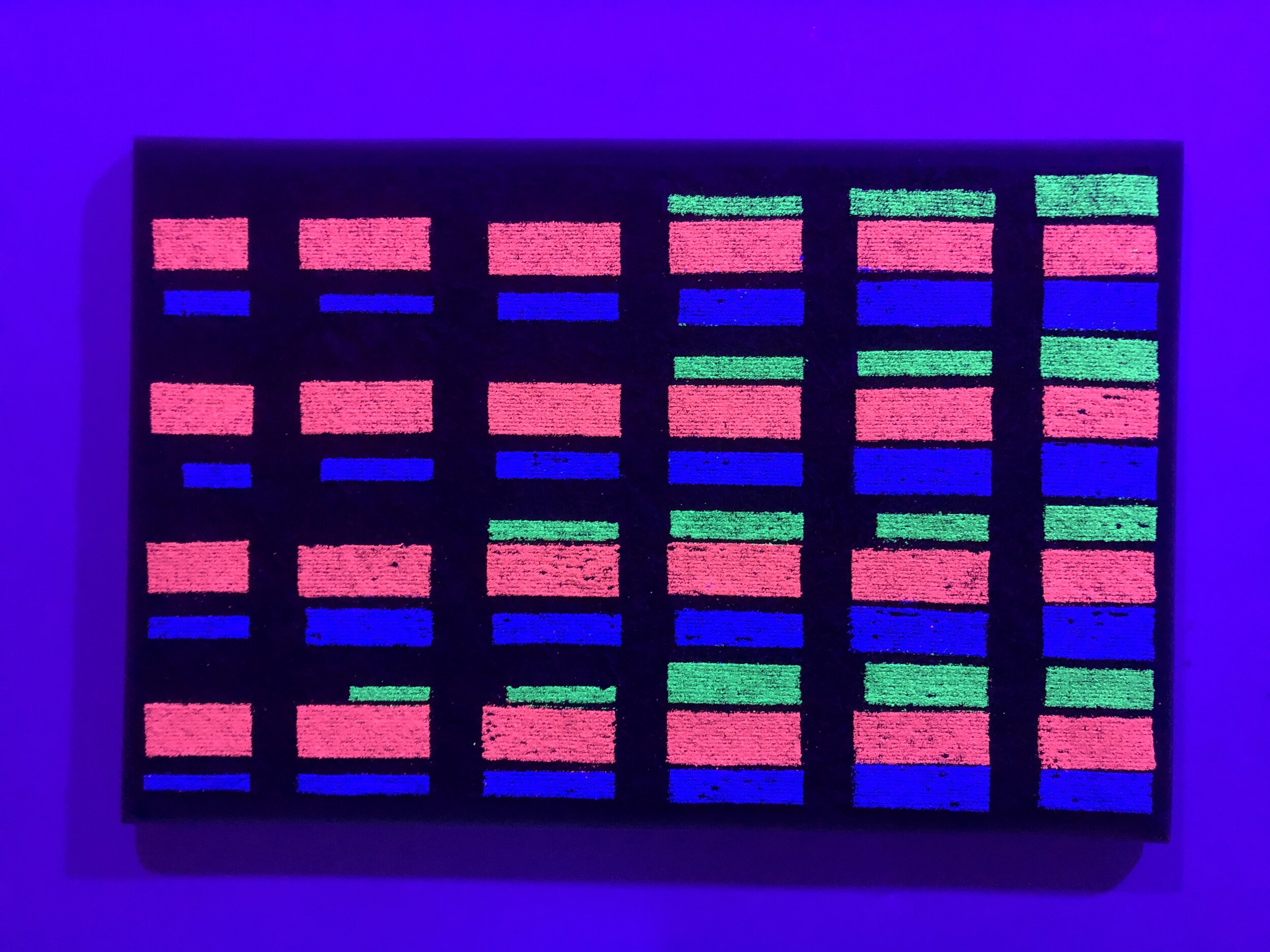
Akira Ikezoe’s paintings are a useful place to start because they make complex systems visible without reducing them to diagrams. The wall text describes “elaborate circular systems, narratives with no beginning or end,” and the phrase is exact. Ikezoe is not illustrating a topic. He is building a visual logic for entanglement. In Mole Stories Around Methane Gas and Robot Stories Around Solar Panels, energy circulates through the composition via the sun, a nuclear power plant, methane from cow feces, and other linked elements. There is wit here, even a childlike openness, but the paintings are not naïve. They understand contemporary life as a sequence of loops: waste becomes fuel, fuel becomes labor, labor becomes infrastructure, infrastructure becomes environment. Nature and technology are not separate domains. Everything touches everything else.
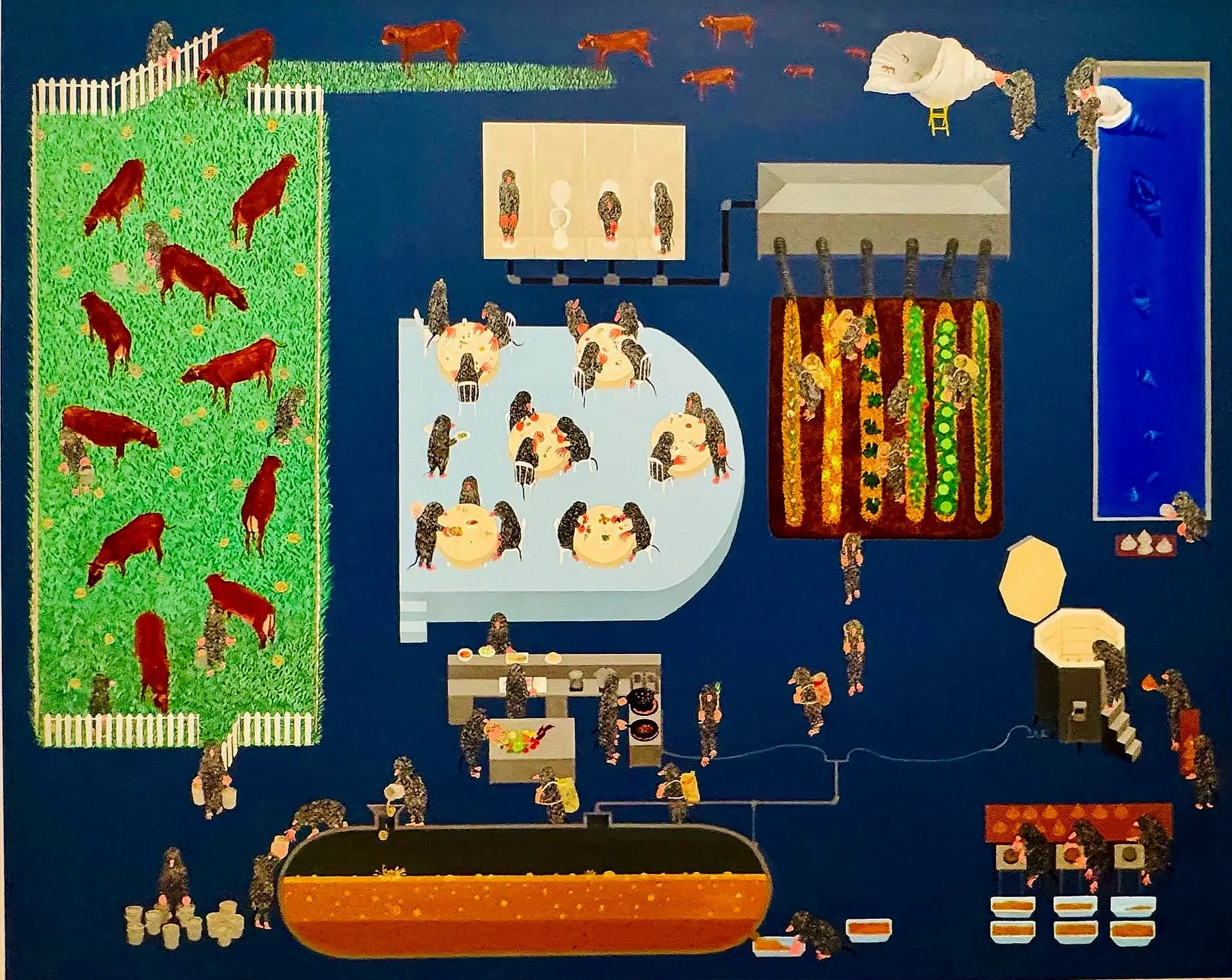
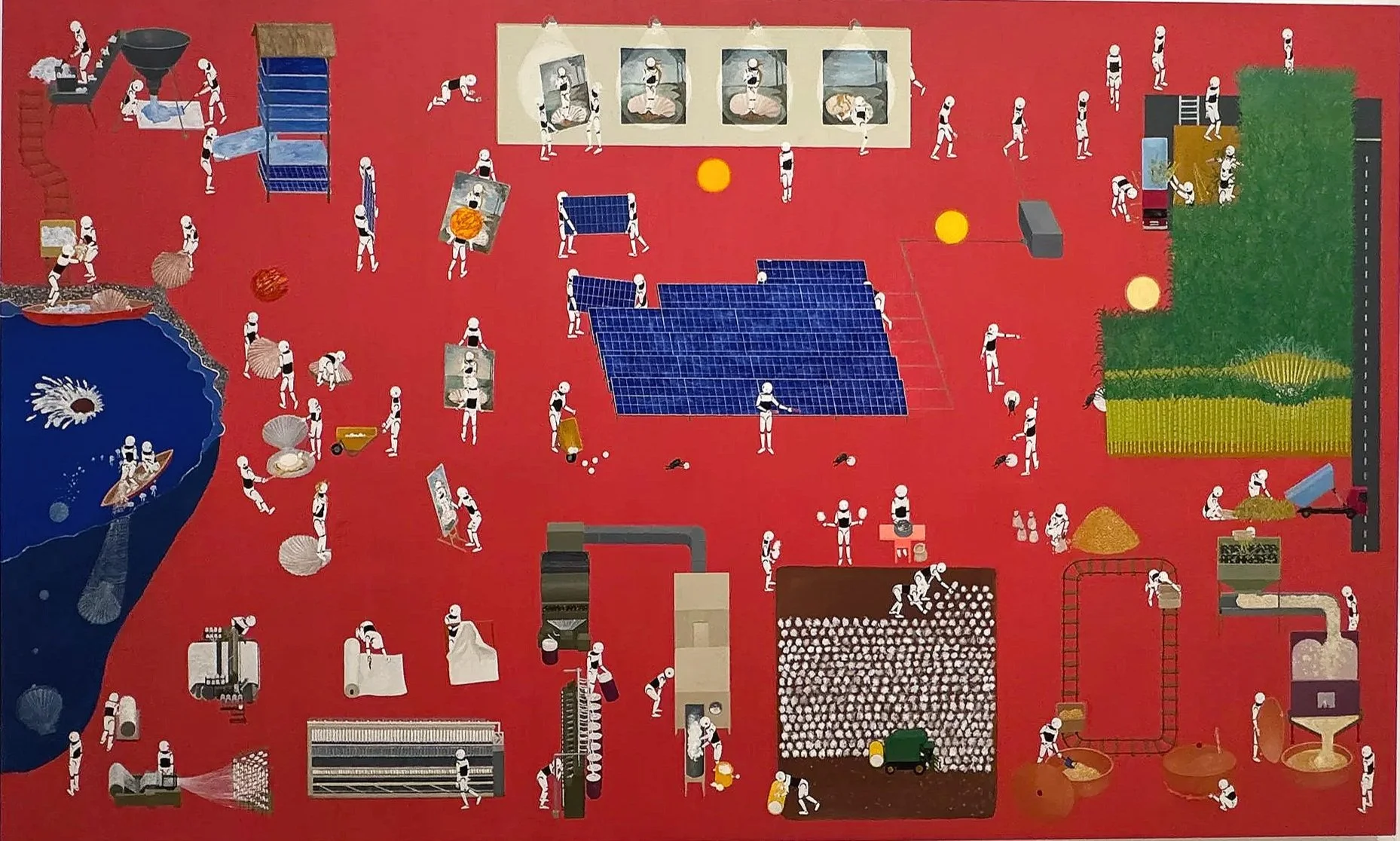
Figure 1. Akira Ikezoe, Mole Stories Around Methane Gas, 2025, and Robot Stories Around Solar Panels, 2025. Installation view, Whitney Biennial 2026. Photograph by Anna Ehrsam.
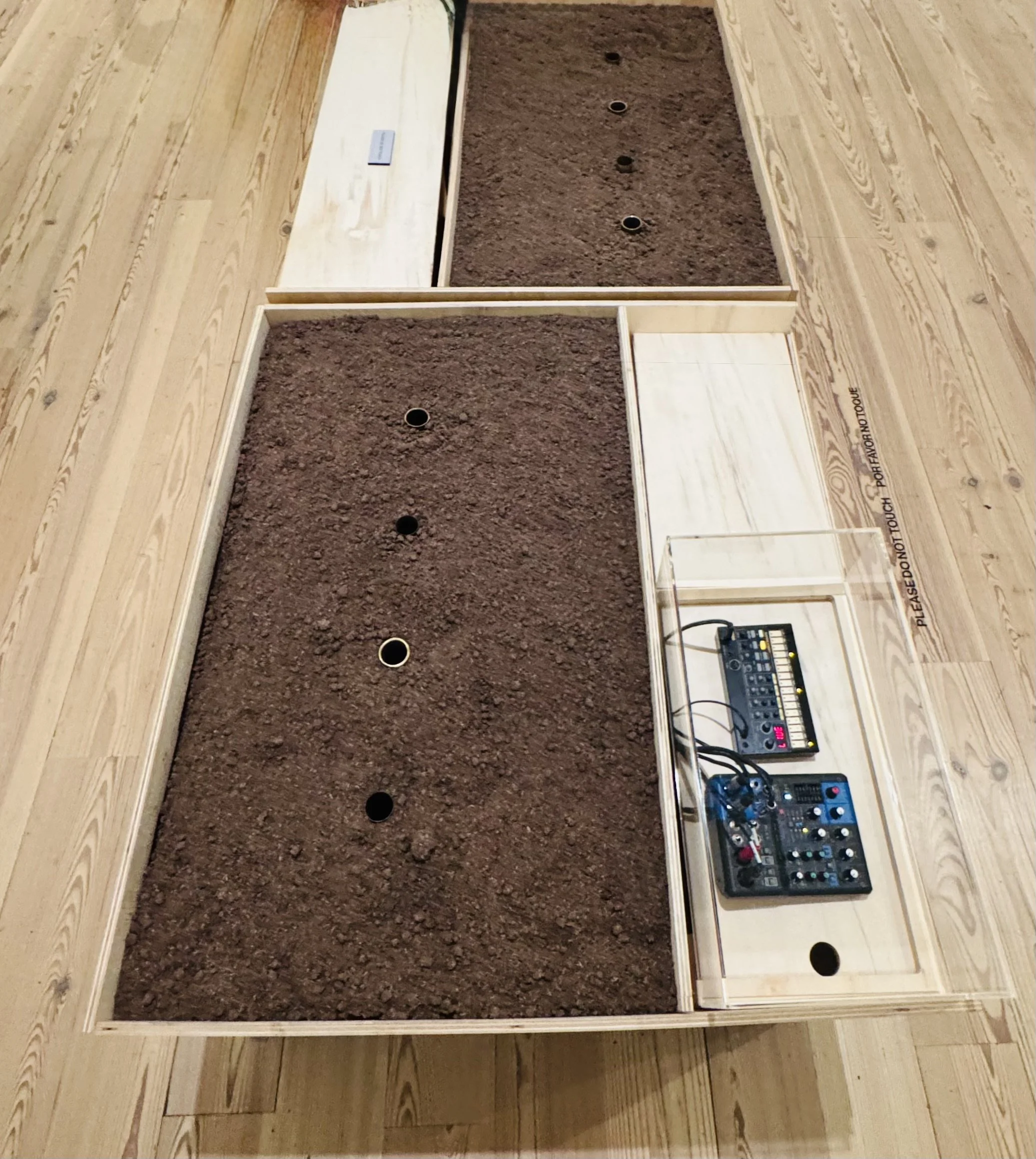
Ash Arder’s Broadcast #4 and Consumables bring that systems thinking into the intimate register of nourishment, family history, labor, and survival. A refrigerator powered by solar panels stores Cadillac hood ornaments cast in butter, shea butter, and chocolate. Nearby, sound frequencies disperse seeds across trays of soil that can later be planted as living records of sonic and genetic data. The materials are precise and strange. Industrial labor history sits beside food preservation. Seed dispersal becomes a recording technology. The refrigerator becomes domestic appliance, ecological machine, and memorial device. Arder’s father worked for General Motors; that biographical fact does not sit outside the work as anecdote. It is one of the structures through which the work thinks. Arder makes interdependence visible. We depend on storage, energy, care, memory, climate, labor, and one another. In her hands, dependency is not a failure of autonomy. It is a fact of life, and a form of knowledge.
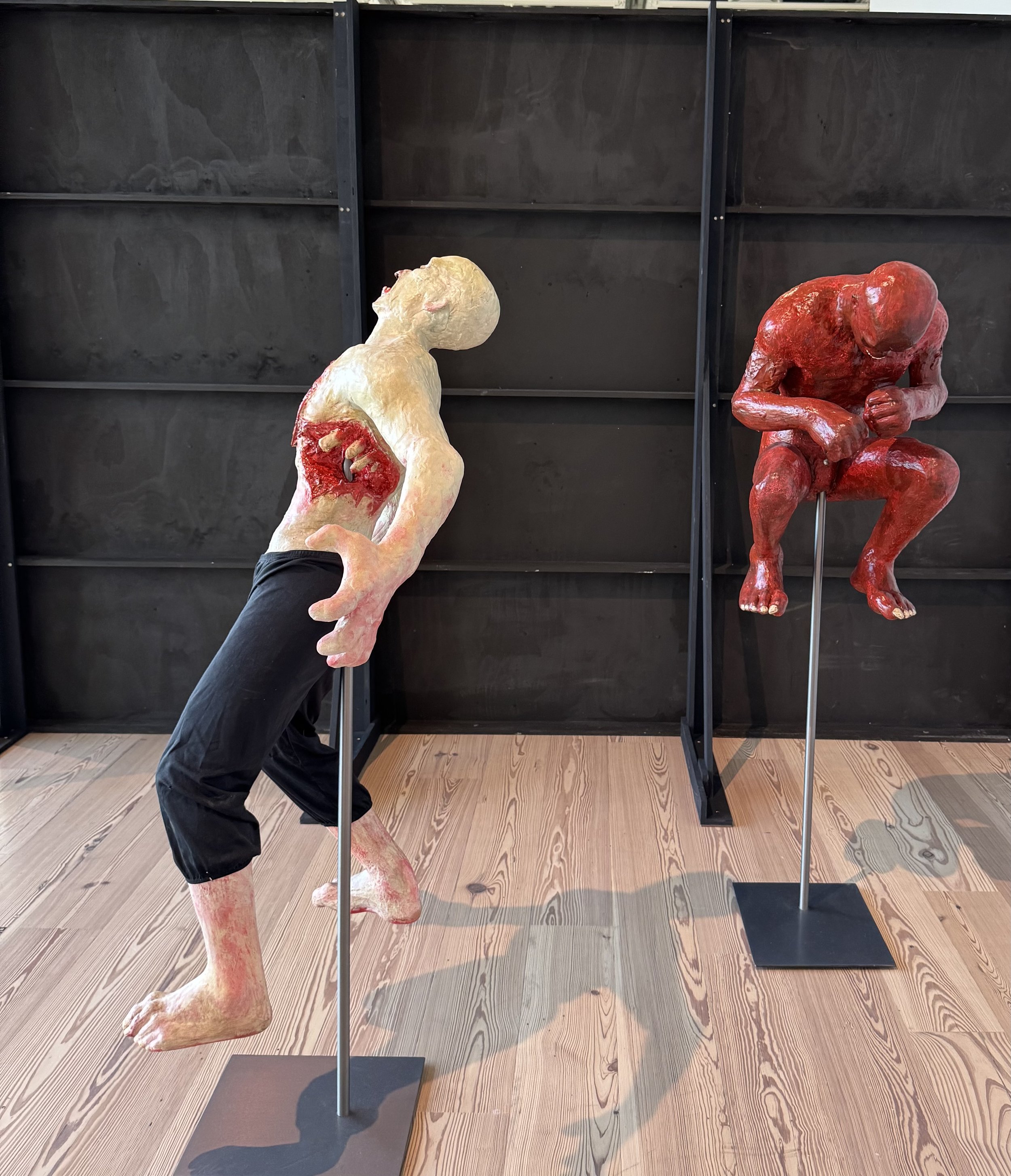
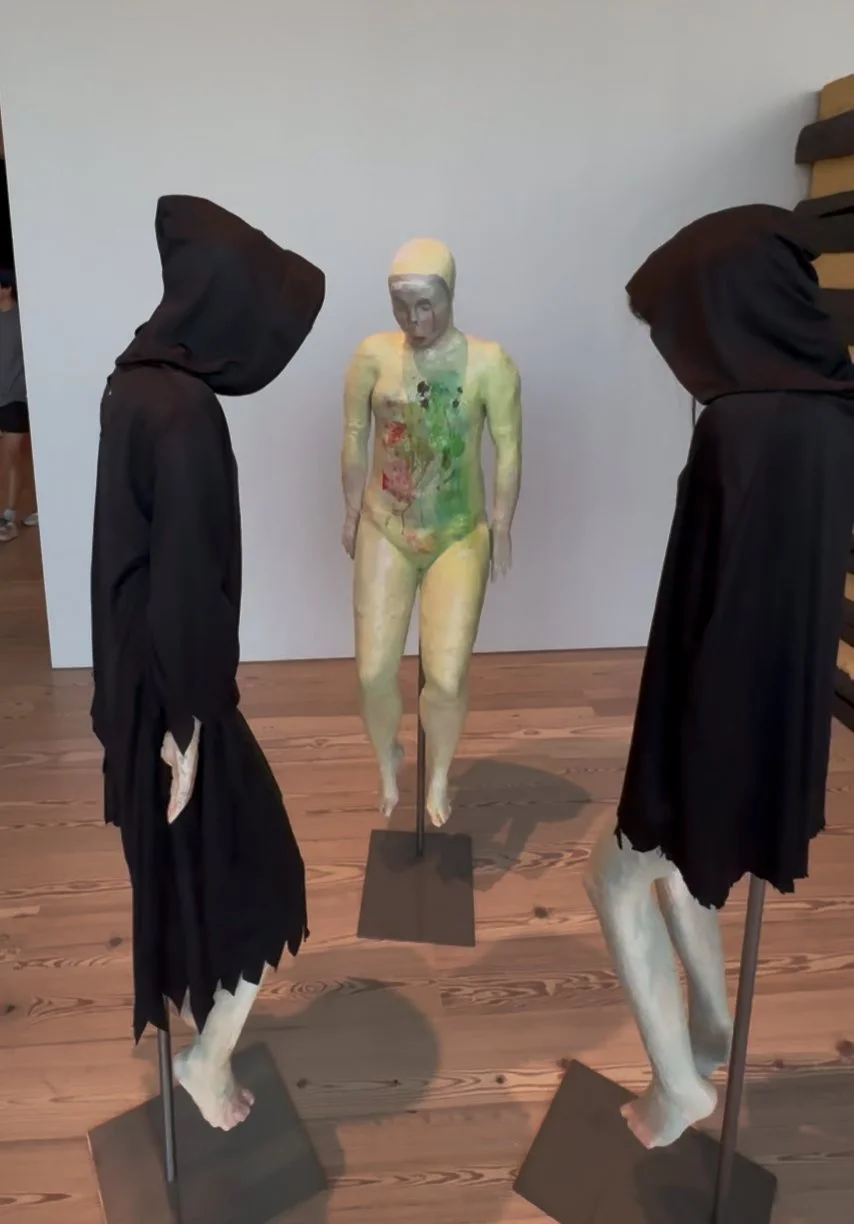
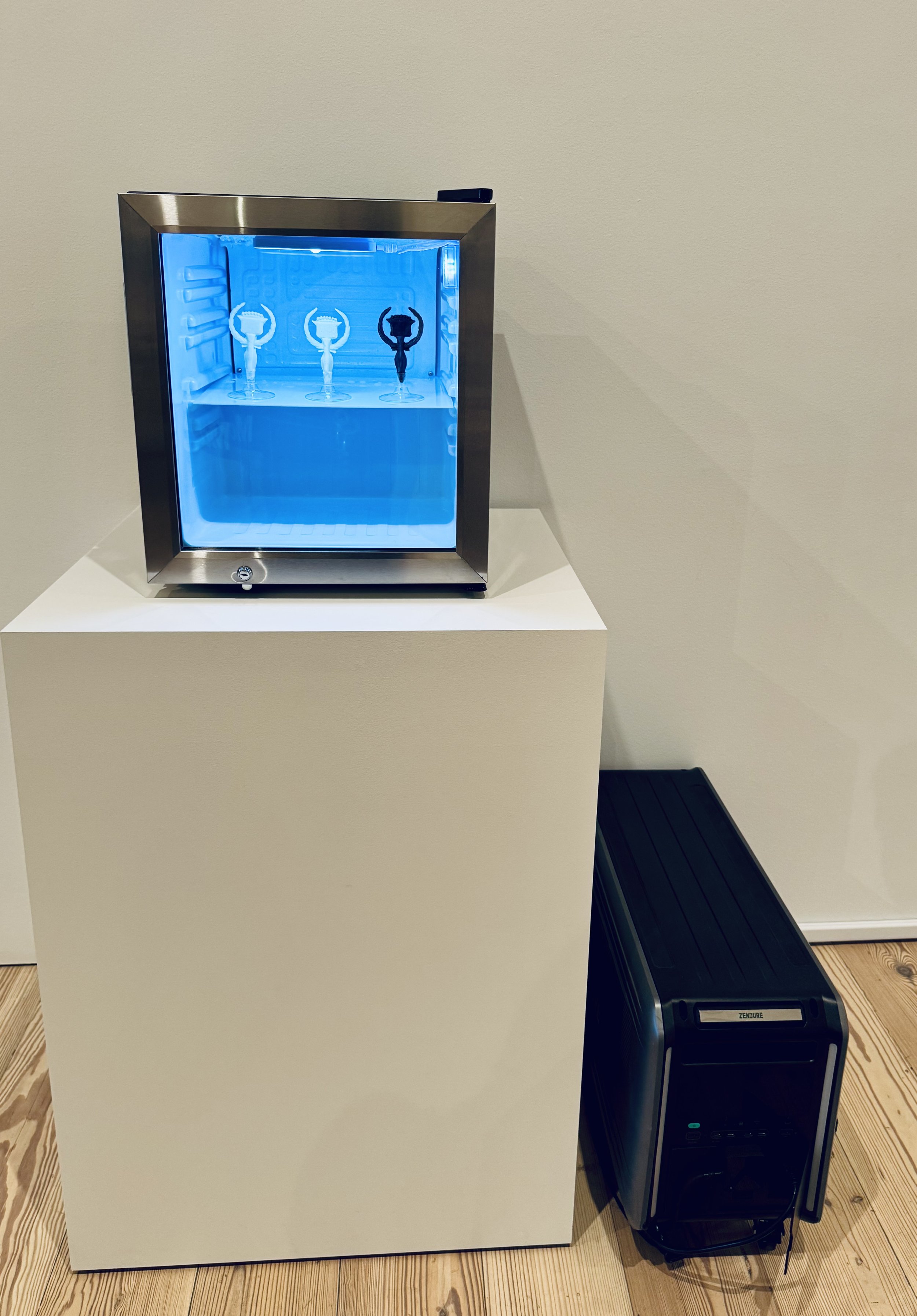
Figure 2. Ash Arder, Broadcast #4, 2024, and Consumables, 2023. Installation view, Whitney Biennial 2026. Photograph by Anna Ehrsam.
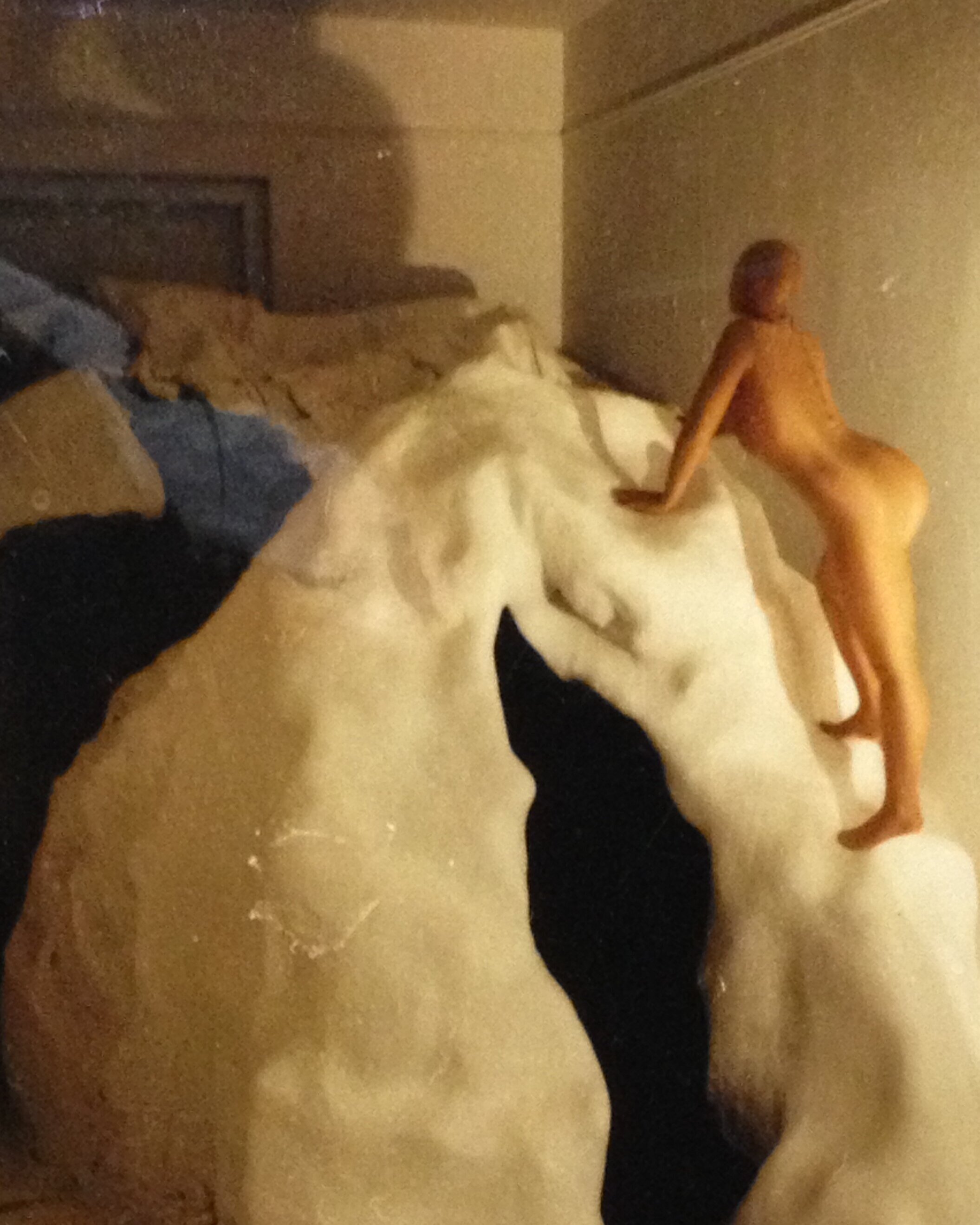
If Arder shows how infrastructure enters the intimate, Isabelle Frances McGuire shows how myth, technology, and violence enter the body. Satan in America and Other Invisible Evils: Experiments in Public Sculpture stages American history as a broken representational machine. Salem witches built from open source CT scans, villagers assembled from Doom character models, demons, and a symbolic birth cabin occupy the same civic theater. The installation is grotesque, but not gratuitously so. Its grotesquerie is epistemological. McGuire is asking how bodies become visible through the systems that claim to know them. CT scans render the inside of the body with forensic clarity while leaving the outside incomplete. Video game models introduce another vocabulary of fabricated embodiment. Public sculpture, folk narrative, horror, and national origin myth collide. The figures feel unfinished because the histories they carry are unfinished. The work refuses a stable national image. It gives us American identity as fractured, haunted, and still under construction.
Figure 3. Isabelle Frances McGuire, Satan in America and Other Invisible Evils: Experiments in Public Sculpture, 2026. Installation view, Whitney Biennial 2026. Photograph by Anna Ehrsam.
Frank Benson’s Castaway offers a quieter but equally charged image of public exposure. On the roof, the sculpture reads as hyperreal and isolated, a figure stranded in visibility itself. The title matters. A castaway is not merely alone; a castaway is someone left outside the structures that were supposed to hold them. In a Biennial filled with louder and more unruly works, Benson’s figure distills the problem of being seen. The body is not heroic, not redeemed by monumentality, not made universal. It is simply there, held in a precarious relation to public space, the skyline, and the gaze of others. Yet there is dignity in that visibility. The figure does not disappear. It persists.
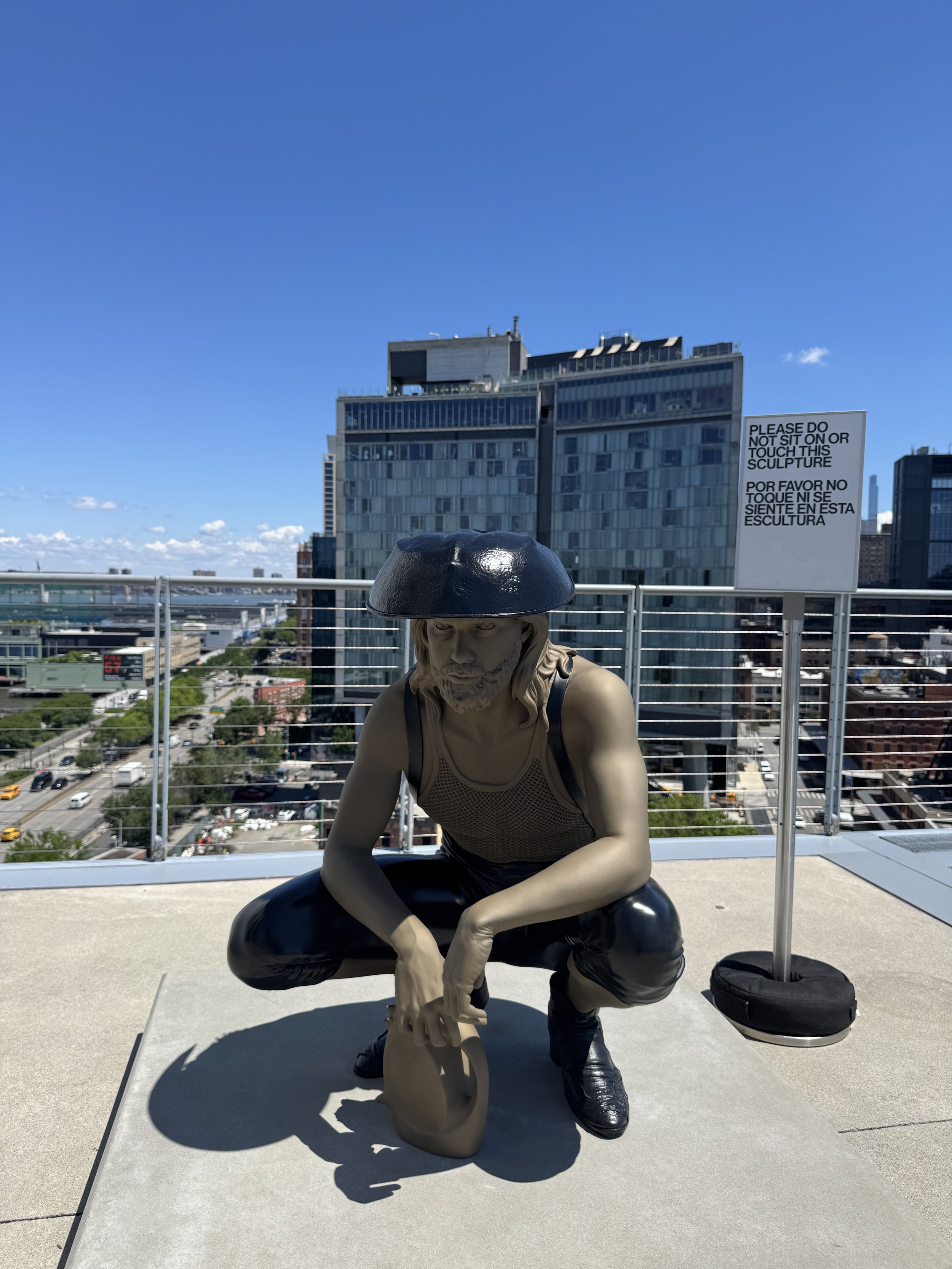
Figure 4. Frank Benson, Castaway, 2018. Roof installation view, Whitney Biennial 2026. Photograph by Anna Ehrsam.
Raven Halfmoon’s Sun Twins shifts the register. If Benson’s figure is solitary, Halfmoon’s are doubled, grounded, and ancestral. Built using a coil technique tied to Caddo tradition, the sculpture insists that making is never purely individual. The twinned figures reflect Halfmoon’s understanding that she works alongside family and ancestors, not as a self enclosed singular genius. This is a different model of power from the one inherited from modernist monumentality. The work is monumental, yes, but its scale serves continuity rather than conquest. In a show attentive to damaged structures, Halfmoon introduces another kind of structure altogether: kinship, lineage, collective authorship, temporal depth. The self is never singular. One way forward is not through isolation, but through a deeper recognition of how we are made with and through others.
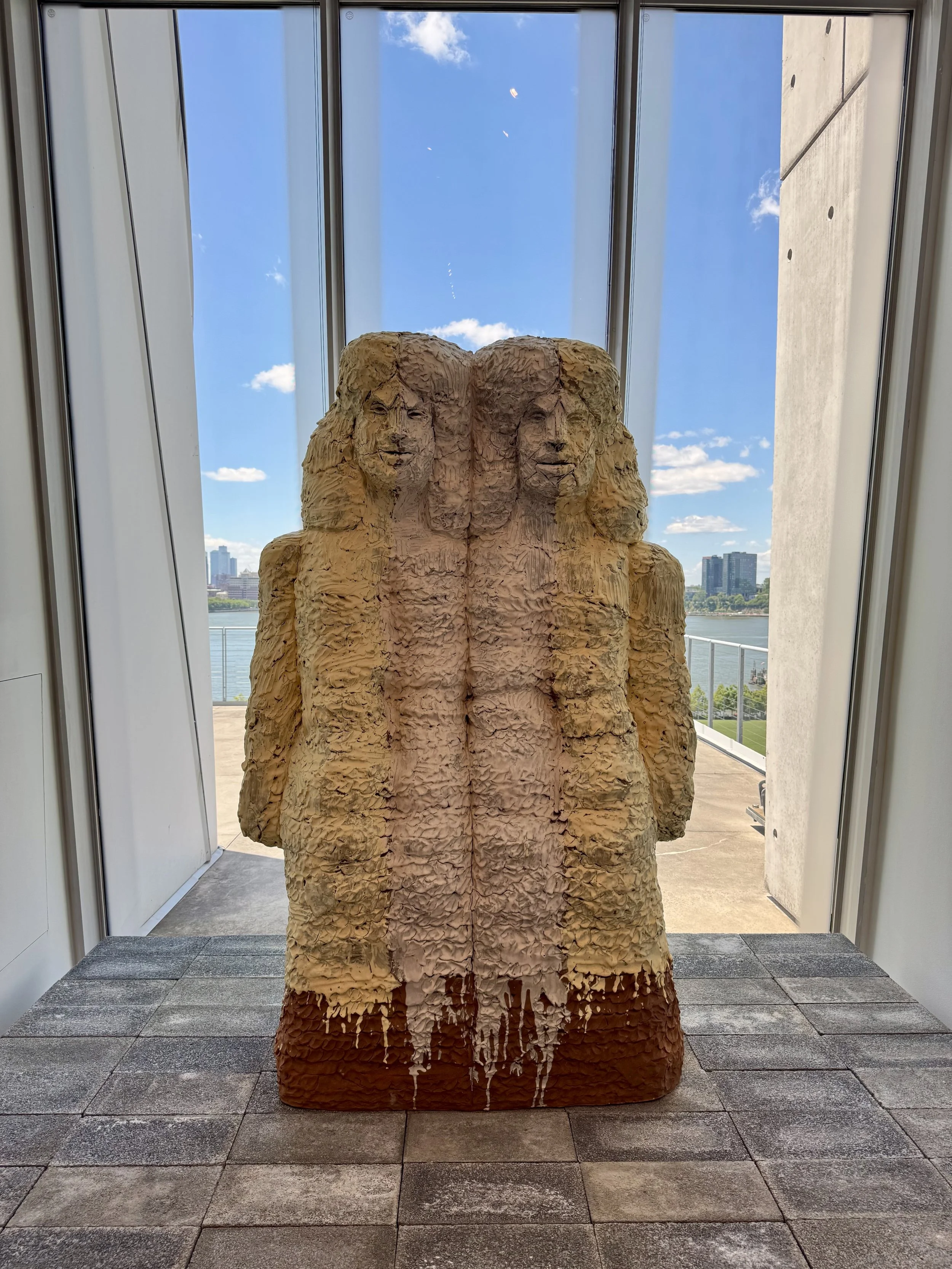
Figure 5. Raven Halfmoon, Sun Twins, 2023. Installation view, Whitney Biennial 2026. Photograph by Anna Ehrsam.
Nile Harris and Dyer Rhoads bring the museum itself under scrutiny. End of Days and Dark Brown Birkin Bag are among the Biennial’s sharpest reflections on collection, translation, luxury, and possession. At the center of the installation is Dark Brown Birkin Bag, a sculptural work Harris has described as a Birkin bag made from his own skin, staged within the visual language of the museum crate and the fetish object. That proposition is extended through End of Days, a live performance and LED text work in which a performer is delivered to the gallery and uncrated as a work of art while speaking in Russian with English supertitles. The performance turns collection itself into a theatrical and linguistic problem. Display, translation, intimacy, fetishization, and possession begin to collapse into one another. The result is not simply a provocation about luxury or objecthood, but a pointed meditation on what it means to be collected, circulated, translated, and made legible inside the museum.
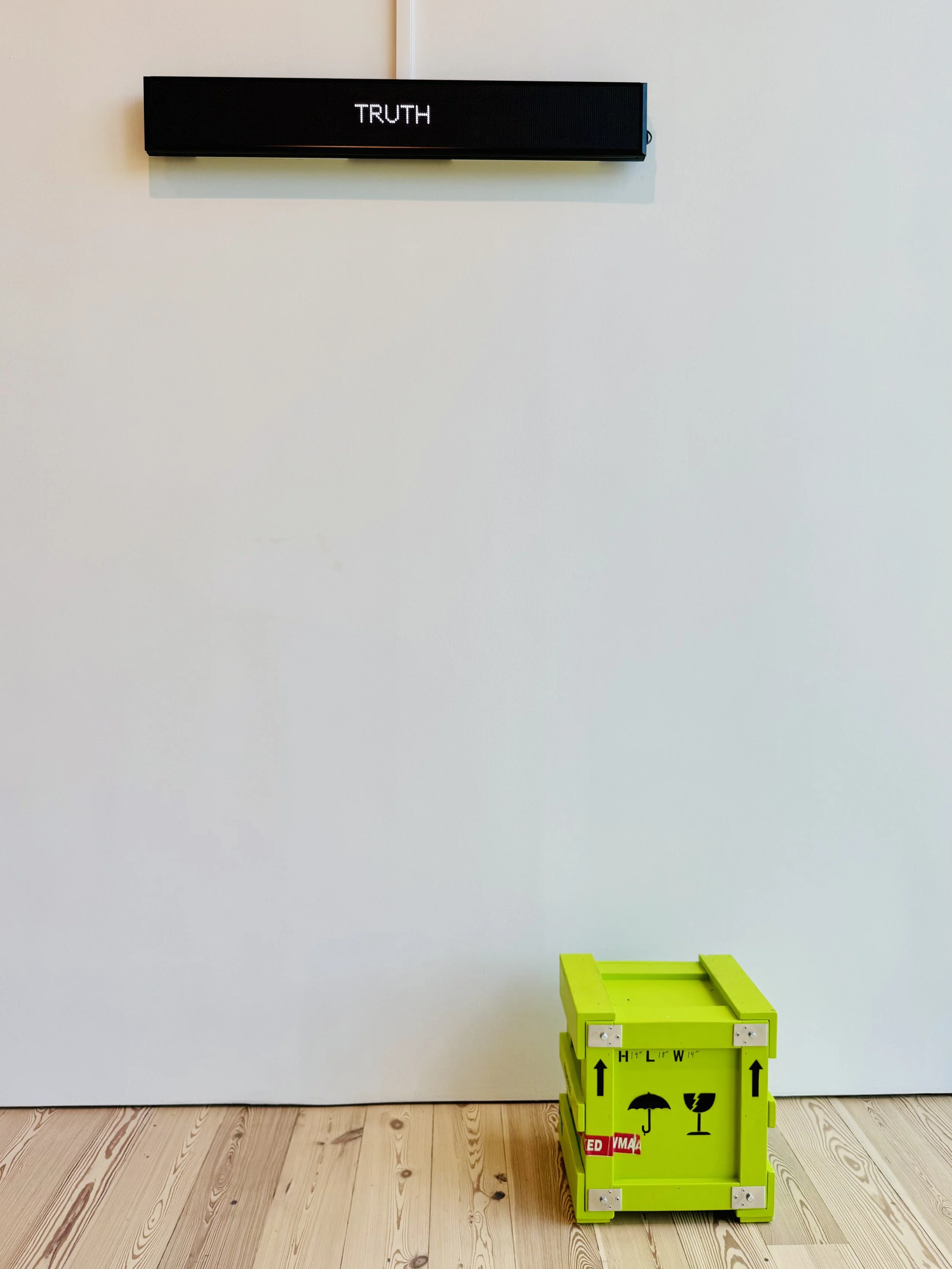
Figure 6. Nile Harris with Dyer Rhoads, End of Days, 2026, and Dark Brown Birkin Bag, 2026. Installation view, Whitney Biennial 2026. Photograph by Anna Ehrsam.
Precious Okoyomon’s installation sharpens the emotional and historical stakes. In Everything wants to kill you and you should be afraid, winged plush creatures hang from nooses, while elsewhere worn stuffed animals and dolls are repurposed into figures that collapse innocence and brutality into a single body. One of the most devastating gestures is the combination of a plush bunny suit with the head of a blackface doll. Comfort and racial caricature become inseparable. Softness itself becomes haunted. A child’s toy is no longer a site of consolation but a carrier of historical terror. Yet the work is not simply an image of despair. It is also an act of transformation. Discarded things are reassembled. Wounded symbols are forced to speak. Softness is not abandoned; it is reclaimed as a charged and unstable material. Feeling here is not secondary to politics. It is one of the ways history continues to act on the present.
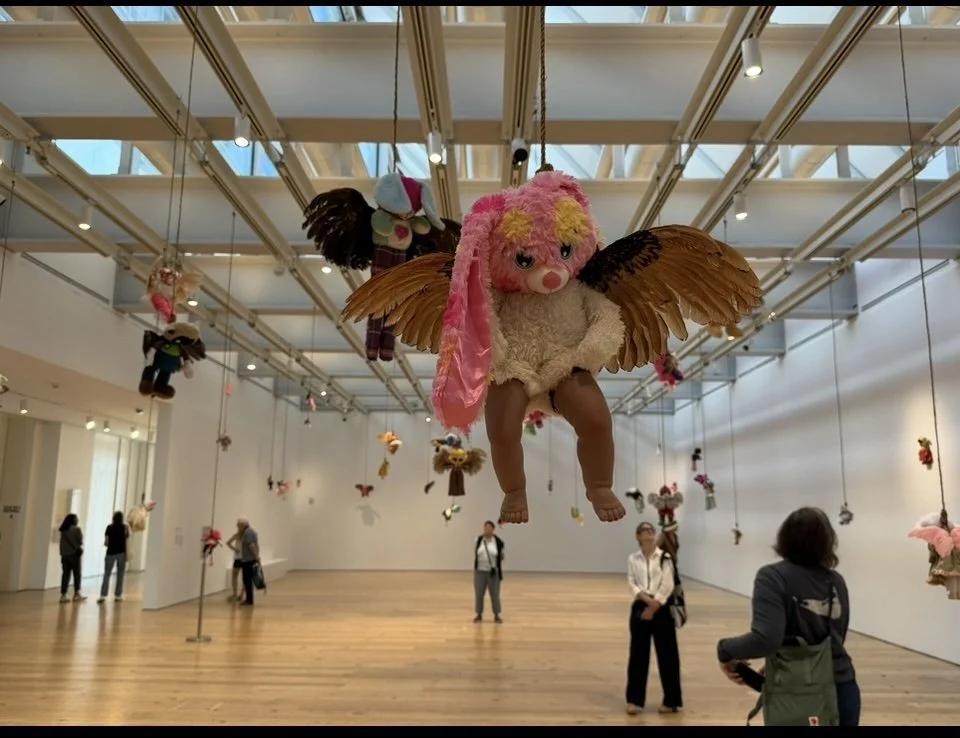
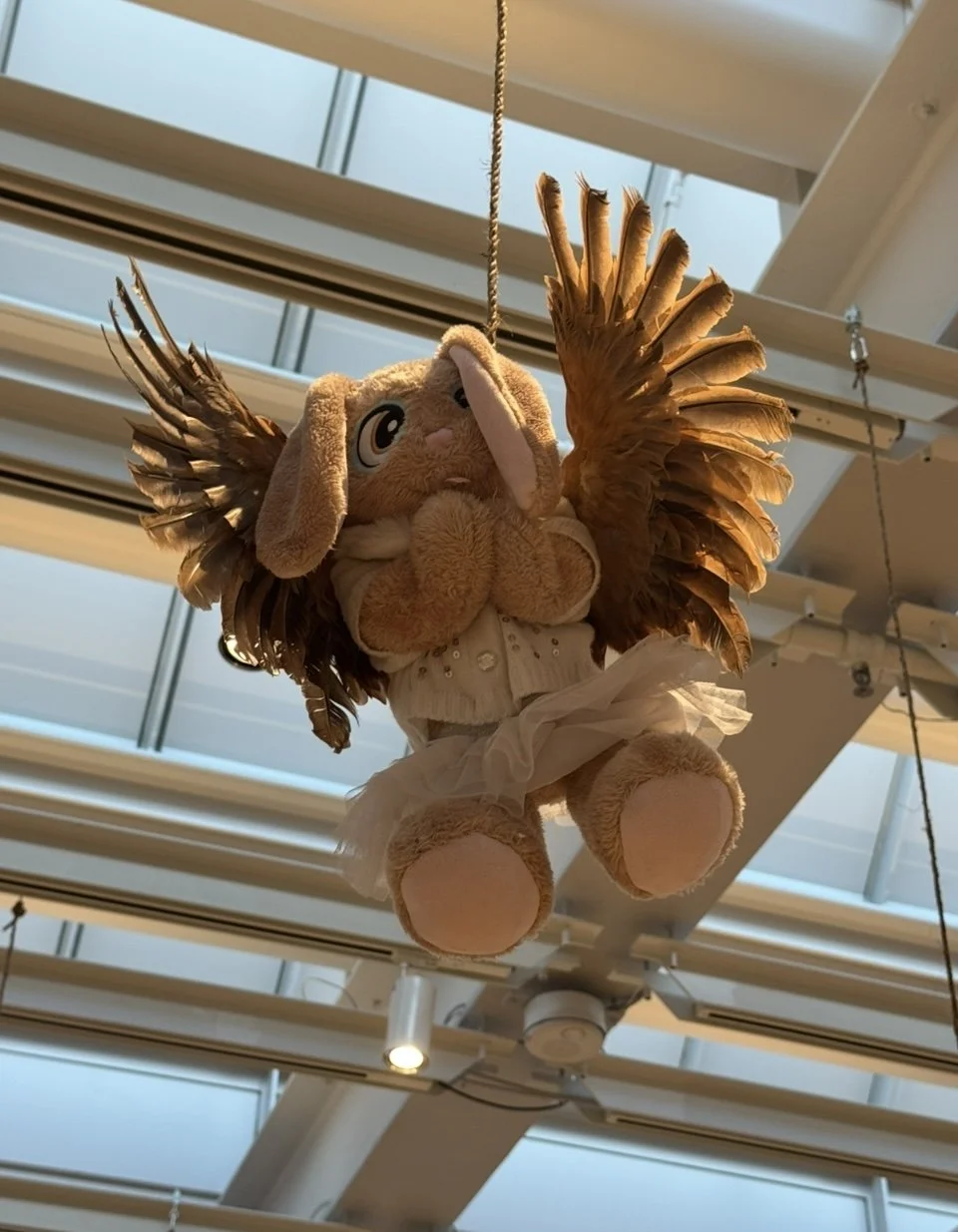
Figure 7. Precious Okoyomon, Everything wants to kill you and you should be afraid, 2026. Installation detail with suspended winged plush forms and related sculptural elements. Whitney Biennial 2026. Photograph by Anna Ehrsam.
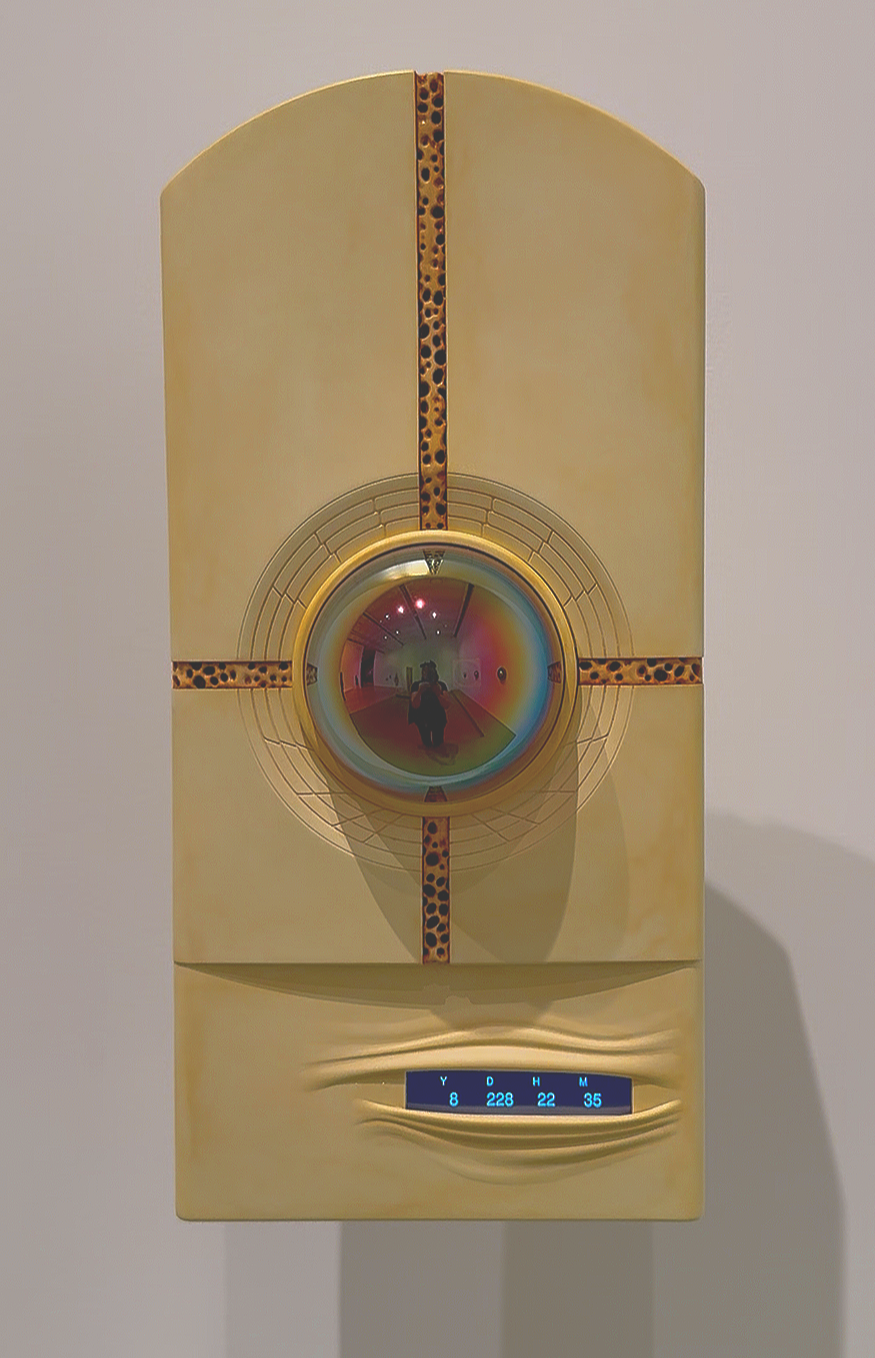
Cooper Jacoby’s Estate (July 10, 2022) extends the exhibition’s inquiry into mediation, storage, and the afterlife of information. Even in label form, the work announces itself through a dense technical inventory: camera, LCD screen, speaker, magnetic field viewing film, dead hard drive, motors, magnets, electronics. The list reads like a contemporary anatomy of capture. What does it mean to inherit a world in which experience is endlessly recorded, translated into data, stored on failing devices, and recirculated through interfaces that both preserve and abstract life? Jacoby’s title folds these components into the language of property, death, inheritance, and value. The work suggests that subjectivity today is inseparable from the devices that record it. Beneath the machinery sits a quieter question: what remains human inside all this storage, playback, circulation, and dead data? What survives translation? What survives the archive?
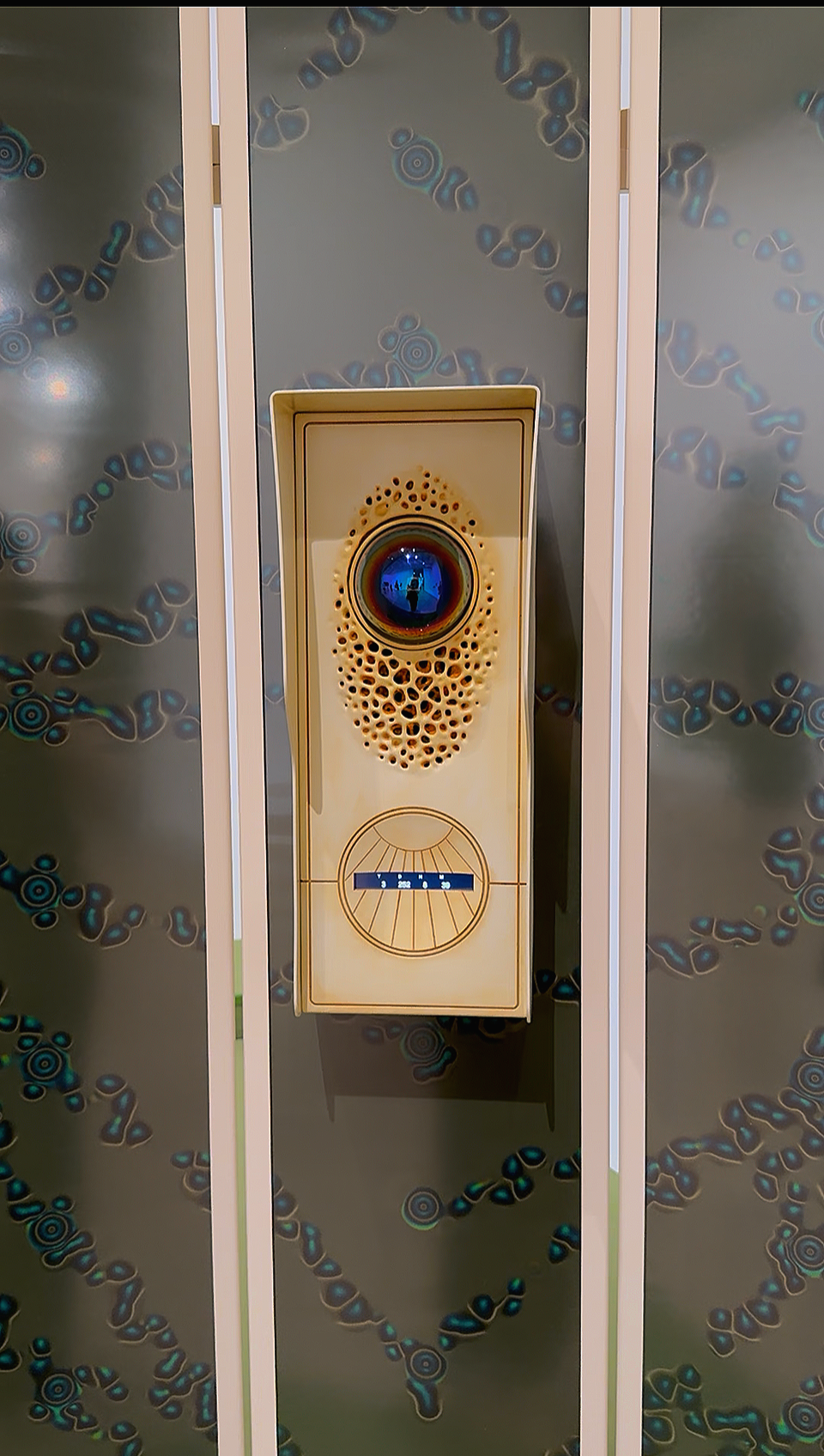
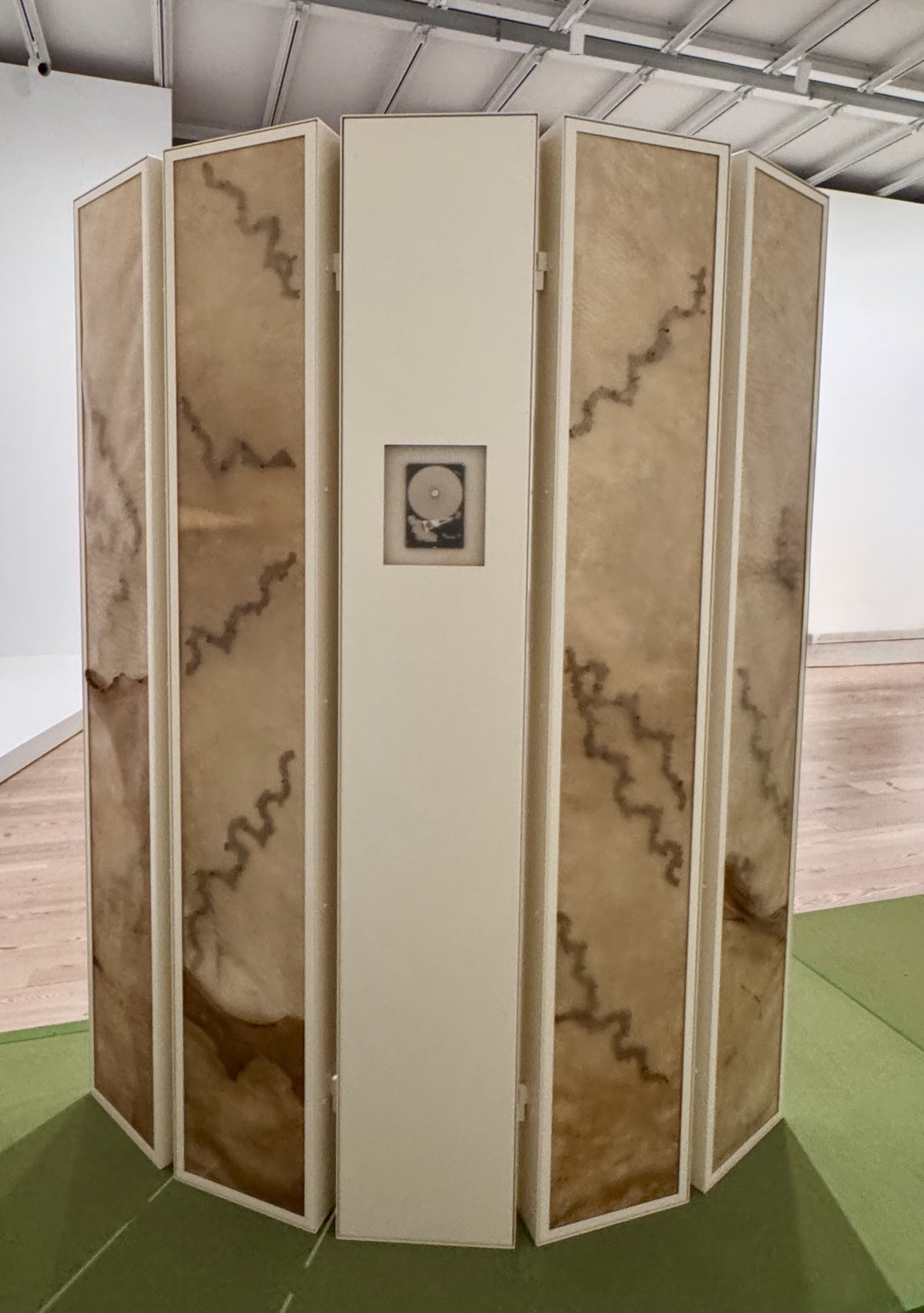
Figure 8. Cooper Jacoby, Estate (July 10, 2022), 2026. Installation view, Whitney Biennial 2026. Photograph by Anna Ehrsam.
Taken together, these works begin to clarify what is compelling about the Biennial as a collaborative effort. It is not simply that the show is expansive in the range of artists, forms, histories, and sensibilities it brings together. What matters more is the kind of collectivity it models. This is not the flattening inclusivity of an institution checking representational boxes. It is a more difficult and more generous proposition: a space in which radically different artistic languages remain distinct while still resonating inside a common field. That resonance is not always harmonious. Sometimes it is abrasive, unresolved, even exhausting. But that is the point. The present is not a coherent melody. It contains frequencies that scrape against one another as much as they align. The Biennial succeeds because it does not force resolution where resolution would be false. It allows friction, difference, contradiction, and beauty to coexist without collapsing into cynicism.
The exhibition’s social and political intelligence is clearest here. It understands that systems of domination are not purely external. They are lived in objects, in infrastructures of care, in fantasies of collection, in family histories, in technological devices, in racial caricatures, in environmental cycles, and in museums themselves. But life exceeds those systems, not in some grand outside, but in the stubborn fact of relation: kinship, memory, play, ancestral technique, damaged materials handled tenderly, forms made to hold contradiction without dissolving it. The Biennial does not offer a solution to the present, nor should it. What it offers instead is a way of sensing the present more fully, and with that fuller sensing, the possibility of acting within it differently.
That sensing is American in the broadest and most complicated sense. Not because the show performs a national identity, but because it registers the United States as a contradictory social formation: technologically saturated, historically violent, economically unequal, ecologically unstable, emotionally overexposed, and still full of artists capable of imagining forms of relation that do not simply reproduce domination. America appears here not as a stable nation state or ideological project, but as a field of broken promises, inherited structures, improvisational survivals, and unfinished collectivities. The artists do not resolve those contradictions. They inhabit them, press on them, metabolize them, and sometimes transform them into forms of beauty, absurdity, grief, and possibility.
In the end, the 2026 Whitney Biennial feels successful because it refuses false choices. It is critical without becoming programmatic, poetic without becoming vague, socially alert without reducing art to messaging. It understands that the contemporary human condition cannot be represented through a single mood or a single politics. It has to be staged as a field of relations: embodied, historical, technological, wounded, playful, unfinished, and alive. But unfinished does not mean hopeless. If anything, the exhibition’s deepest argument is that unfinishedness is where possibility lives. These artists are not passive witnesses to the present. They are active participants in shaping how it is felt, understood, contested, and imagined. They are making forms for realities that do not yet fully exist, but might.
That is where the Biennial’s optimism resides: not in denial, not in uplift for its own sake, and not in the fantasy that art can solve the crises it names. Its optimism lies in the vitality of artistic persistence itself, in the insistence on making, thinking, feeling, and questioning in the face of systems that would prefer compliance, numbness, or despair. The exhibition suggests that the body politic is not fixed, inert, or handed down from above. It is something we are continually making together. We are not merely acted upon by the present; we are also its agents, its witnesses, its builders, and its critics. Through these works, the Biennial proposes that art remains one of the places where new realities can be rehearsed, where other social relations, other temporalities, other forms of care, and other futures can begin to take shape. The common space that emerges here is not consensus and not resolution. It is something more alive: a charged space of questioning, experimentation, and possibility. It is the hum of people thinking, feeling, and making their way toward futures they still believe can be shaped.