Whose Gesture?
Whose Gesture?
Fountain, Aura, and the Gendered Authority of the Readymade
Anna Ehrsam
Battery Journal | August 2026
Duchamp did not simply remove the aura from the unique art object. The readymade redistributed aesthetic authority across a relational field of object, gesture, artist, institution, language, reproduction, market, audience, and historical discourse. Within that field, aura became newly concentrated in the authorized artistic gesture and in the author-name capable of making that gesture stick. Read through Walter Benjamin, Michel Foucault, and feminist scholarship on Baroness Elsa von Freytag-Loringhoven, Fountain becomes a study not only of what can become art, but of who possesses the cultural authority to perform designation as art.
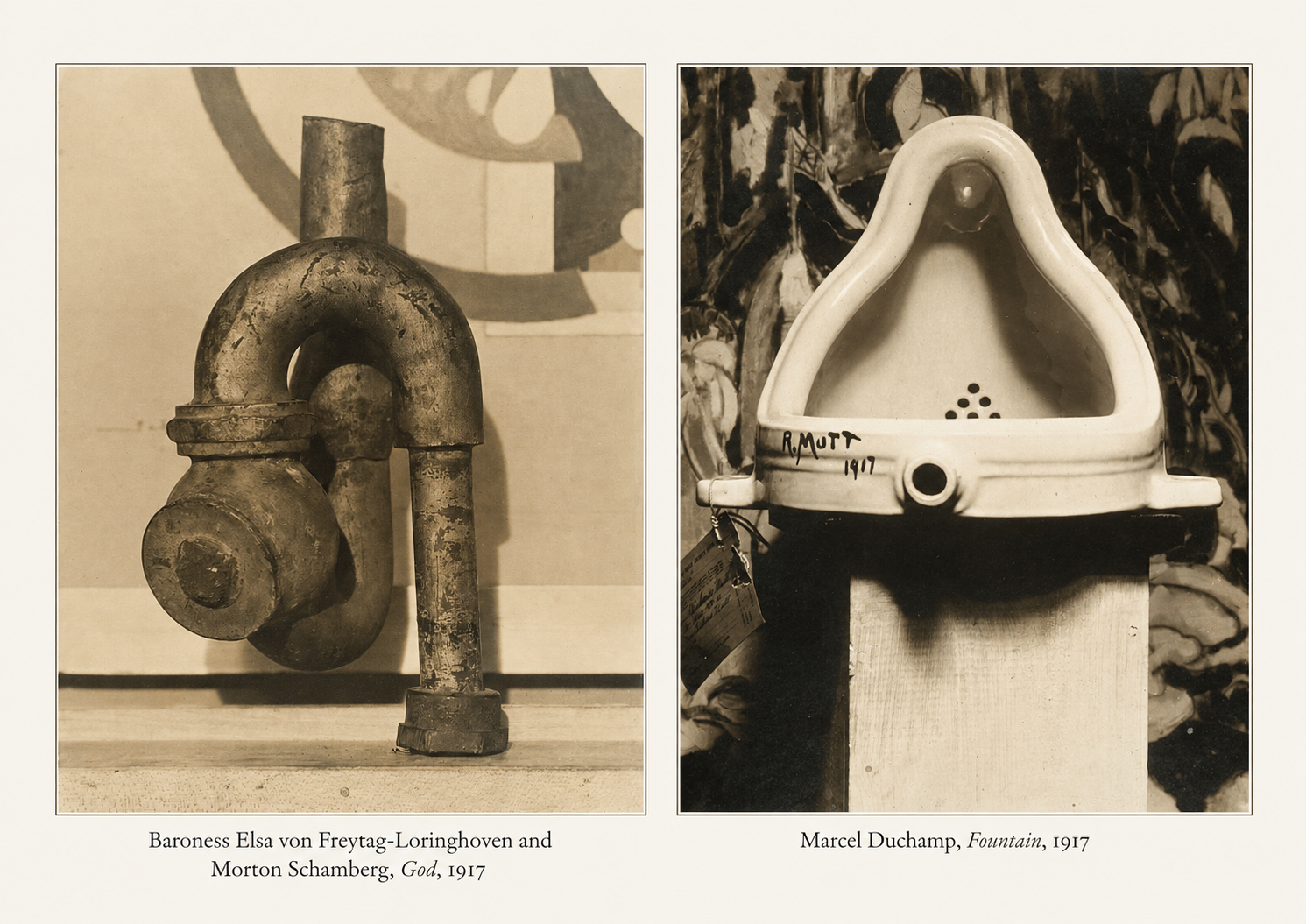
As the Museum of Modern Art’s Marcel Duchamp retrospective reaches its final day, we find ourselves once again before the urinal, that most overdetermined of twentieth-century objects. MoMA’s exhibition, the first North American Duchamp retrospective in more than fifty years, makes clear how completely his practice reorganized the terms through which art could be understood. Few works condense that reorganization as efficiently as Fountain, the porcelain urinal submitted under the name “R. Mutt” to the Society of Independent Artists in New York in 1917. Its importance does not reside only in scandal, nor in the substitution of selection for fabrication. Duchamp’s larger achievement was to relocate the artwork within a relational field in which meaning is produced among object, artist, institution, language, reproduction, audience, economy, social convention, and historical discourse.
I love Duchamp for precisely this reason. As an artist and an art historian, I understand the readymade not as the destruction of the art object but as a radical expansion of the conditions under which an object can operate aesthetically and intellectually. The object is never simply itself. It is activated by where it is placed, who names it, who accepts or rejects it, how it is photographed, how it circulates, who owns it, who writes about it, and what social structures permit those acts to matter. Once we accept Duchamp’s relational logic, however, we have to accept all of it. Gender cannot remain outside the analysis merely because earlier criticism preferred the philosophical cleanliness of a neutral object and a universal artistic subject.
A Urinal Is Not a Neutral Object
More than a century of interpretation has transformed Fountain into an almost disembodied philosophical proposition. Turned from its conventional orientation and photographed by Alfred Stieglitz, the fixture has been compared to sculptural, biomorphic, and even sacred forms. Yet before Fountain became any of those things, it was a urinal, and more specifically a men’s urinal. The distinction is not trivial. The object was manufactured in relation to a particular body and bodily function. It belongs to a history of architecture, sanitation, industrial production, bodily comportment, privacy, mobility, and access to public space organized around male anatomy.
Duchamp’s own conceptual logic requires us to retain this history rather than erase it. If an ordinary object carries its context into the artistic field, the urinal cannot become culturally neutral merely because it has acquired philosophical importance. Its previous meanings do not disappear through designation. They are reactivated within another structure of signification. One of the persistent privileges of masculinity within Western culture has been precisely its capacity to appear unmarked. A work by a woman that foregrounds menstruation, childbirth, domestic labor, female anatomy, sexuality, or bodily fluids is readily described as gendered. Yet an industrial fixture explicitly engineered for male urination has been remarkably capable of ascending into the history of ideas as a universal proposition concerning the ontology of art.
This is not an argument against Duchamp. It is an argument for taking him more seriously. If Fountain demonstrates that context produces meaning, feminist art history extends rather than contradicts Duchamp’s proposition when it asks which parts of that context have been rendered invisible and whose particularity has been allowed to masquerade as universality.
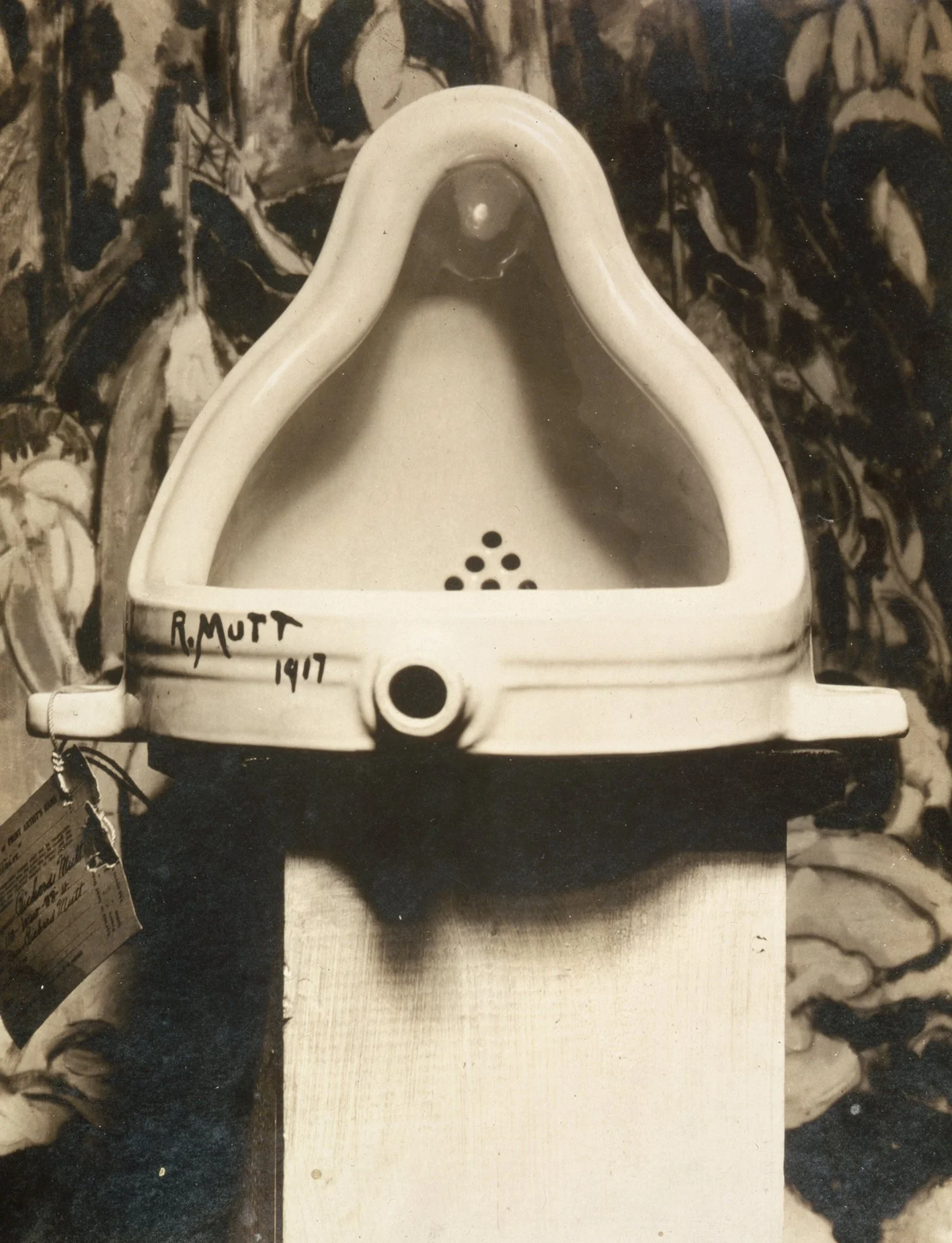
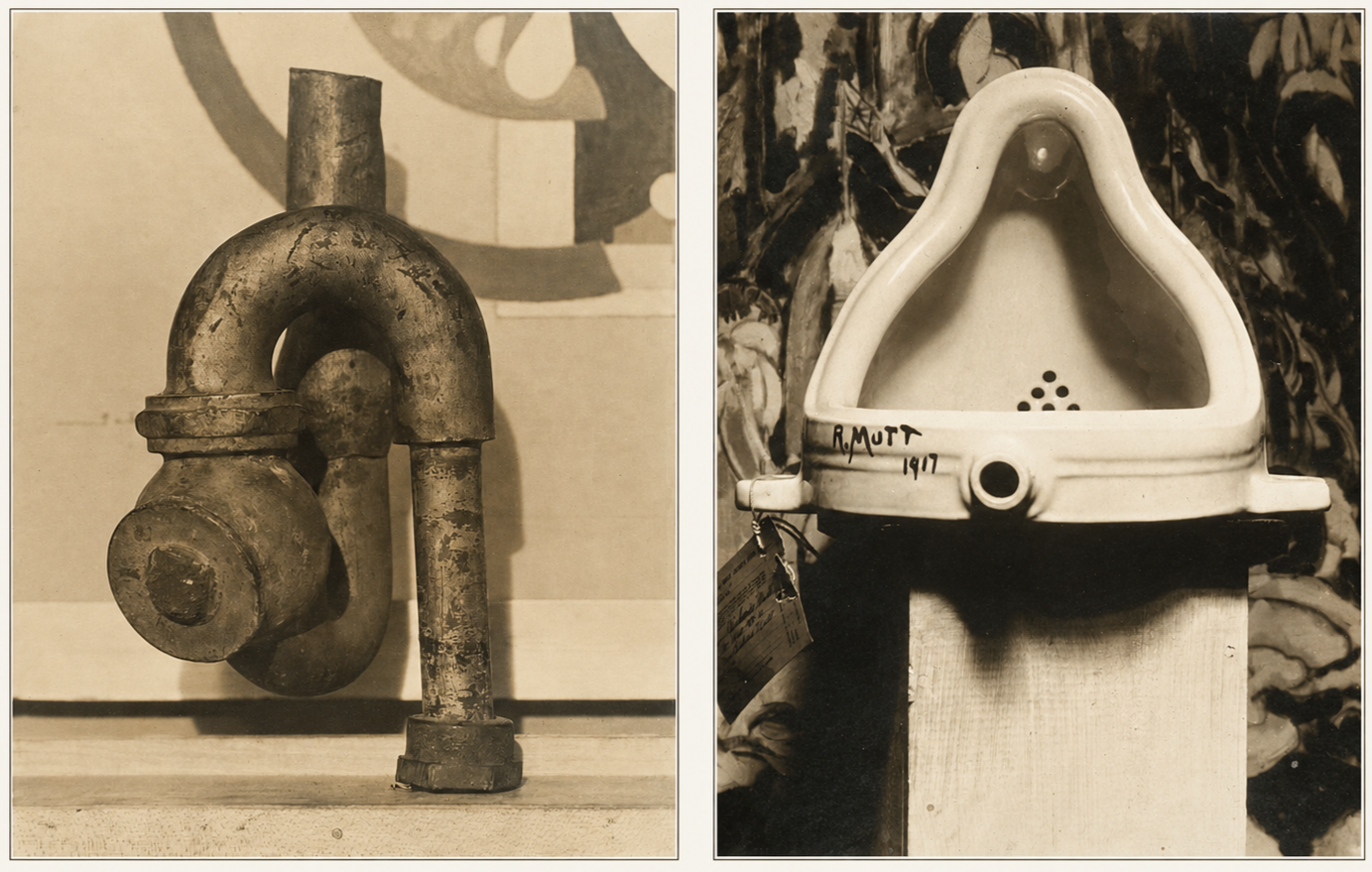
Fig. 1. Alfred Stieglitz, photograph of Marcel Duchamp / R. Mutt, Fountain, 1917. Gelatin silver photograph. The work was reproduced in The Blind Man, no. 2, May 1917. Public domain in the United States. Source: Wikimedia Commons.
From Object to Relation
The familiar mythology of Fountain compresses the work into a beautifully economical formula: Duchamp chose a urinal and declared it art. But the historical event is considerably more complex. Duchamp was a director of the Society of Independent Artists and headed its hanging committee. Shortly before the organization’s first exhibition opened, he tested its purported “no jury” policy by submitting Fountain under the pseudonym R. Mutt. When the work was refused, Duchamp resigned. Stieglitz then photographed the rejected object, and The Blind Man devoted its second issue to the affair. The anonymous editorial “The Richard Mutt Case” famously insisted that whether Mutt had physically fabricated the fixture was irrelevant because “He CHOSE it.”
The object itself soon disappeared, yet the artwork survived. That fact is fundamental. If the physical urinal can vanish while Fountain not only persists but becomes increasingly consequential, then the artwork cannot be identical to its material substrate. Fountain exists through an apparatus of relations: R. Mutt, the Society of Independent Artists, the refusal, Stieglitz’s photograph, The Blind Man, publication, debate, replicas, collectors, museums, critics, historians, and generations of artists for whom the work became a point of departure. The readymade does not simply replace an object with an idea. It reorganizes the field in which artistic meaning is produced.
And relational fields contain power. The gesture “this is art” is never culturally effective in the abstract. Its force depends upon who speaks, where the gesture occurs, which institutions encounter it, who records it, who circulates it, and whether the name attached to it possesses or acquires sufficient authority for the gesture to become historically legible.
Where Did the Aura Go?
Walter Benjamin provides a productive way of sharpening this problem. In “The Work of Art in the Age of Its Technological Reproducibility,” Benjamin theorized the destabilization of the artwork’s traditional aura under conditions of mechanical reproduction, where the authority of the unique object bound to a singular presence in time and space is radically altered. Fountain would seem to carry this logic further. Its original meaning is lost. The plumbing fixture was industrially manufactured. Later versions can be produced and still function institutionally as Fountain. Material uniqueness ceases to be the guarantor of the work.
And yet Fountain is now among the most auratic objects in modern art. This apparent contradiction suggests that Duchamp does not simply destroy aura. He redistributes it. The aura migrates away from the singular handcrafted object toward the artistic gesture: the act of choosing, repositioning, naming, signing, submitting, and thereby reclassifying the industrial object. Material uniqueness diminishes precisely as the historical uniqueness attributed to the gesture expands.
But a gesture cannot acquire cultural force independently of the person understood to have performed it. Aura migrates again, toward the author-name. “Duchamp” becomes the stable sign under which an unstable network of objects, jokes, pseudonyms, reproductions, refusals, replicas, and contradictions is organized. This is where Michel Foucault’s “What Is an Author?” becomes crucial. Foucault’s author-function describes the author not merely as the empirical person who produces something, but as a classificatory and organizing principle within discourse, a name that regulates how statements are grouped, circulated, and interpreted. Duchamp destabilizes conventional authorship at the level of the work, while the subsequent history of Duchamp consolidates the author-function around his name with extraordinary force.
The object can disappear, the signature can be pseudonymous, the original can be replaced, and the work can depend upon a network of other people. Yet the name Duchamp becomes monumental. At that point Fountain is no longer only a problem of objects. It is a problem of authority: who possesses the cultural capacity to make designation consequential?
Enter the Baroness
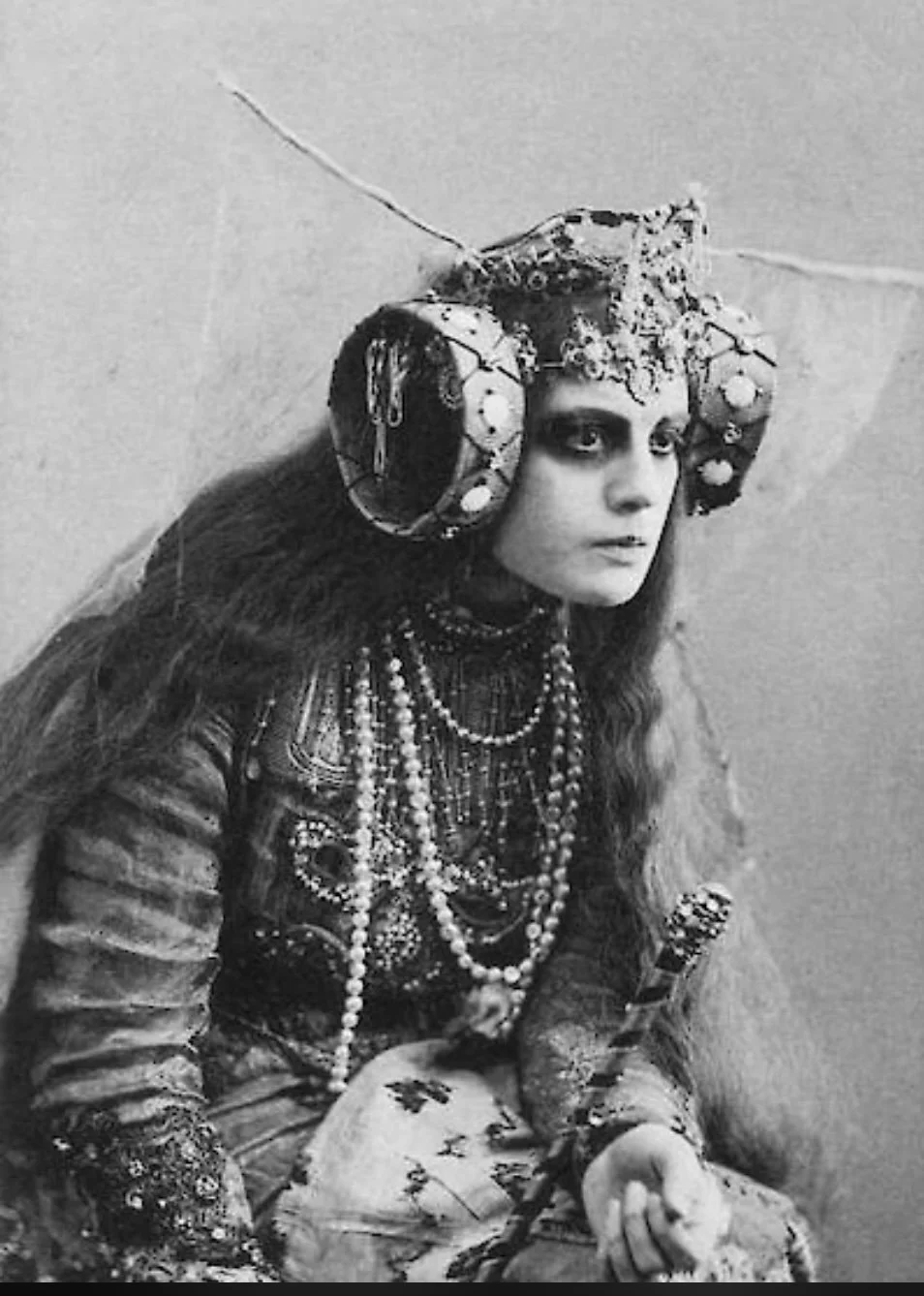
Baroness Elsa von Freytag-Loringhoven changes the problem because her presence disrupts the clean genealogy by which the readymade descends from Duchamp’s singular intelligence. Feminist scholarship, particularly the work of Irene Gammel and Amelia Jones, has substantially expanded our understanding of New York Dada beyond the conventional heroic constellation of Duchamp, Man Ray, and Francis Picabia. Elsa emerges not as a colorful eccentric orbiting more important men, but as an artist whose practice destabilized the boundaries among found objects, sculpture, assemblage, costume, language, sexuality, performance, and everyday life.
Recent research on her surviving found objects makes the chronology impossible to ignore. Gammel’s study of five found objects and assemblages includes Enduring Ornament, dated 1913, a discarded industrial metal ring that Elsa found and transformed through designation, preservation, and use. That date precedes Duchamp’s Bottle Rack of 1914. Whether Enduring Ornament should be named “the first readymade” depends upon how one defines the term, but the definitional problem is itself historiographically revealing. If the readymade is retrospectively defined through the theoretical parameters associated with Duchamp, Duchamp will necessarily remain the paradigmatic author of the category.
Elsa’s work introduces friction into that tautology. Her relation to discarded and manufactured objects was neither incidental nor occasional. She scavenged the city and recombined its refuse within an artistic practice that was sculptural, poetic, sartorial, erotic, and performative. Her own body became one site on which objects could be resigned. The modern industrial object did not become disembodied in her practice. It collided with sexuality, gender, poverty, theatricality, and the unruly conditions of lived experience.
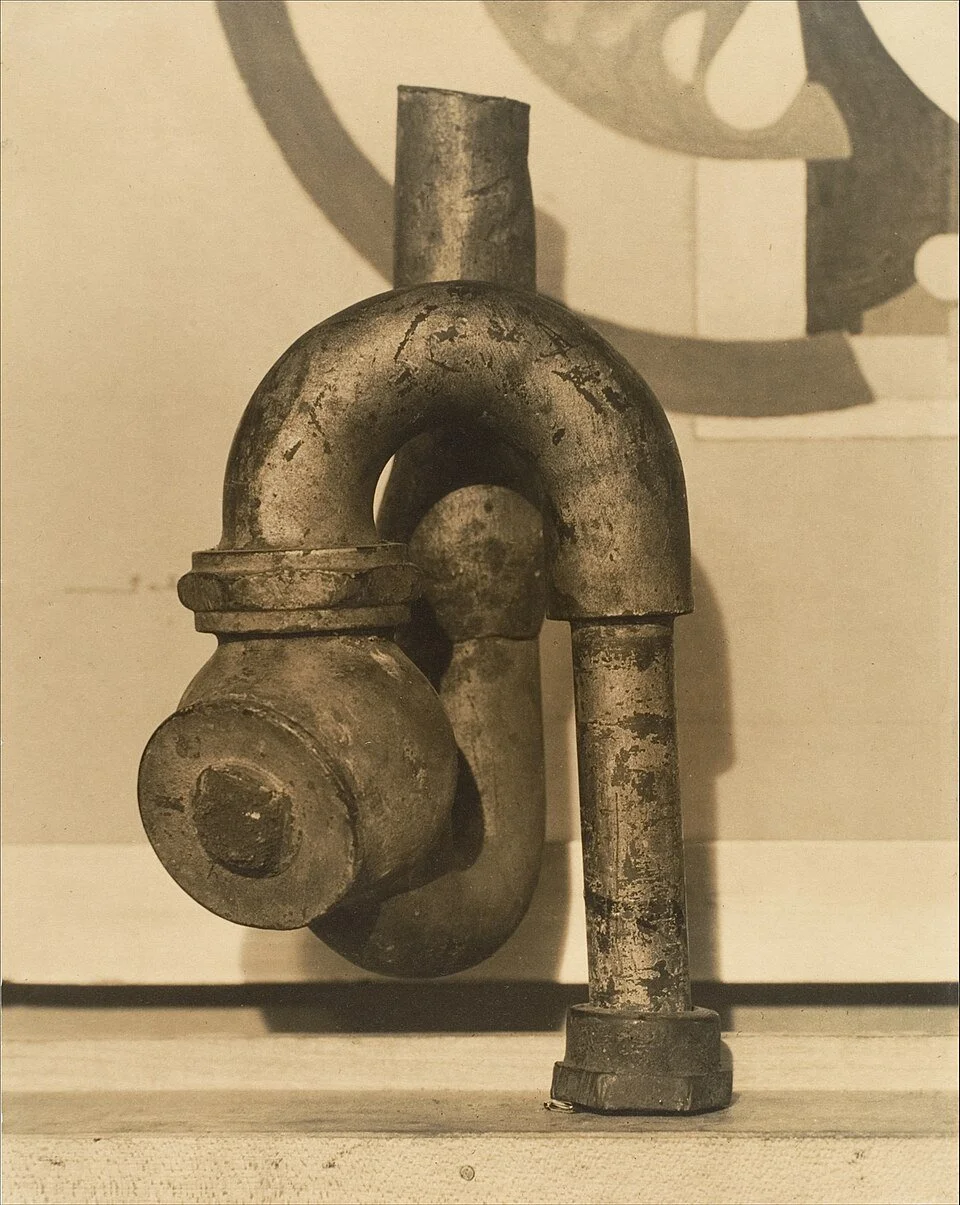
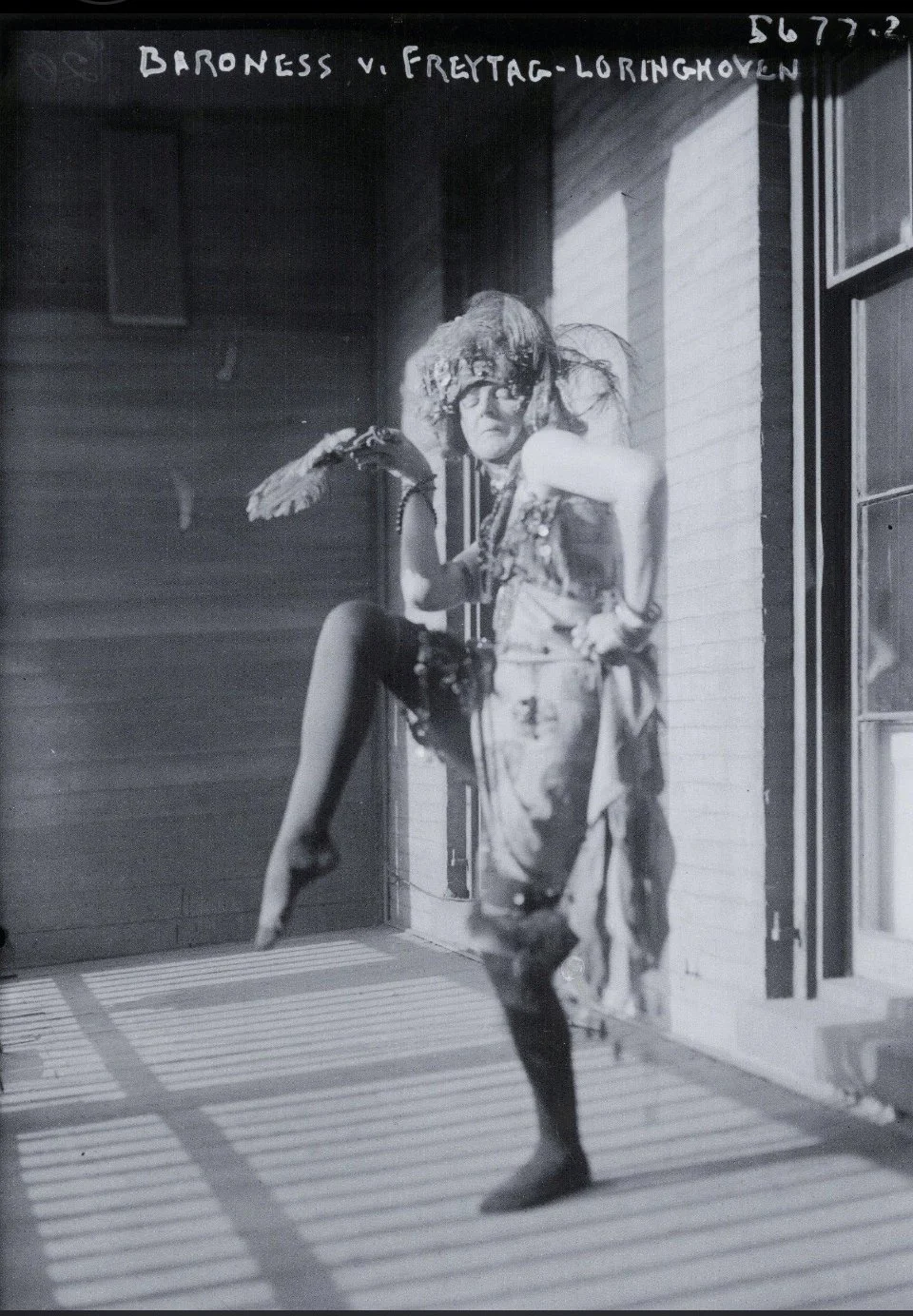
Fig. 2. Baroness Elsa von Freytag-Loringhoven, photographed by the Bain News Service, c. 1910s–1920s. George Grantham Bain Collection, Library of Congress Prints and Photographs Division, LC-DIG-ggbain-33940. No known restrictions on publication.
Plumbing, God, and the Body
The 1917 assemblage God makes the problem almost embarrassingly material. The work, associated with Elsa von Freytag-Loringhoven and Morton Schamberg, consists of a cast-iron plumbing trap mounted on a wooden miter box. The Metropolitan Museum of Art catalogs a period photograph under both names, and the surviving image places another plumbing fixture directly within Elsa’s artistic orbit at precisely the historical moment of Fountain. The attribution history is complicated, and it should remain complicated. The point is not to force God into a simple priority contest. Its importance here is that plumbing, found industrial material, bodily association, and artistic designation were not the exclusive conceptual property of Duchamp.
The Fountain authorship controversy intensifies the issue. In his letter of April 11, 1917, Duchamp wrote to his sister Suzanne that one of his female friends, using the masculine pseudonym Richard Mutt, had sent a porcelain urinal as a sculpture. The identity and role of this “female friend” remain contested. Elsa has been proposed, and Louise Norton belongs centrally to the social and editorial history surrounding the work. The available evidence does not justify replacing the conventional assertion “Duchamp made Fountain” with the equally totalizing assertion “Elsa made Fountain.” That reversal would preserve the very model of singular heroic authorship that the work itself destabilizes.
A more consequential scholarly question is how authorship becomes culturally authoritative in the first place. The avant-garde was a social formation. Ideas circulated through correspondence, conversation, friendship, rivalry, sexual relationships, magazines, exhibitions, parties, institutions, jokes, borrowing, and appropriation. Women were not outside that network waiting for Duchamp to invent modernity. They were inside it. The question is therefore not merely who first performed a gesture toward a found object, but whose gesture acquired enough institutional and discursive support to become foundational.
The Power to Designate
The readymade is often summarized democratically: anything can be art. But anything cannot simply become art. An object becomes art within a structure capable of receiving the proposition. Anyone can point to a urinal, rename it, rotate it, or place it somewhere unexpected. The historical consequence of that act depends upon whether institutions, editors, photographers, collectors, critics, museums, and historians recognize the person performing it as someone whose gesture deserves to be preserved and interpreted.
Duchamp understood this structure with exceptional sophistication and manipulated it brilliantly. He could expose the arbitrariness of institutional authority because he was already situated within an avant-garde network that included artists, patrons, collectors, publishers, photographers, and institutions. This does not reduce his achievement to privilege, nor does it imply that his eventual canonical position was guaranteed. It means something more interesting: artistic authority is relational too. The artist does not stand outside the system that legitimizes the artistic gesture.
The gendered asymmetry becomes visible when we compare the historical reception of Duchamp and Elsa. Duchamp’s provocations could be progressively abstracted from his body and reconstructed as epistemology. Elsa’s provocations remained attached to her body, sexuality, poverty, theatricality, instability, costume, and biography. Duchamp became conceptual. Elsa became eccentric. He could become Mind while she remained Body.
That distinction is not a neutral description of artistic quality. It is one of the mechanisms through which canons have historically distributed intellectual authority. Amelia Jones has shown how New York Dada has been structured through gendered and psychosexual narratives, while Paul B. Franklin’s queer reading of Fountain further complicates any supposedly self-evident relation between the urinal, masculinity, sexuality, and authorship. Thierry de Duve’s analysis of the readymade, meanwhile, demonstrates how decisively Duchamp reorganized artistic nomination and judgment. Bringing these approaches together allows us to understand the Elsa problem not simply as an omitted woman requiring insertion into an existing story, but as evidence of how the story’s organizing authority was produced.
The Author as Organizing Principle
This is where Benjamin and Foucault converge productively with feminist art history. Benjamin allows us to see that reproducibility need not annihilate aura. In Fountain, aura can migrate from the unique object toward the uniqueness attributed to the artistic gesture. Foucault allows us to see that the gesture does not remain free-floating. It becomes organized through the author-function. Feminist art history then asks which subjects have historically been permitted to occupy that function, and which have been left as atmosphere, influence, personality, muse, collaborator, or eccentricity.
“Duchamp” is therefore not merely the proper name of the man Marcel Duchamp. Within art history, it becomes an organizing principle. The name gathers together readymades, puns, pseudonyms, Rrose Sélavy, chess, erotic objects, optical experiments, the Large Glass, Fountain, replicas, notes, refusals, and institutional maneuvers into a coherent intellectual structure. That organization is productive. It is also powerful. Once the name has acquired authority, new evidence and ambiguous events are repeatedly pulled back into its gravitational field.
The historiographical significance of Elsa lies precisely in her capacity to interrupt that gravitational pull. Her presence makes visible the distinction between performing a radical gesture and having history authorize that gesture as foundational. We do not need to prove that Elsa secretly authored Fountain in order to demonstrate the politics of attribution. The stronger argument is that Duchamp’s relational model of the artwork obliges us to study the relational production of the artist as well.
If the artist designates the object, the cultural field designates the artist.
The Urinal Returns
This returns us to the continuing critical fascination with the urinal. There remains something genuinely funny about Fountain, and something refreshing in Duchamp’s willingness to let vulgarity, sex, language, stupidity, intelligence, and institutional critique coexist in the same operation. The problem is not that critics continue to admire the work. I admire it too. The problem is the critical reflex by which the work’s masculinity and the social authority surrounding its designation are treated as secondary once the object has been elevated into philosophy.
A urinal is a urinal. It is also a commodity, an industrial product, a sculptural form, a vessel for bodily waste, a linguistic joke, a pseudonymous submission, a rejected exhibition entry, a photograph, a lost original, a sequence of replicas, an institutional provocation, and an art historical proposition. The multiplicity is the achievement. But once multiplicity becomes our methodological premise, gender, economics, social status, institutional access, and historical power cannot be removed from the field simply because they complicate the heroic elegance of the story.
Whose Gesture?
The question posed by Fountain after more than a century is therefore no longer simply “What is art?” Contemporary practice has absorbed that question so thoroughly that its radicalism can now seem almost axiomatic. The more difficult question is whose gesture can become art history.
Duchamp demonstrates that artistic meaning can be produced through designation within a relational field. Benjamin helps us understand how aura displaced from the singular object can be reorganized around the historical uniqueness of a gesture. Foucault helps us understand how the author-name becomes a function that organizes discourse. Elsa von Freytag-Loringhoven forces us to confront the unequal historical distribution of the cultural authority required to occupy that position.
This does not diminish Duchamp. It takes him to his logical conclusion. If meaning is relational, power is relational. If context matters, gender matters. If the artist confers a new status upon the object, we must also examine the cultural structures that confer the status of artist upon the person making the declaration.
Duchamp appears to remove aura from the unique art object. Art history subsequently relocates that aura into his gesture and consolidates it around his name. The Baroness does not merely offer us an alternative candidate for authorship. She reveals what that consolidation conceals.
The urinal was never neutral. The gesture was never neutral. Neither was the history that decided whose gesture would become Art.
Image Rights and Source Links
Fig. 1, Fountain: Wikimedia Commons file page identifies the 1917 Stieglitz photograph as public domain in the United States: https://commons.wikimedia.org/wiki/File:Marcel_Duchamp,_1917,_Fountain,_photograph_by_Alfred_Stieglitz.jpg
Fig. 2, Baroness Elsa: Library of Congress, George Grantham Bain Collection, LC-DIG-ggbain-33940. The Bain Collection record states no known restrictions on publication: https://www.loc.gov/pictures/item/2014714092/
Fig. 3, God: Wikimedia Commons / Metropolitan Museum of Art Open Access file page: https://commons.wikimedia.org/wiki/File:%22God%22_by_Baroness_Elsa_von_Freytag-Loringhoven_and_Morton_Schamberg_MET_DP137411.jpg
Enduring Ornament is discussed in the essay but no image is reproduced here because the commonly circulated photographs are from a private collection and I have not treated them as open-license publication images.