Arcadia Now:Emma Tapley
Arcadia Now: The Language of Landscape
Paintings by Emma Tapley
By Anna Ehrsam
Editor in Chief, Battery Journal
The Painting Center is currently presenting three solo exhibitions that together affirm the gallery’s sustained commitment to rigorous, exploratory contemporary painting. In the Project Room, Will Duty’s black and white oil paintings extend his earlier graphite work into a language of abstract form. Geometric structures, shifting tonal fields, and subtle inversions of light and dark generate a restrained but quietly dramatic visual tension. Daniel Sutherland’s Fragile Intervals brings forward paintings and drawings that move fluidly between structure and dissolution, merging historical and invented imagery into compositions that hover between pattern, interior space, and atmospheric ambiguity. Within this context, Emma Tapley’s Arcadia unfolds as an intimate and luminous engagement with the natural world, grounding her work in direct experience, sustained attention, and lived continuity.
Tapley’s exhibition does not simply revisit landscape as a genre; it reconsiders it as a mode of thinking and a way of being in the world. Arcadia emerges from long durations of looking, from a daily, bodily presence within a specific place. Painted directly from life in the Catskills, on land once tended by her father, the series transforms personal inheritance into philosophy. Landscape here is not a motif or backdrop but a partner in an ongoing dialogue, one shaped by care, memory, and time.
Tapley’s father, himself a painter, shaped her earliest understanding of art and attention. The land surrounding his home became, over decades, a shared horizon of looking and conversation. When Tapley returned to care for him in his final years, the landscape took on a new gravity. After his passing, she remained. Caring for the house and the land became a continuation of their bond, and painting became a means of sustaining that relationship across absence. In this sense, Arcadia is not only about nature; it is about inheritance, continuity, and the ethics of staying.
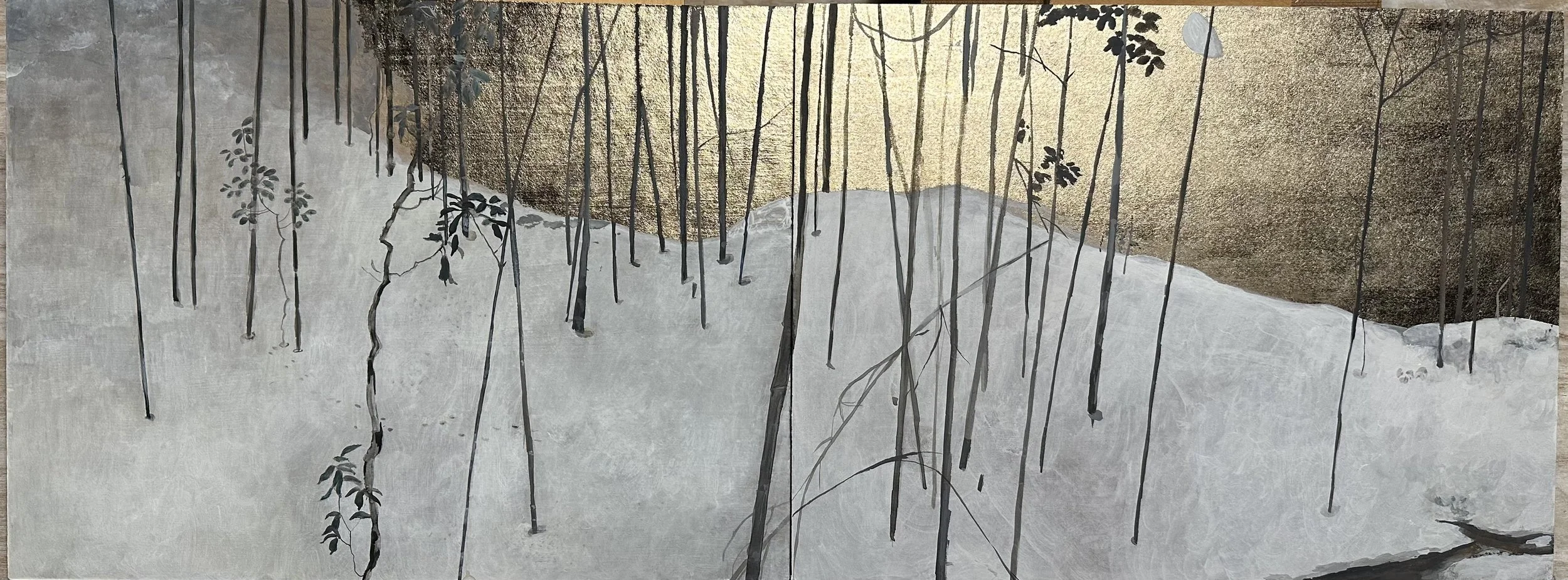
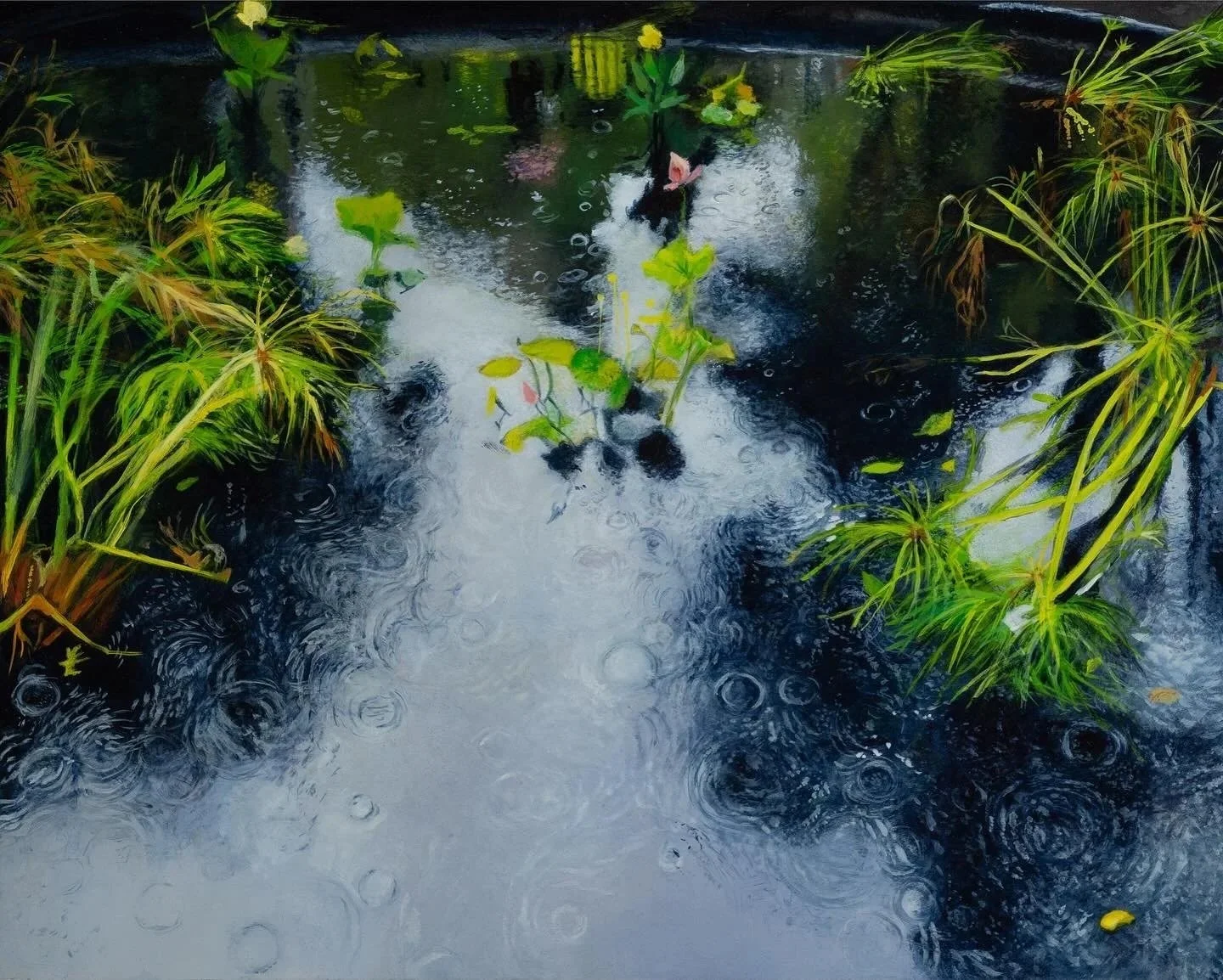
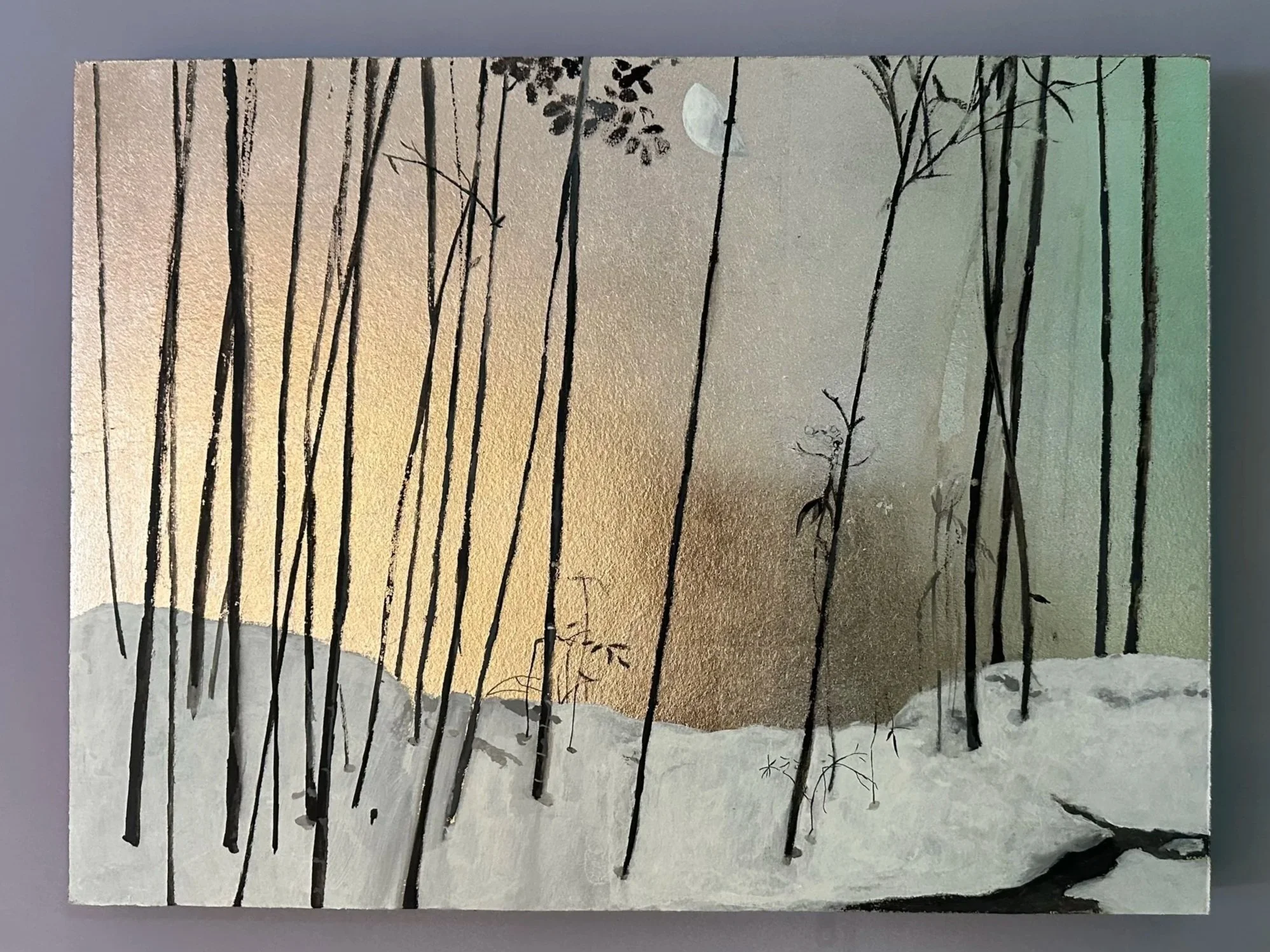
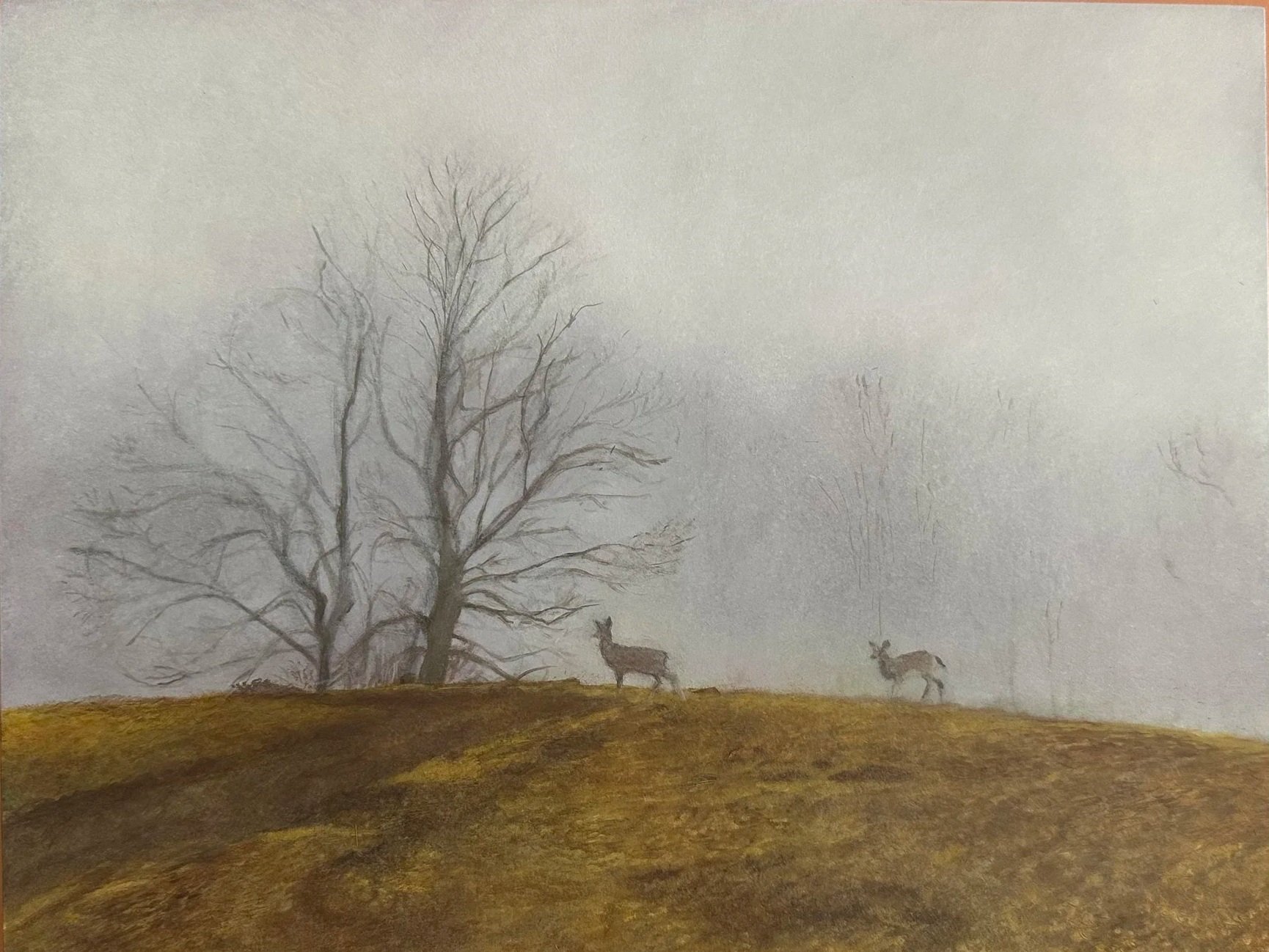
Each painting in the series captures the subtle transitions of the natural world: air moving across water, light dissolving into snow, shadow passing through branches. These are not dramatic moments but modest ones, easily missed. Tapley’s gift lies in her ability to hold such transience with extraordinary stillness. Her paintings operate at the threshold between perception and memory, between the world as it appears and the world as it is carried within the mind. Time does not advance in these works so much as it settles.
This practice situates Tapley firmly within the long tradition of American landscape painting, while also extending that tradition into the present. Thomas Cole conceived nature as a moral text, a space in which the balance between human ambition and natural order could be read and judged. By the mid nineteenth century, the Luminists — John Frederick Kensett among them — shifted toward restraint and ethical attention, dissolving brushwork into quiet luminosity and allowing time to suspend itself within the image. George Inness carried this inward turn further, dissolving clarity into tone and treating painting as a form of spiritual cognition rather than representation.
Tapley inherits all three lineages. From Cole, she carries forward a sense of moral equilibrium; from the Luminists, a discipline of light and patience; from Inness, a yearning toward the unseen. Yet her work is neither revivalist nor nostalgic. She transforms nineteenth century Romantic aspiration into a contemporary language of lived perception. Her Arcadia is not an imagined paradise but an inhabited awareness — shaped by responsibility, repetition, and care.
Working primarily in oil on panel or linen, Tapley builds her paintings through translucent layers applied over extended periods. Forms cohere gradually, like vision adjusting to dawn. The atmosphere becomes structure; light becomes a stabilizing force. Each surface holds the record of its own making, an archive of attention rather than a display of virtuosity. The paintings feel less composed than arrived at, as though they have come into being through sustained listening.
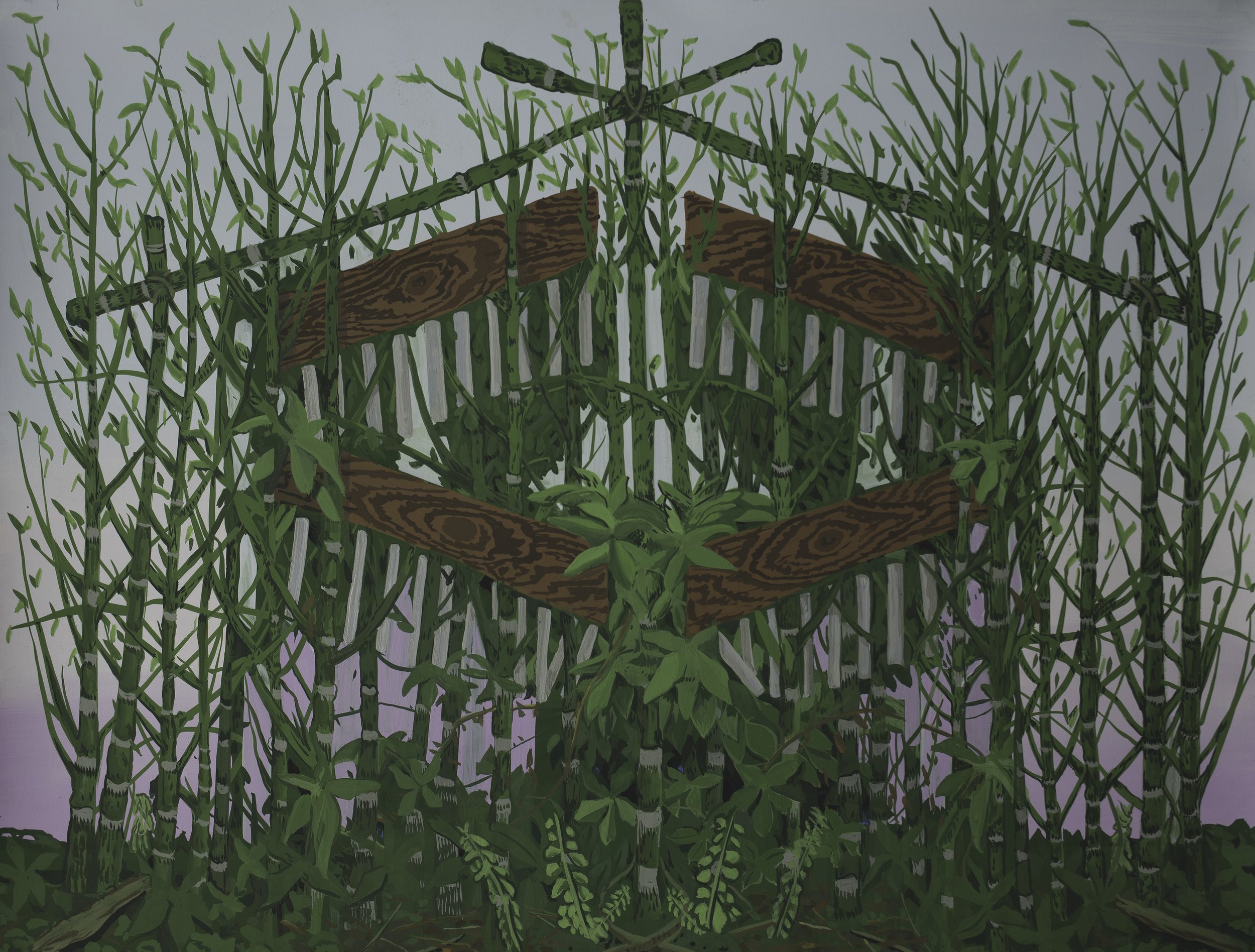
Certain motifs recur throughout the series. Trees hover at the edge of recognition, their forms dissolving into surrounding air. Snowfields gleam with an internal light that seems to emanate from within the surface itself. Water mirrors the sky so completely that reflection becomes more substantial than the world above it. The recurring deer, often suspended in fog or half light, functions as a quiet sentinel — an alter ego of sorts, embodying watchfulness and restraint. It occupies the same liminal space as the paintings themselves, between appearance and disappearance, stillness and movement.
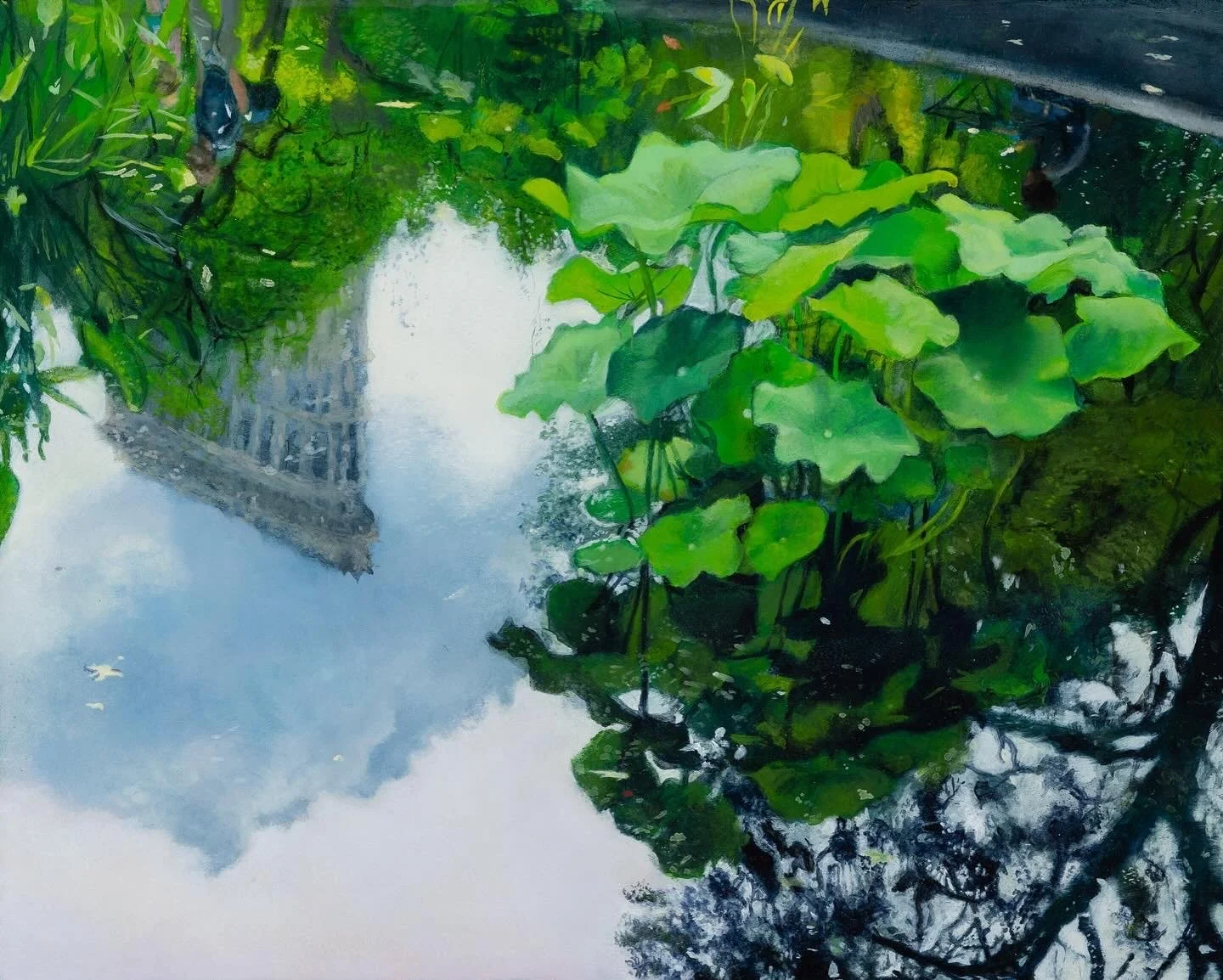
In classical art, Arcadia signified pastoral innocence, an idealized harmony between civilization and wilderness. Tapley redefines Arcadia not as a place but as a condition of awareness. Her Arcadia exists in the patient act of looking, in the continuity of care, in the fragile shimmer of light across water and snow. She paints from within the landscape rather than at its edge. Her engagement is reciprocal, a dialogue rather than a document.
This reciprocity carries ethical weight. At a moment when the natural world faces intensifying precarity, Tapley’s practice restores duration, slowness, and embodied seeing. She advances the language of landscape painting beyond the optical and toward the relational. Like Jane Wilson or Rackstraw Downes, she merges perception with consciousness, yet her work maintains a romantic intensity that insists on the moral dimension of beauty. Attention, in this context, becomes an ethical act.
Arcadia also traces a personal arc: from the density and structure of city life to the slow rhythms of rural existence; from caregiving to creative renewal. The paintings register this shift not as escape but as recalibration. They ask what it means to dwell — not merely to reside in a place, but to remain present to it over time.
In Arcadia, Emma Tapley offers not a retreat from modernity but a way to inhabit it differently. Her paintings invite us to slow down, to dwell within the fragile equilibrium of attention. Each canvas becomes a microcosm of care, a site where perception, memory, and devotion converge. Tapley extends the lineage of American landscape painting into a new register, carrying forward Cole’s moral inquiry, Kensett’s clarity, and Inness’s spiritual tone while transforming them through her own lived philosophy.
The result is an art that is both timeless and urgently present. In the hush of her surfaces, we recognize not the absence of sound but the presence of listening. Arcadia teaches us that paradise is not lost. It is practiced — slowly, deliberately, through the act of devotion.